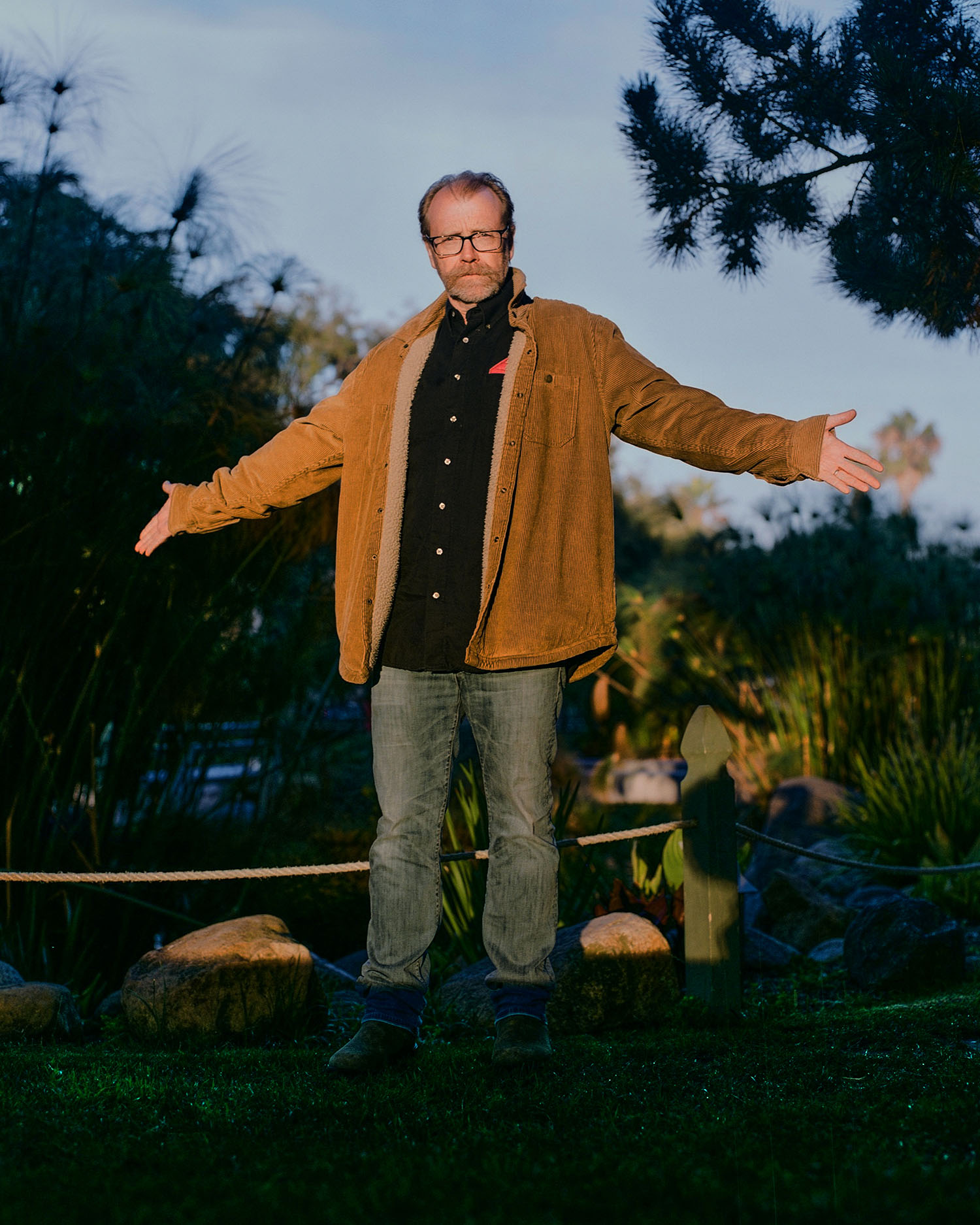
A giant of fiction, the Booker Prize winner returned this year with Vigil, a spiraling tale of an oil company CEO’s last hours on Earth. With it, George Saunders likewise reminds us of the power of a work of art to go toe-to-toe with the titans it critiques.
What do you think is your biggest contribution to culture?
Probably those rare, intermittent periods when I manage to stay quiet.
What would you like the headline of your obituary to be?
“This Is a Fake Obituary! Saunders Lives!” and then the text would read, “Saunders, at Nearly Two Hundred Years Old, Continues to Be Both Productive and Continent.”
What keeps you up at night?
Norm, our neighbor, who has been learning “Smoke on the Water” on the banjo for the last three months. No, just kidding: What keeps me awake is the realization that we’ve somehow managed to convert a country on the brink of actually making sense of its founding principles into an unholy mess of cruelty and self-dealing. That, plus Norm: bad combination.
What grounds you, and what invigorates you?
What grounds me is reading some great work of fiction and thinking, Ack, I still haven’t done it as beautifully as that. That is, it neutralizes any stupid feeling of elation I might have about what I’ve done. But this is also what invigorates me, in the spirit of, Well, I might still do it, in the time left to me.
What’s been the hardest part of your career so far?
Maybe the early days, when it was looking as if I wasn’t going to have a career. But even that was kind of great, because it made me confront the question, Why are you doing this, anyway? It was also thrilling (as a husband and father of, at that time, two small kids) to see that life, just life, was going to be plenty, even if the “career” part didn’t work out.
What are you looking forward to this year?
Getting back to work and to some sort of regular meditation practice.
What’s one work of art that got you through an important moment in your life?
The short story Hot Ice by Stuart Dybek changed my life. I’d been kind of allergic to contemporary fiction. But after reading this (because it was set in a Chicago I knew) I suddenly understood what fiction was meant to do. I was reading in full color, as opposed to just black-and-white.
What question do you ask yourself most often while you’re making work?
Would someone who found this story on a bus bench keep reading it? Would he or she feel respected by it?
What would you be doing if you weren’t working in your field?
Based on times when I’ve taken a break from writing, I’d be working obsessively on some other art-related thing. Music, most likely.
What’s something people get wrong about you?
They often think I’m muscular, with a full head of hair. Then they meet me and are like, “Wow, why did I think that?”
When you were little, what were you known for?
For being an odd, funny, fast-talking, rather positive little guy, who erroneously thought he was someday going to play for the White Sox while simultaneously serving as a U.S. Senator.
Name an influence of yours that might surprise people.
Those early Jimmy Webb songs. “Wichita Lineman,” “Gentle on My Mind,” and “MacArthur Park,” which got into my artistic mind and permanently wedged something open. The Catholic Mass. Seeing Jaws five times in the theater.
To read more from the 2026 CULT100 honorees, see the full list here.






 in your life?