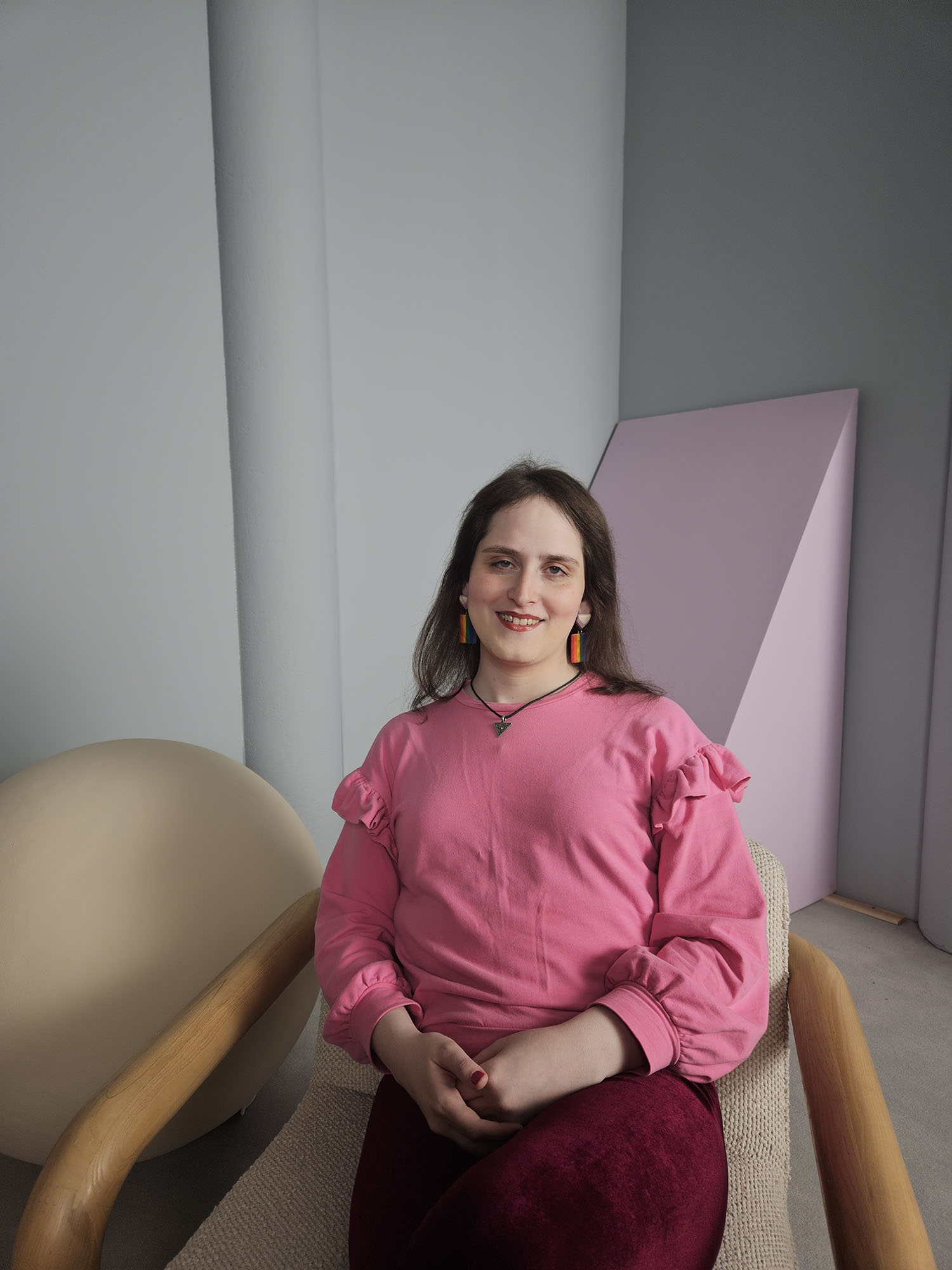
In 2019’s Becoming Eve, writer Abby Stein details growing up in Brooklyn’s Hasidic Jewish community, where she became a rabbi before leaving to explore her identity as a trans woman. Since then, she’s fiercely advocated for Palestinian rights and the city’s LGBTQ+ residents during a pivotal moment.
Where do you feel most at home?
In New York—specifically at protests. That’s weird, but that’s it. Showing up at a protest— whether it’s about ICE, Israel-Palestine, or recently, gender-affirming care—there’s something special about those spaces. Sometimes it bothers me that it’s always the same people. I know everyone, and part of me thinks we should expand and have bigger groups. But at the same time, it’s where I feel at home. These are people I’ve gotten arrested with. These are people I’ve sat with for days, figuring out what our actions are going to be. They’re also people I go hang out with at bars or clubs afterward.
What do you think is your biggest contribution to the culture?
I think I’m known for advocating at the intersection of fundamentalist religion and gender, transgender identity, and sexuality. I really love having conversations with people who don’t think you can be all the things that I am. Many people have asked me, “What do you mean you’re trans, but you’re also a rabbi?” Both within queer communities and beyond, I love the idea that you can be many things at once.
What keeps you up at night?
Right now it’s mostly health care. I’m afraid that one day I’m going to show up at the pharmacy and they’re not going to cover
my hormones anymore. This is something I’ve had nightmares about. There’s a lot of work that I’ve been doing, including with the new administration and Mayor Mamdani. I’ve been working on access to things like hormones because it truly freaks me out. For example, over the past few weeks a lot of hospitals stopped providing care for trans youth, which is very scary because I rely on these systems on a daily basis.
What’s one work of art that got you through an important moment in your life?
I usually like watching comfort TV shows. I make fun of myself a lot for it [but] I watch a lot of police procedurals. I find them very mind-numbing, but I also call them sci-fi, because in those shows the police are always the good guys, and that’s not always the case in real life.
What’s something people get wrong about you?
People who know me from where I grew up expect me to be very anti-religion, which I am not. The flip side of that coin is that people who know me as a rabbi expect me to be a lot more religious than I am, at least in a conventional sense, because I’m not observant in any traditional way.
To read more from the 2026 CULT100 honorees, see the full list here.








 in your life?