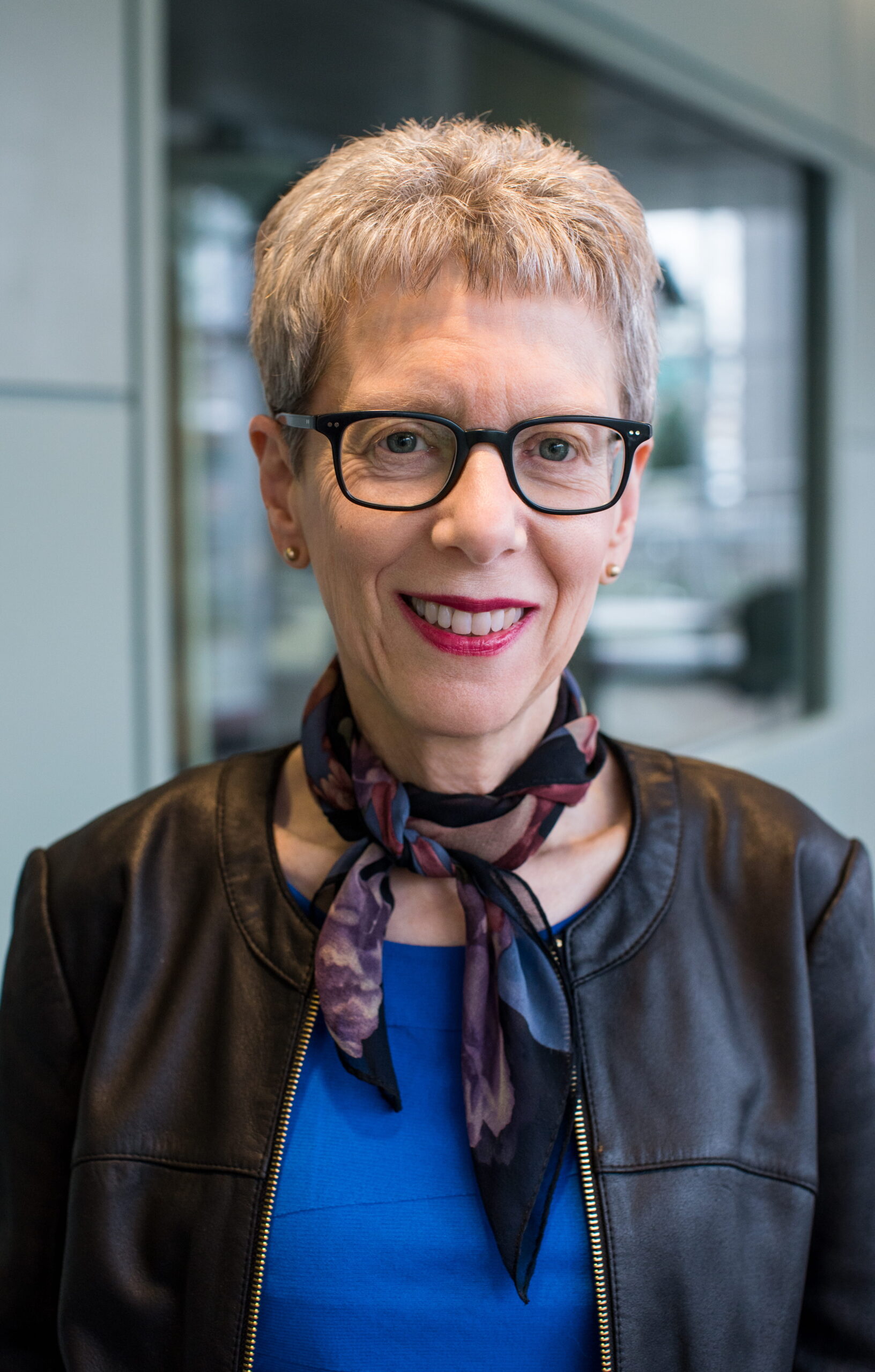
These days, everyone has a podcast. But the influx of amateurs and hobbyists has only proven the value of a skilled radio interviewer like Gross, host of NPR’s Fresh Air since 1975. (She now shares the role with Tonya Mosley.) Amid funding cuts and upheaval in the news industry, she consistently gets to the heart of what makes her guests human.
What do you think is your biggest contribution to culture?
I’m especially proud of the Fresh Air archive, which dates back to the 1970s when Fresh Air was a local program. So many remarkable creative people are no longer alive, but we have recordings of them that capture, I hope, both that moment in their lives and their reflections on earlier experiences.
Was there a point in your career where you considered leaving it behind?
There was a point in my career where I thought of leaving Fresh Air before Danny Miller, our longtime executive producer who just retired, came along. The facility back then was really run down. There was a day when urine from the upstairs bathroom leaked into my coffee cup and I just thought, I’ve got to get out of here. I was doing a three-hour show, five days a week, by myself.
What would you like to see more of in your industry and less of?
I hope that audio podcasts aren’t totally replaced by video podcasts because I think we’d be losing the unique, special qualities of audio.
What gets you out of bed in the morning?
Anxiety and breakfast.
When you were little, what were you known for?
In grade school, I was known for having a wiggle in my walk. Now I’m pretty sure it was scoliosis.
What’s one work of art that got you through an important moment in your life?
I’m not the vengeful type. However, there are songs from Sweeney Todd that definitely run through my mind when I’m really pissed off at someone.
Name an influence of yours that might surprise people.
I like opera. What got me started was excerpts of an opera in Margaret, written and directed by Kenneth Lonergan. The two main characters, a daughter and her mother, have been at odds with each other throughout the film. But at the end, they go to an opera together and they’re so moved by the opera that it suddenly brings them together. I saw those two scenes and I thought, That’s really beautiful. I should go. And I did, and I just immediately fell in love with it.
I had no education in opera. The singing always felt so kind of forced to me. I couldn’t comprehend why anybody would like opera until the right moment when I thought, Hey, I need this in my life. The one that I love the most is by [Francis] Poulenc. It’s called Dialogues of the Carmelites. It’s about nuns who have to stay in their convent and uphold their religious vows or else be guillotined during one of the French revolutions.
What’s the question that you ask yourself most often when you’re making your work?
When I’m working on the show, doing an interview, the question I ask myself most often is, Is this interesting? And if not, How do I make it interesting? And, Is this confusing? And if so, How do I make it not confusing?
Where do you feel the most at home?
At home. And at the radio station.
What are you looking forward to this year?
Spring and summer.
What keeps you up at night?
My problem is I don’t have time to be in bed long enough to get enough sleep. Once I’m in bed, I sleep okay.
To read more from the 2026 CULT100 honorees, see the full list here.



 in your life?