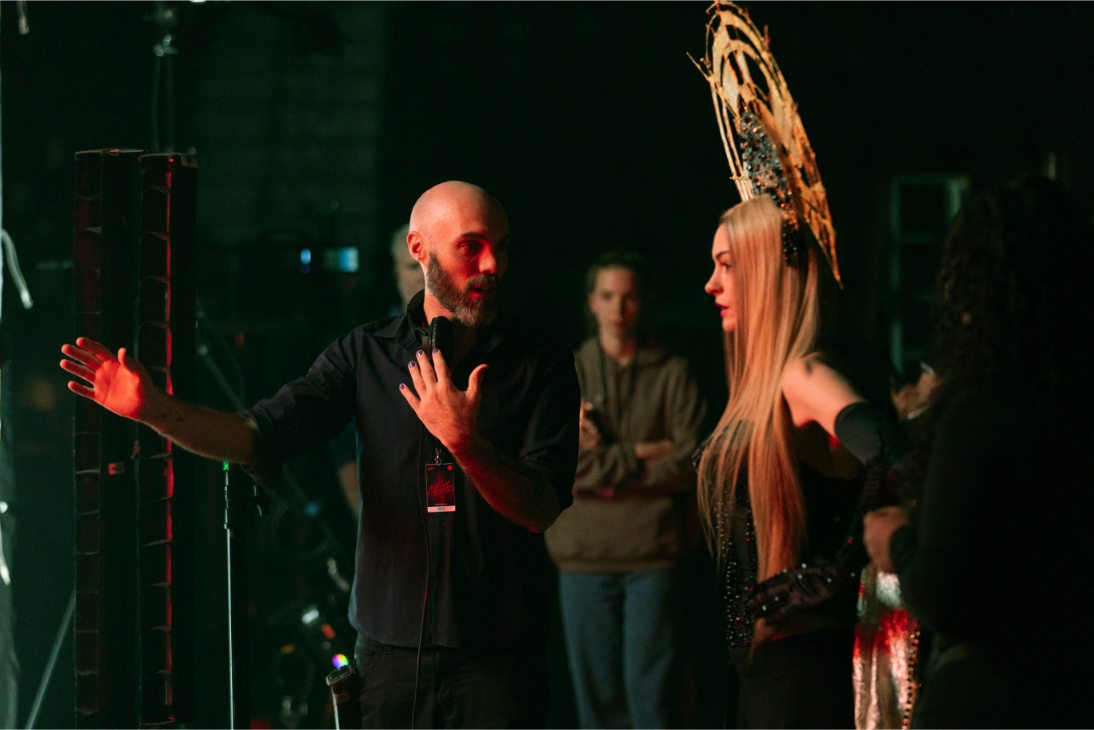
David Lowery is the first to admit that he’s had a weird career. At first blush, haunting, almost allegorical, films like 2017’s A Ghost Story and 2021’s The Green Knight don’t have a lot in common with sweeping, IP-driven movies like 2023’s Peter Pan & Wendy or even a Malickian crime romance like 2013’s Ain’t Them Bodies Saints. So when Lowery announced his latest, Mother Mary, a psychosexual two-hander about a pop star (Anne Hathaway) and her estranged costume designer (Michaela Coel), there was only one mandate: leave all expectations at the door.
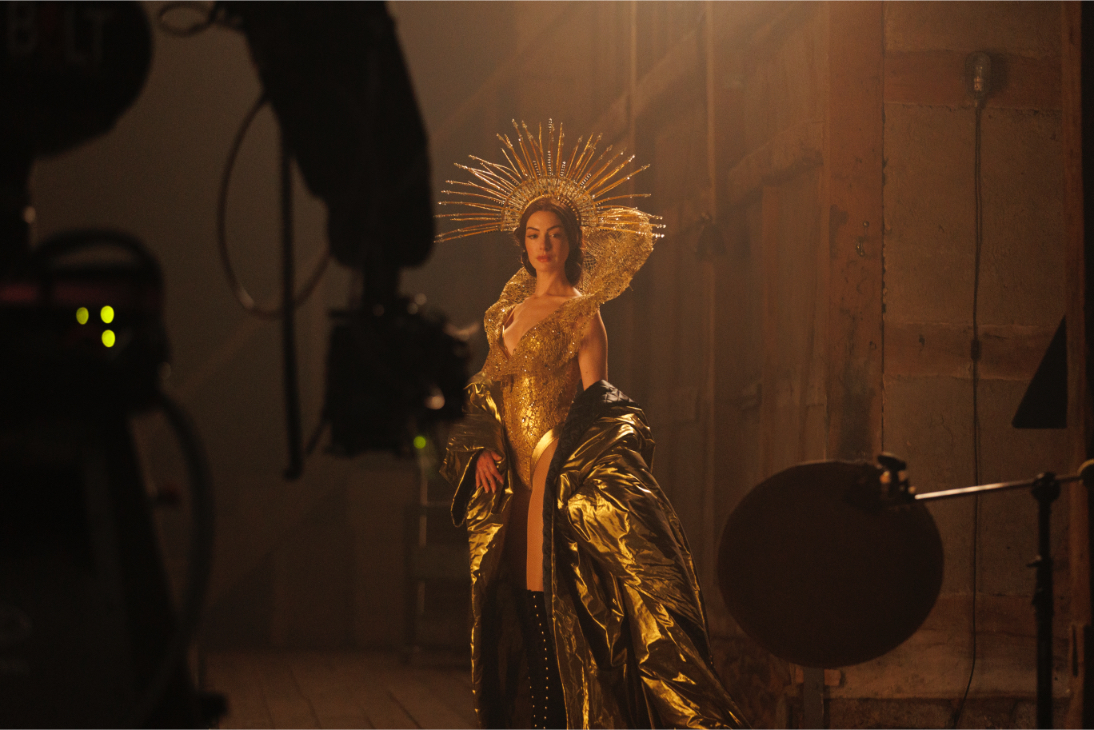
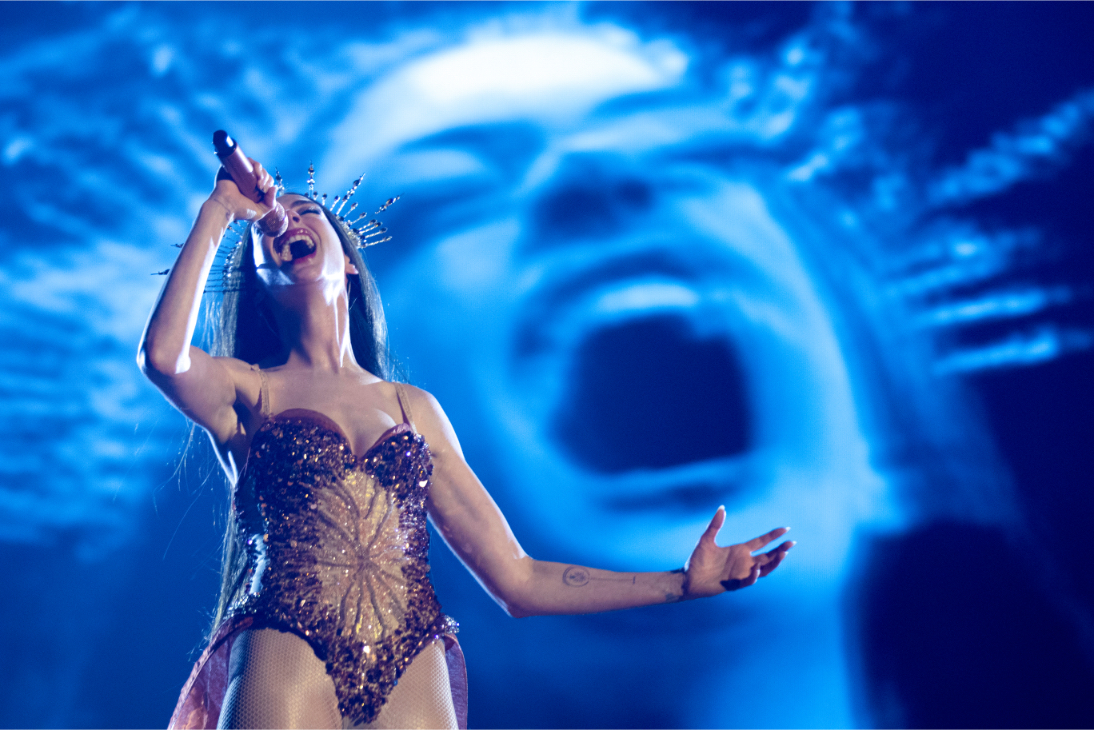
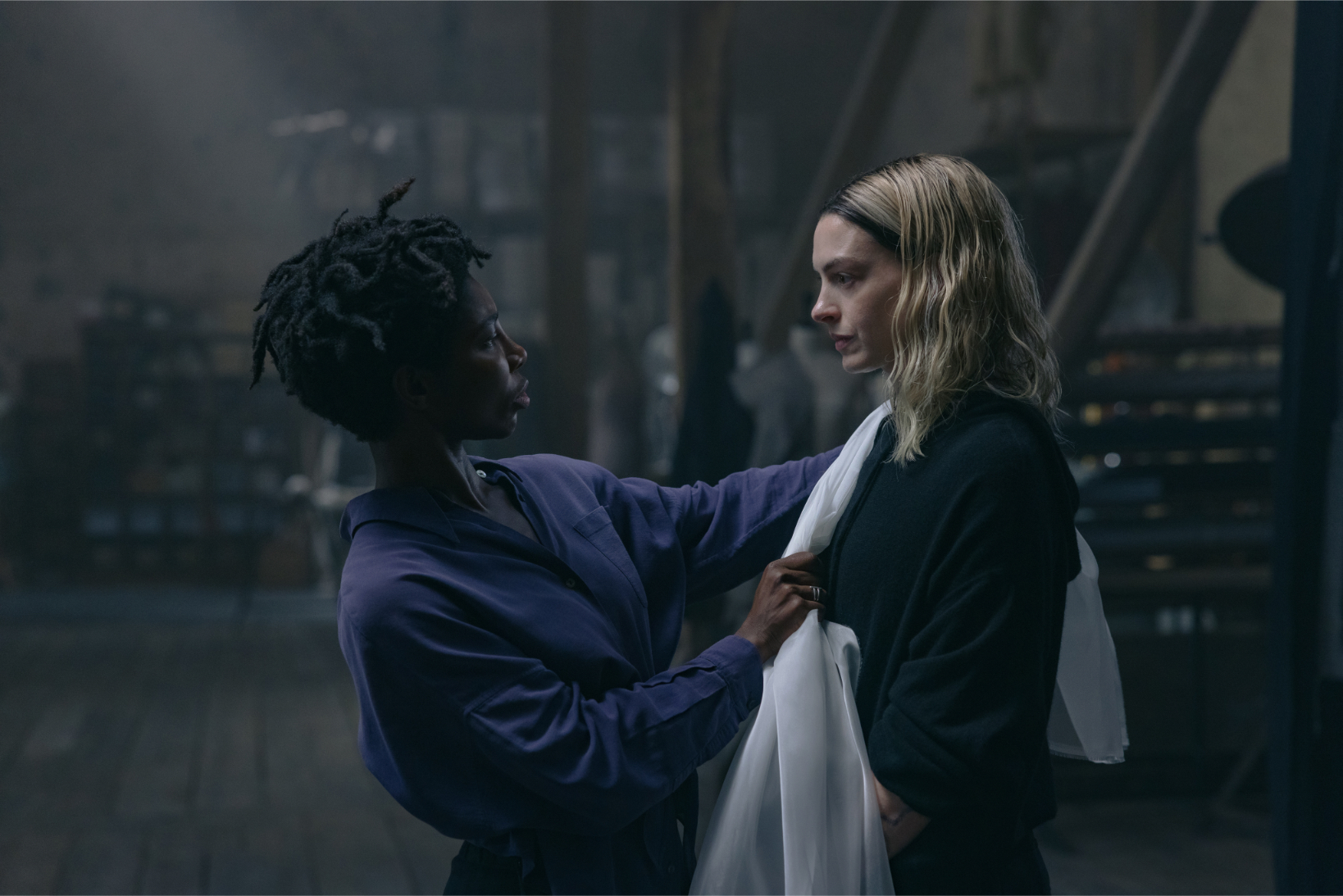
Hathaway stars as the titular Mother Mary, a veteran performer who finds herself returned on bent knee to the doorstep of a fashion designer and former creative collaborator Sam, begging her to create one last divine garment. The pair haven’t spoken for years by the time Mother Mary appears soaking wet and stringy-haired. Sam remembers her as larger-than-life and ruthless, but the audience finds Mother Mary diminished and trembling, clearly shaken by an encounter, but with what she cannot say. What ensues is a magical realistic chamber piece, largely confined to a mouldering farmhouse and some of the biggest stages in the world as Mother Mary and Sam’s struggle for the upper hand turns into something much more mysterious.
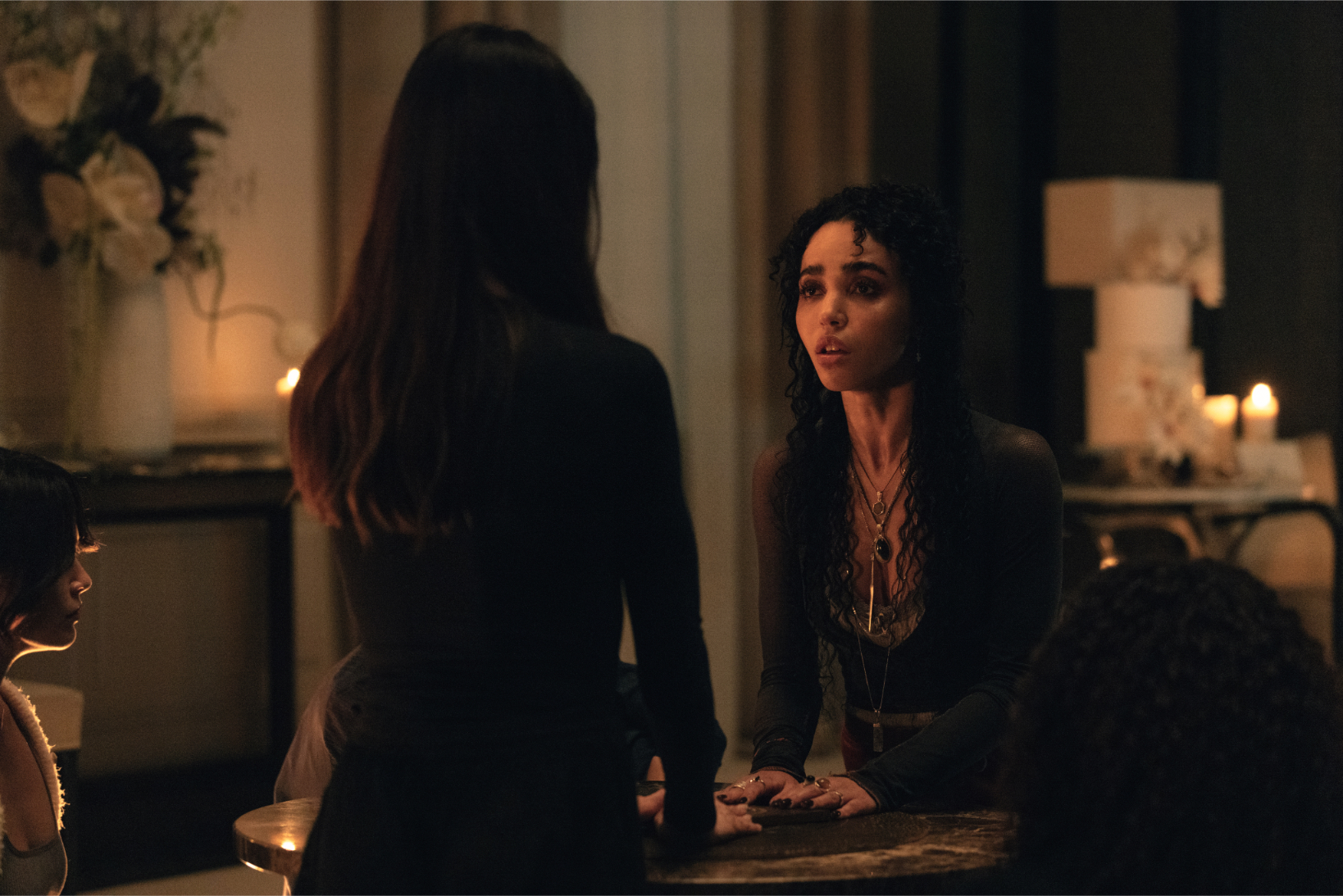
The film has a fetishistic edge, indulging in the cold steel of a pair of scissors, fabric that binds, and Mother Mary’s signature confining headdresses (a callback to the sublime costuming of The Green Knight.) But what eventually emerges is a question of creative identity: Mother Mary has lost her way artistically, and for a woman who has all but eradicated the boundary between her self and her onstage persona, she risks not just a kinky loss of control but a more complete annihilation. After a chance encounter with the divine in a hotel room (featuring FKA twigs in a metatextually charged role) Mother Mary’s fears suddenly become much more embodied.
As a director who, despite great success, is not widely known for one particular style of filmmaking, Lowery may not seem all that similar to his protagonist, who puts herself and her body at the forefront of her art. But the film is a deeply felt expression of his own creative self-doubt, which reared its head five years ago. “The script began as a repository for all these emotions I was feeling while I was making The Green Knight,” says Lowery. “I was in a place in my life where I wasn’t quite sure who I was as a filmmaker, who I was as a person.”
Why use a pop star as an avatar to work through these feelings? Because he’s a fan. As a self-described “pretentious and goth” teen growing up in Texas, Lowery came to pop music late, but when he did, it came on strong. The kind of artistic expression that inspires near-religious devotion in fans felt ripe for expression to the filmmaker. Lowery knew that for the film to land, he would need music that felt real and captured that fervor. So, he scored the ultimate coup: seven original songs written by Charli XCX, FKA twigs, and Jack Antonoff, the mastermind behind dozens of hit songs from Taylor Swift, Lorde, Lana Del Rey, and more modern pop royalty. The resulting album is woozy, dangerous, and, yes, sounds like actual pop music that could be tearing up the charts. It’s the necessary backtrack to the film’s crescendo, collapsing the boundaries between bodies, onstage and off.
In an intimate conversation with CULTURED, Lowery opens up about his favorite pop divas, making movies instead of going to therapy (and then also going to therapy), and why creating art can feel like life or death.
You’re in Dallas?
I would’ve moved a long time ago, but it’s become a nice place to just go in between projects. My wife’s a director as well, so we’re always needing a reset somewhere.
We’ve actually been looking at houses in both New York and LA because we just want to get out of Texas. But we’ve been working again. Our cats go on location with us too.
Are they the two emotional support cats on set?
I wish I had them when I was making Mother Mary. My wife was making a movie in London, so I had stuffed replicas of the cats made so that she could see familiar feline faces. It sounds utterly psychotic, I know. Then she brought them to Germany for me when we were shooting Mother Mary. So they were around in effigy.
What is your relationship to pop music?
My parents wouldn’t let me listen to modern music when I was growing up, so I missed out on Michael Jackson and Madonna. By the time I got to high school, I was very pretentious and goth and gravitated towards Smashing Pumpkins, Nine Inch Nails, and Tori Amos—anything that was dark and moody. I looked down on anything that was fun or poppy or that was played on KISS FM.
But eventually those hooks and earworms worked their way in and expanded my horizons; I loosened up and realized that not only was it okay to have fun, but that pop music could be just as emotional, if not more so than the music I’d been limiting myself to. By the time I was making Ain’t Them Bodies Saints, a movie that was openly inspired by American folk music, I was listening to Taylor Swift and Kesha alongside Nick Cave and Joanna Newsom. I guess you could say that Mother Mary represents the tension between these two corridors in my taste, but I don’t believe there’s much tension there at all.
Pop music wasn’t the only type of music I loved, but I found something cathartic in it that I couldn’t find anywhere else, and part of the appeal of that catharsis came from the fact that it was so widely shared. Is pop now my favorite category of music? Sometimes, but I’m also less into that sort of rigid categorization; Nine Inch Nails and Taylor Swift have more in common than anyone probably realizes. Reputation probably has a lot of Pretty Hate Machine in it!
Who are your favorite pop girls?
Kesha and Lorde are two that I feel personally connected to in a really deep way. When we were making Mother Mary, Kesha’s second to last album [Gag Order] that she produced with Rick Rubin came out, and that was on repeat the entire time. It’s so interesting to me that this artist who represents so many aspects of life that I don’t participate in, or that aren’t a part of my life, connects to me so deeply. For some reason there’s something about her music that always resonated with me, even going back to her first singles.
With all great pop music, when you listen to it, you feel seen and heard, and listening to Lorde, I feel that way. Even though we are completely different people from different generations, her music feels autobiographical to me in a very specific way.
The Green Knight is a film set in mythic time and space, and I see a lot of similarities in how Mother Mary is staged. Where does your interest there come from?
A lot my extremely Catholic upbringing is evident in the film. When I go to a pop show or even when I’m listening at home, I find a lot of that transcendent energy that people find in religious gatherings. I wouldn’t go so far as to say I’ve exchanged church for a stadium tour because I gave up going to church a long time ago and I don’t go to stadium tours enough, but there is a sense of divine iconography at play in the sphere of pop music. That is fascinating to me on a cultural level.
We all watch, revere, and pay devotion to an artist in spite of the fact that they are usually singing about something very personal to themselves. We are all there sharing in that experience collectively, taking their personal emotion, and processing it as our own so that everything that they went through becomes a mirror of something that we’ve gone through. It feels devotional.
At its heart, this is a story about a creative relationship. Were you inspired by any of your own creative relationships?
Mother Mary really was really born of a sense of personal unrest. The script began as a repository for all these emotions I was feeling while I was making The Green Knight. I was in a place in my life where I wasn’t quite sure who I was as a filmmaker, who I was as a person. Rather than going to therapy, which I probably should have done, I just started writing this screenplay.
I’ve had a weird career. I have made a lot of seemingly very disparate movies, which in the moment that I make them feel like the right move. But then I wonder, Is one version of myself betraying another? That sense of very internalized personal betrayal was where the initial argument in Mother Mary began. You could very literally break this movie down into bits and interpret it as a conversation between the version of me that makes movies like The Green Knight and A Ghost Story, and the version of me that makes movies like Peter Pan & Wendy and Pete’s Dragon.
The truth is that the both of those filmmakers are me. And all of those films are incredibly meaningful and make sense to me. But there’s also a tension there that I haven’t quite resolved, and this screenplay was an attempt to resolve that.
The characters eventually began to take on lives of their own, and their conflict began to eclipse whatever personal discontent was at its heart. They became characters, some of whom were indeed based on creative relationships I’ve had where we’ve had disagreements, where we’ve had to make hard decisions. But it ceased to become literally autobiographical at a very crucial moment. I think it was important for that to happen or else the movie would be nothing but a therapy session.
Hey, many good movies have been made because people didn’t go to therapy.
I started therapy after this movie. I was like, Oh yes, this is what I was missing.
In creative industries, relationships are so often inflamed because people’s output is really closely tied to their sense of self. At the same time, pop music and films are really collaborative endeavors. I’m curious about how you tried to express creativity in the film.
Film is the synthesis of so many different art forms—while I may be writing my own screenplays, directing on set, and editing the films, I could not do it without all of the other artisans and craftspeople who are giving their effort and time. I do sometimes wish that I were a better writer and could just be a novelist because a novelist can sit down and create something entirely on their own.
I’ve not had the opportunity to put this in words before, so I’m going to be fumbling in the dark as I try to draw this comparison. The type of art that I’m interested in making has a lot in common with pop music, in that it is something that is meant to resonate with multitudes in unison. I want to make films that people go to the cinema and experience together in the same way that musicians in general want to play their music for people in an environment where everyone can experience it collectively.
If I were acting in my movies, which I will never do, it might be a little different. I don’t put myself ahead of or in front of them. I’m fascinated by someone who is the forward facing manifestation of all that they want to convey to the audience. I can hide behind the camera. But a musician like Mother Mary is the embodiment of their expression, and there is very little separation between the two.
There is an incredible book by Maggie Nelson called The Slicks. The Slicks is about the way in which an exceedingly famous person like Taylor Swift has to both keep a disconnect between an audience and who they really are, but also let who they really are be the driving force of their art form. It’s a terrifying concept to me as a very shy person, but also incredibly potent.
So you’re more comfortable when you have a less immediately legible identity as a director?
There’s fun in being unpredictable. It’s never “one for me then one for them,” commercially-speaking. They’re always for me. I would never have made Peter Pan & Wendy if I didn’t feel intensely connected to it. I’ve got a giant hook tattoo because that movie means so much to me. I’ve got a Green Knight one too [gestures to an axe tattoo on his forearm]. I have get my Mother Mary one now that the movie’s done.
What are you going to get?
I think scissors will make the most sense, in keeping with all the sharp objects I seem to have. I can see the way in which each film leads to the next, and I can recognize myself in all of them, but there is an anonymity to them at the same time that allows me to hide to a certain extent. Sometimes I wish that I had a more recognizable trademark. Not to make it sound so highfalutin, but more often than not, the choices that I make are guided by something deeper than aesthetics.
How did you go about casting and bringing on collaborators? I’ve never seen Anne Hathaway in a role like this.
I needed three things. Number one was just an exceptional actor, who could make every single syllable count. Number two, I needed someone who could play a pop star. In my completely naïve mindset when I began this process, I thought if someone can sing, they’ll be able to do it, only to find out that being a great pop star requires a very specific type of musical talent. Thankfully, in casting Anne, I found someone who is willing to go there and to go to pop star bootcamp. It wasn’t just a case of being able to hit the high notes. You have to be able to not hit those high notes and understand why it’s important not to.
Can you sing, but also, can you slay?
Exactly. The third thing was I wanted someone who was going to be able to bring their own celebrity to the movie on a metatextual level. This is a character who is meant to have been in the public eye for decades. When you cast someone, you can either lean into who they really are, or you can close that door and run the other direction. They’re both valid approaches, but if you lean into it, there’s a lot that can be gained from doing so.
It’s funny that you say writing the movie was like therapy because I was thinking about how the film is like couples therapy, but also a bit like a cat and mouse game.
The characters are in a relationship that is perhaps even more tightly bound than a romantic partnership. There’s something more intrinsically interconnected between these two artists that burn incredibly bright and passionately.
It is something that I’m still unpacking. I was trying to think of the right way to say this, but when I sat down to start writing this in 2019 in an attempt to soothe myself, to understand what I was thinking about being an artist, there must have been so many other aspects of myself in my subconscious that instantly saw this object forming and rushed to grab onto it. It contains so many aspects of me and everyone I worked with that I’m now starting to unravel. There were so many aspects that felt autobiographical to their own experience that had nothing to do with me.
I suspect, as a believer in the collective unconscious, that I was tapping into something that I didn’t know. I’m gonna get real magical thinking here. But it gave voice to all sorts of feelings that I didn’t know I was capable of feeling and that I didn’t know so many other people were feeling as well. As we all felt those feelings collectively, it somehow gave birth to this movie. That sounds really cheesy, but there was a lot of that was going on while we’re making this film.
Did you do a lot of group activities with your actors to get in the right head space?
A lot of conjuring. We had moments on set where it really felt like we were about to cross from one reality into the next. I can’t quite reconcile that with my own objective belief in the tangible world. But there was something strange afoot while we were making this film.
Most importantly, you managed to get the music right, which is always the hardest part about making a music movie.
We had incredible musical collaborators in this film—Jack, Charli, and twigs—but I can’t discount the degree to which Anne led the charge too because she was the one that was gonna have to sing it. She really pushed us to get the music to a place that was exceptional. She would be in the studio on weekends reworking tracks, trying to nail the vocals. When I hear the changes that you are making, I can only be grateful that she cared that much.
But we also had some of the best in the business. I remember Charli sent us one song, and I sent back notes on it because I needed it to fit the movie in a certain way. And, in response—she didn’t say that my notes were wrong, but she did say, Here’s why I think it would work better if we did it the original way. And all of a sudden, I just saw pop music in a different way. She understands pop music and the way it can function for an audience in a truly uncanny way.
I know we have to wrap up, but I’m dying to know, did you like The Moment?
The Moment felt so real to me. I know Charli just enough to know that it’s not real, but also watching it, rather than laughing, my anxiety was through the roof. It felt so emotionally true to what it’s like to not know how to be yourself as an artist but feel like you need to be something for other people. It felt very emotionally honest.
More of our favorite stories from CULTURED
How The Pitt’s Patrick Ball Went From Role-Playing Corporate Trainings to Starring on Broadway
The 2026 CULTURED Power Advisor List: Meet the Art Advisors Shaping the World’s Top Collections
A New Book Unearths the Heated Rivalry Between Artists Peter Hujar and Paul Thek
Speed Round! 13 Critics Review 25 NYC Shows Before You Finish Your Morning Coffee
Sign up for our newsletter here to get these stories direct to your inbox.




 in your life?