
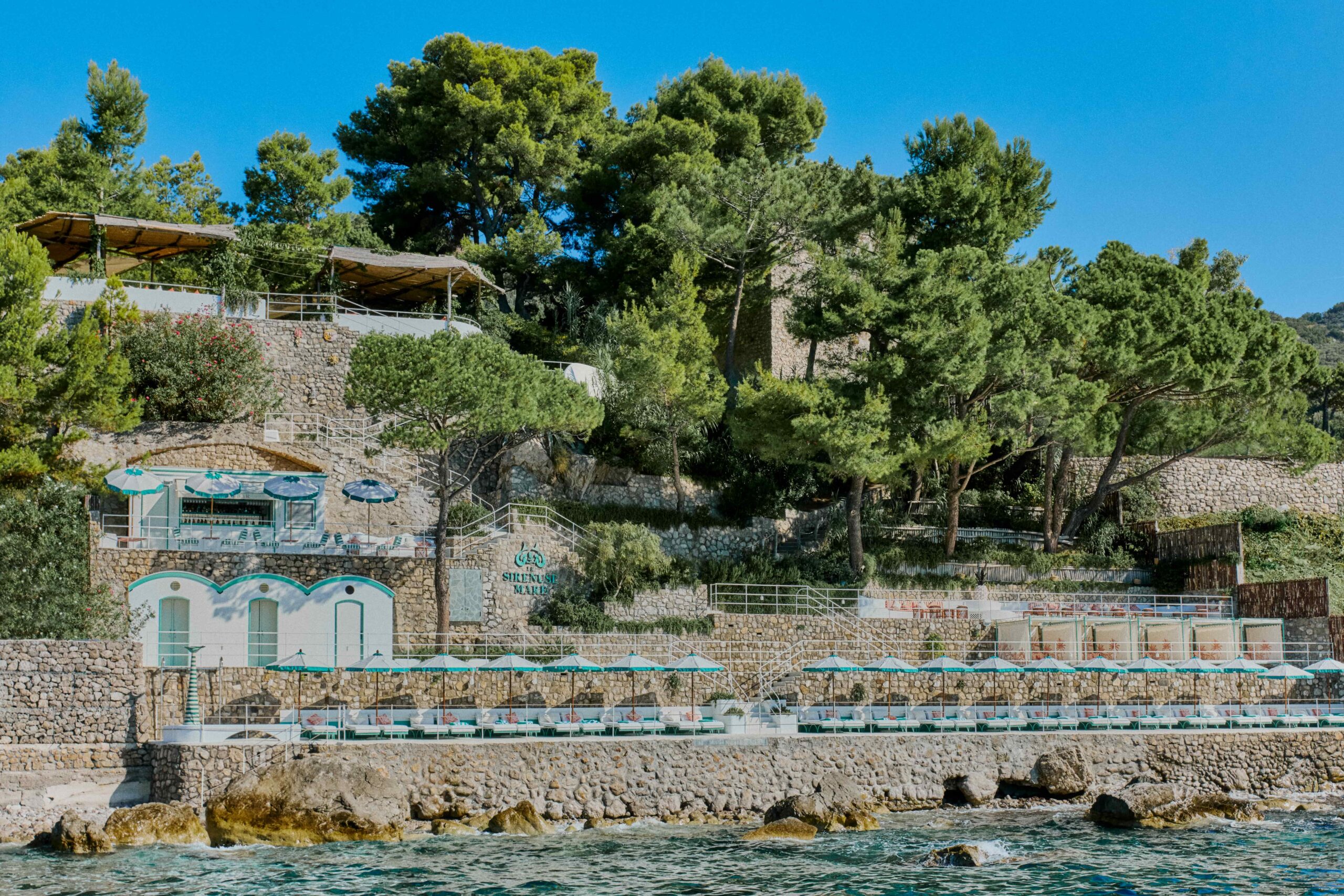
Le Sirenuse turns 75 this year, and the family-run Italian hospitality group is celebrating the milestone with the opening of Le Sirenuse Mare, a new beach club that doubles as the first flagship for fashion and lifestyle brand Emporio Sirenuse outside Positano (it’s a quick 25-minute boat ride away).
Since the third generation, comprised of Aldo and Francesco Sersale, joined the family business in 2020, the hotel has quietly expanding its purview: a pre-season Dolce Vitality retreat, a speakeasy-style Don’t Worry Bar, and now a beach club that blends contemporary sculpture with curated cocktails. The only limit to its expansion is a time-honed family rule: no novelty for novelty’s sake. Le Sirenuse Mare will have the chance to prove its mettle with an opening on April 23.
Ahead of the occasion, we sat down with the family—including Antonio, son of one of the founding siblings, Franco; his wife, Carla; and their children, Aldo and Francesco—to talk family, legacy, and what it actually takes to steer a 75-year-old hotel into the future without losing its original charm.
Since Aldo and Francesco joined the operation, the hotel has seen new projects including the pre-season Dolce Vitality retreat and the Don’t Worry Bar. Where is the internal family dialogue about the ongoing vision for Le Sirenuse headed?
Aldo Sersale: What is most interesting for us is that the dialogue is very continuous and very natural. We do not sit around a table trying to invent “new projects” for the sake of novelty. The conversation is usually about how Le Sirenuse can stay alive, curious, and relevant while remaining unmistakably itself.
There is a strong family discipline around asking whether something truly belongs here. That is probably the most important internal conversation. A project may be exciting on its own, but if it does not feel organic to Le Sirenuse, then it is not right for us. Dolce Vitality and Don’t Worry Bar, although very different, both came from that same principle: they felt like authentic extensions of the world we have inherited, rather than attempts to impose something new for effect.
The beach club will house the first Emporio Sirenuse flagship store outside of Positano. How will that impact the expansion of the line?
Francesco Sersale: The store at Le Sirenuse Mare marks an important step for Emporio because it reflects how the brand has evolved beyond the narrow category of resortwear. From the beginning, Emporio was never just about holiday clothes, but about expressing a wider world shaped by travel, craft, decoration, and a distinctly Italian sensibility.
What this new space allows us to do is present the brand more completely. At Le Sirenuse Mare, fashion sits alongside objects, ceramics, textiles, and architecture, which feels very true to how we think about Emporio today: not as something seasonal, but as a broader way of living and dressing. In that sense, the flagship is less a departure than a fuller expression of what the brand has always been becoming.
As Le Sirenuse approaches its 75th anniversary, how will you continue to balance the intimacy of a family home with the logistics of a 58-room property?
Antonio Sersale: Le Sirenuse remains, above all, our home. Since our sons returned from the United States in 2020, it has become theirs as well. Each morning, we gather for breakfast in the restaurant before beginning our day. We welcome our guests for drinks and dinner, and over time, many have become dear friends whose annual visits we cherish. For us, there is no real distinction between work and leisure—that is part of the magic of it all: we have fun.
The Artists at Le Sirenuse program, which curates site-specific commissions, is now entering its second decade. Can you walk us through the selection process for this initiative?
Antonio: In the early 2010s, we met Sam Keller and Tracey Emin, who visited Positano on two separate occasions. Though very different in character, both are towering figures in the art world. Around that time, we became intrigued by the idea of collecting and began discussing it with Silka Rittson-Thomas. With her guidance, we laid the foundations for the Artists at Le Sirenuse program.
Carla Sersale: Our vision was to create a site-specific collection of contemporary works by artists invited to Le Sirenuse, drawing inspiration from the hotel and from Positano itself. The first artist was Martin Creed in 2015, who created his very first double neon piece. He chose to suspend it from the apex of a vault so it could be viewed from both sides. We never set strict boundaries when selecting artists. Antonio and I share a strong affinity for similar works, and from the very beginning, Silka understood our perspective deeply. We are drawn to color and to art that conveys a sense of positivity.
Does the family still actively collect antiques for the hotel, or has the focus shifted to site-specific contemporary commissions?
Carla: Antonio’s father’s favorite pastime was browsing Sotheby’s and Christie’s antiques catalogues in search of pieces to decorate the hotel. Although we acquire fewer items today, we have continued this tradition. All our bedrooms and communal spaces are furnished with period pieces, tribal rugs, and antique prints and paintings. Together with the contemporary artworks, they create a seamless and eclectic décor—one that feels as natural as a private home.
After 75 years in Positano, why was now the right moment to expand to the shores of Nerano?
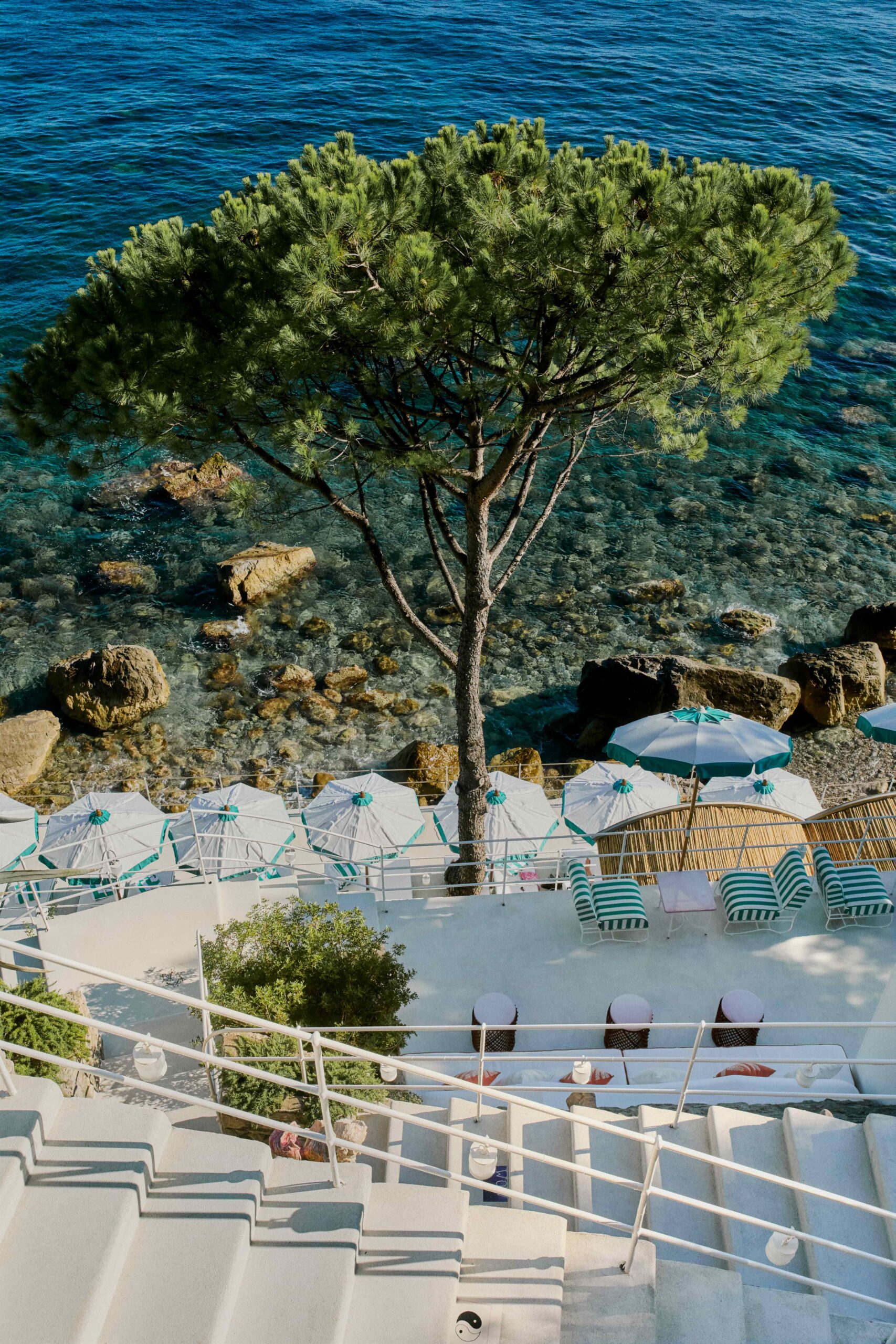
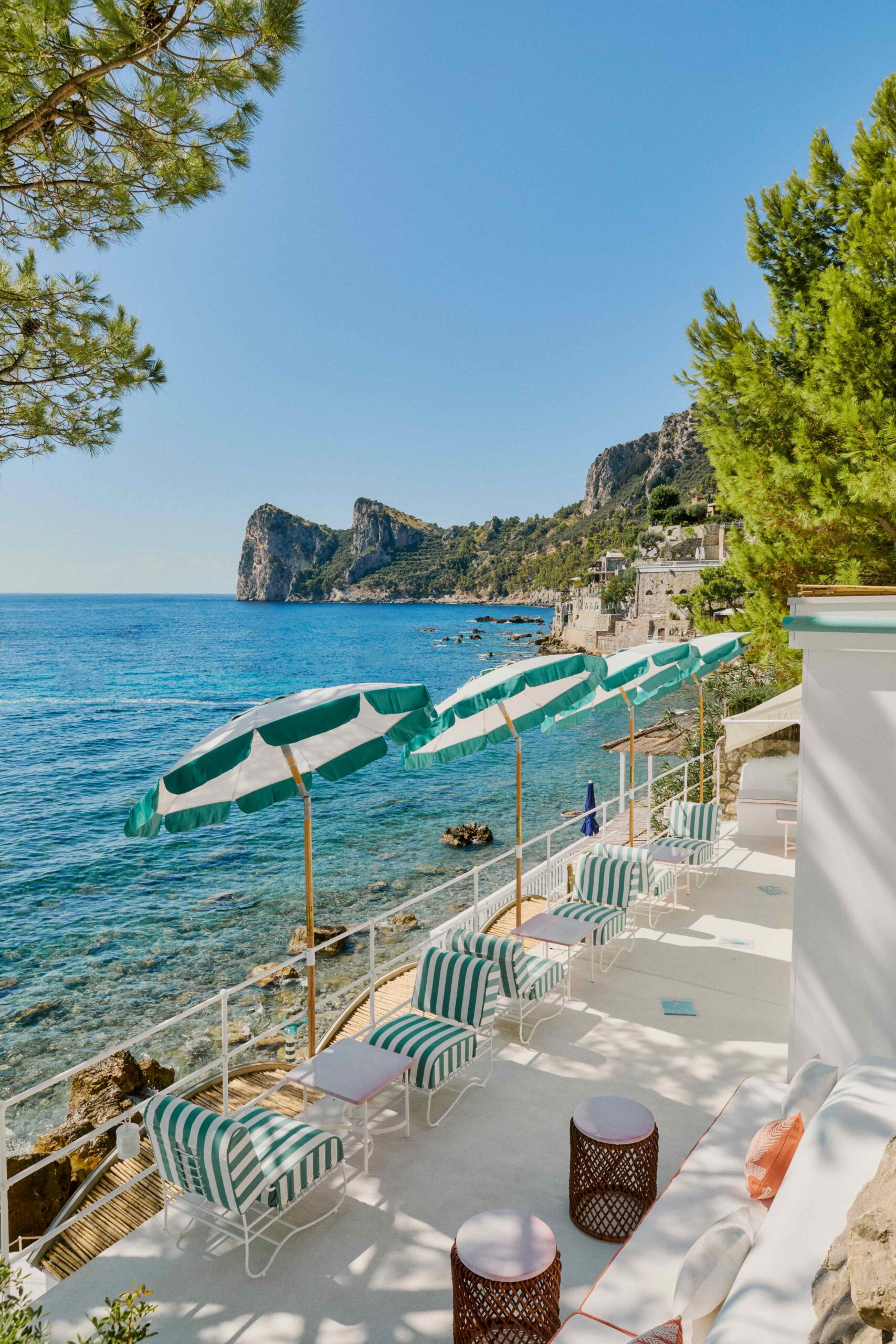
Antonio: It was perfect timing. Aldo and Francesco had returned in July 2020 after more than five years in the States, and we visited the property together that November. From the moment we saw it, we recognized the extraordinary potential of the land—even with a dilapidated cement tennis court occupying most of the space. Transforming the place took years. We planted 12 pine trees, which now feel as if they’ve always been there, framing a garden restaurant perched above the sea. Every detail was carefully curated with love and passion, and we are thrilled to finally open. Nothing would have been possible without our boys.
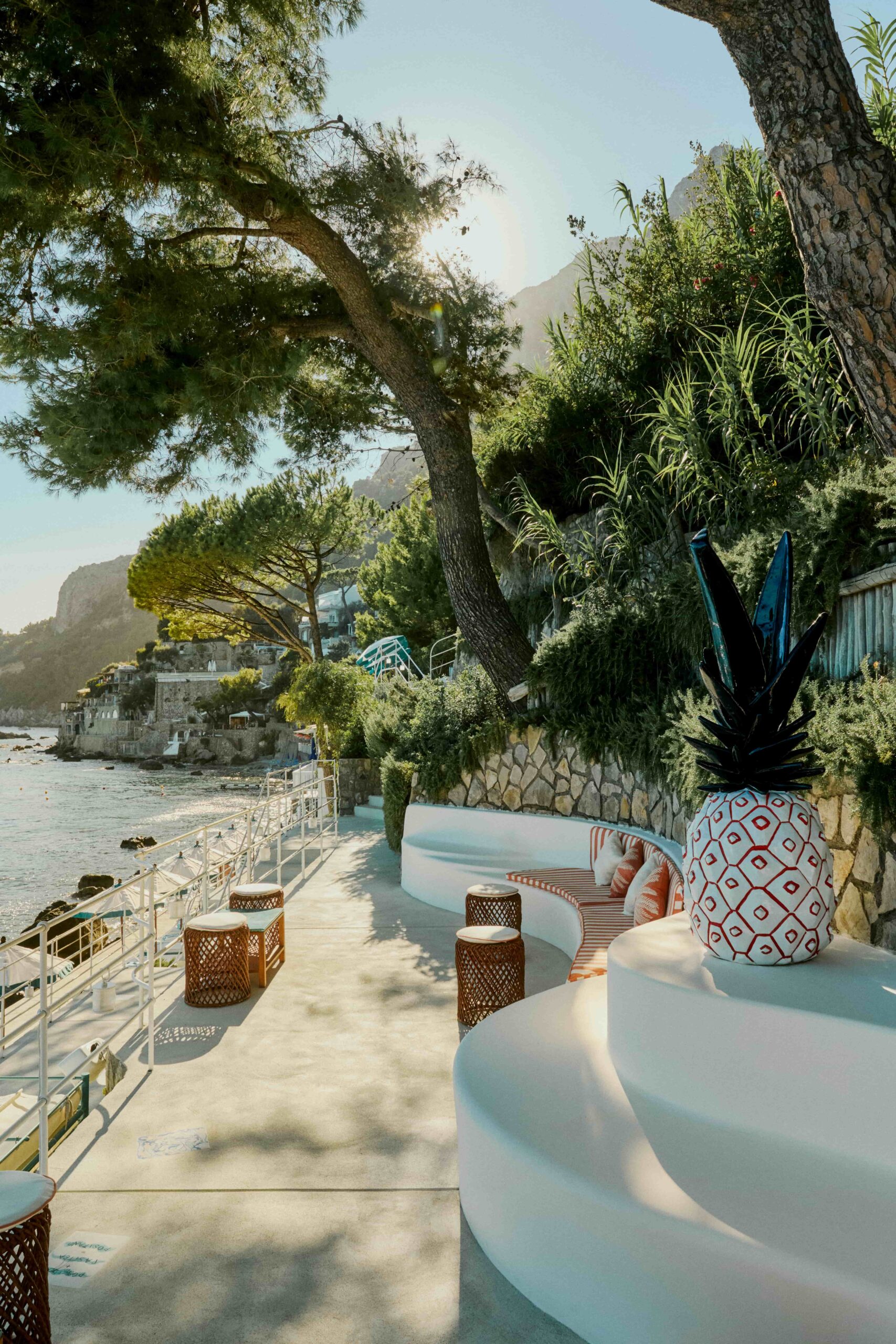
The new beach club features monumental sculptures, including Rose Wylie’s pineapple and Giuseppe Ducrot’s 3.5-meter fountain. Why was it important to bring this level of contemporary art to a beach setting?
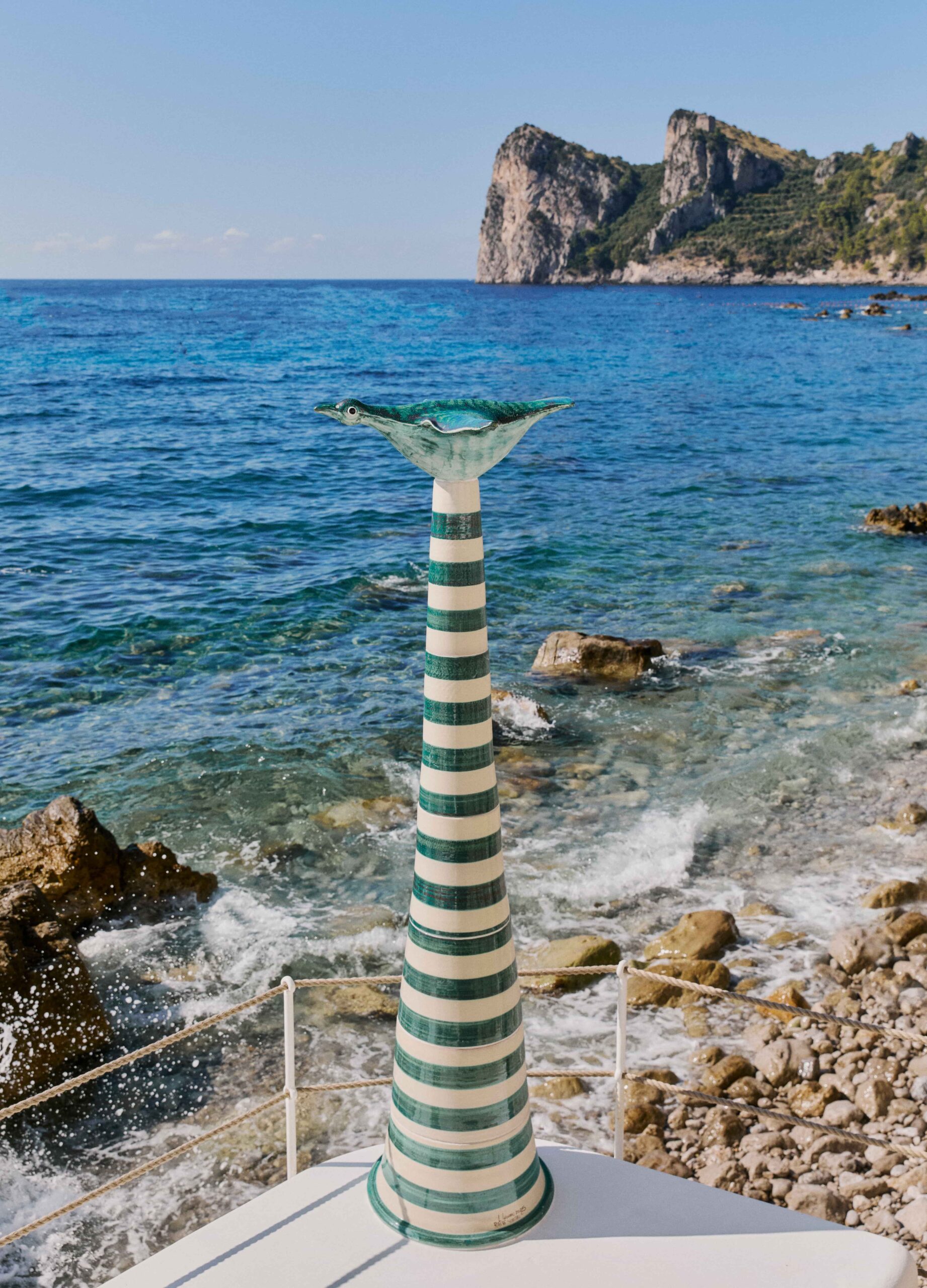
Antonio: It was a natural evolution. Giuseppe Ducrot’s monumental yellow ceramic fountain brought us immense good luck at Franco’s Bar when we opened it in 2015. So, naturally, we felt that opening a new place called for a new fountain by Giuseppe. And he created the most incredible decorated ceramic wall, complete with two small benches where people can sit—the color inspired by the surrounding rocks.
Carla: Antonio fell in love with Rose Wylie’s pineapple when he saw it at Frieze London. It turned out to be the perfect size for the lounge area on the lower terraces of our beach club, naturally shaded by ancient pines—a truly lovely spot. Rose Wylie’s piece felt so perfect for its location that we decided to name the bar Rose’s Bar and designed the drinks menu using her drawings. Embedded in the stairs’ cement are 38 ceramic sheets reproducing drawings and paintings by Alba Clemente. She imagined her artist’s folder scattered by the wind, with all the pages falling everywhere. The result is a poetic work titled Il Signor Mare. Other ceramic works by Lucio Liguori also decorate the space. We simply love them all.
More of our favorite stories from CULTURED
How Blue Ribbon Survived a Mob Run-in and Transformed Late-Night Dining
Why Cookbooks Are the Next Frontier for Narrative Writing
You’ve Heard About the New Museum’s New Building. The New Show Is Even Better.
Everyone Was Afraid to Touch Nadav Lapid’s Satire of Israeli Artists. Now, It’s Being Released.
Where 27 Artists Are Hanging Out in New York Right Now
Sign up for our newsletter here to get these stories direct to your inbox.

 in your life?