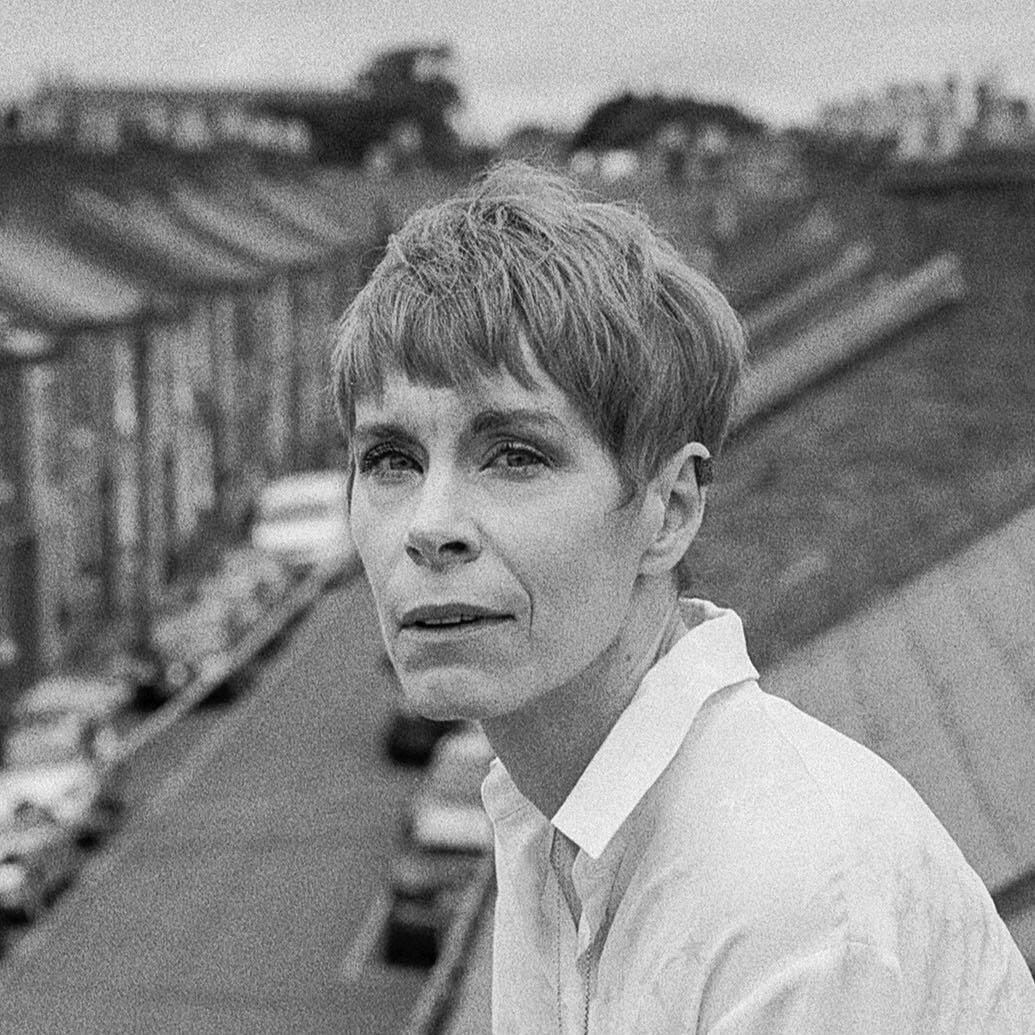
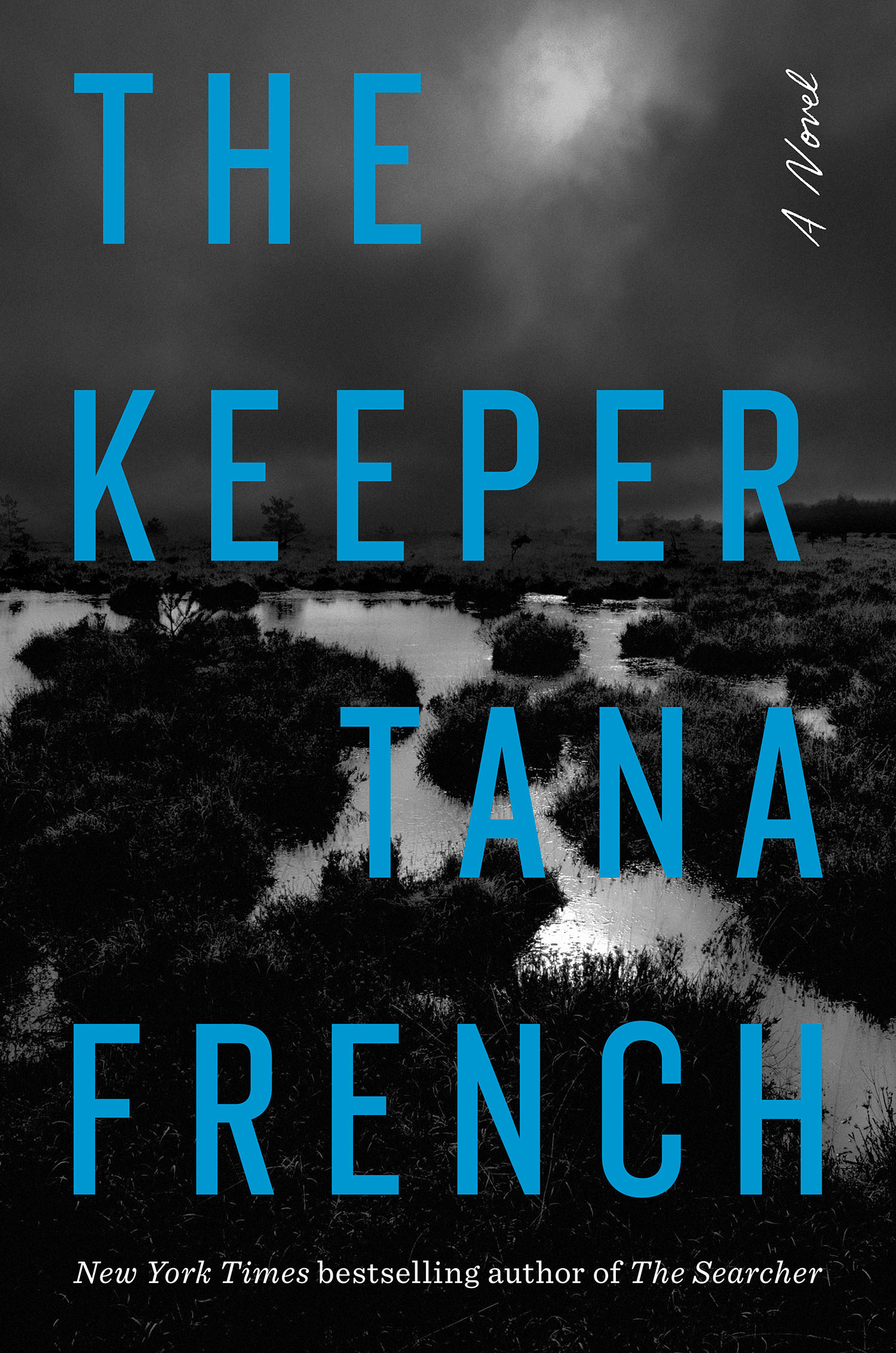
It’s a dark and dreary evening in the Irish village of Ardnakelty when a local girl turns up dead in the river. In other words, writer Tana French is back in form. The author’s best-selling Cal Hooper detective trilogy has come to a close with this month’s The Keeper, which sees the retired Chicago cop getting pulled onto one last case in his adopted home. It’s time for Hooper to move past his disenchantment with the American way of policing (sparked in his first novel, 2021’s The Searcher, by real-life protests) and into actual community living, whether by way of small-town justice or actual retirement.
Likewise, French is ready to move on from her first completed trilogy. When we speak about her latest book, the American-born, Dublin-based crime writer is clearly already mulling over new themes. “Murder tells you so much about [a] time and place and its priorities,” she tells me. Five years ago, that meant Hooper confronting the corrupting influence of his office over a missing boy. These days, it looks like a violent crime in the midst of a bucolic neighborhood stuck in Covid lockdown. The dead body is just the shock that jolts their private anxieties and frustrations loose. How else would anyone learn about each other?
Ahead of The Keeper‘s release, French let loose on the challenges and thrills of tying up a three-novel arc, writing across Irish and American cultural divides, and our unending appetite for crime.
First, how are you feeling about wrapping up this trilogy?
It’s a weird feeling. I’ve never stuck to one world for this long before. It’s really strange leaving it behind. I felt like I could keep writing about these people and all the others in this little network of relationships within this village. I could have kept writing about them forever, but there’s a limit to how many people you can kill off in a small town this size without going Murder She Wrote, so I had to leave.
Can you tell me about creating Cal Hooper? How did he end up being from Chicago?
I’d been reading some Westerns for the first time and thinking about those as an interesting match, both for mystery fiction and for the West of Ireland because an awful lot of the tropes of Western fiction map really nicely onto the West of Ireland. There’s that harsh terrain that demands toughness, mental and physical, from anyone who wants to make a living out of it, and there’s that sense of being so distant, both geographically and culturally, from the power brokers. They don’t understand your life, they don’t care, and if you want to function in society, you have to make and enforce your own rules. Cal came out of that.
You asked why he was from Chicago. I was interested in the Western trope of the outsider who blows into a small town and who acts as a catalyst for change. He’s going to cause upheaval and transformation in Ireland, right? He couldn’t be Irish or somebody would know him because it’s an international joke that the first thing Irish people do when they meet is figure out how they’re connected, and if he’d been from anywhere in Ireland, his mom would have gone to school with somebody’s sister and his dad would have played poker with this guy’s cousin. He wouldn’t have been an unknown quantity. So he had to be foreign. He couldn’t even be from New York or Boston because somebody would know his cousin, no question.
Having spent time in the States and in Ireland yourself, I know you were thinking through this current reevaluation of the place of police officers in society. How was it crossing the conversation between these two places, as this character goes from one to the other?
They are two very different conversations. In Ireland, our uniformed police don’t carry guns. If you get pulled over in traffic, no matter what demographic you’re in, there’s not going to be a fear that you’re going to wind up dead because they’re not carrying a gun. I’m not saying our police are this perfect, wonderful institution, but it’s not the same thing as what was going on in the U.S. at the same time, with the huge upheaval in the way the police were seen and the awareness that they’re not always a force for order and for justice and that that needs to be examined.
I thought it was interesting, the idea of someone who had been part of that and who was becoming aware that it was not what he thought and that he was becoming something he didn’t think he was going to turn into. He has a line somewhere in the first book, saying that one or the other of them, him or the job, couldn’t be trusted. He’s trying to leave that behind and go to a place where morality is clearer, simpler, and more manageable. At first he thinks that’s what he’s getting, but of course it’s not. He’s navigating a whole different set of complications.
You’re hopping into different points in this conversation as these three books are coming out. Where did you feel like you were picking up with The Keeper?
I don’t think there’s as much interplay with the American side of the conversation in this one. It was much more about the interplay between the detective genre and the Western genre. In the detective genre, justice and law come down from above. They’re very clearly laid out. You know what will be defined as having gotten justice or a conclusion or closure. But in the Western genre, anything to do with justice and law is much more rough hewn and handmade and ad hoc. Cal has moved from his detective zone into this world where anything he can contribute, and what’s required by the community, are going to be in those Western terms. I thought of this book as the final point in that transition from him being a detective in detective terms to him being this guy in Western terms, who provides the kind of justice and the kind of law that the community he’s become part of is demanding.
Over the course of your career, have you seen the appetite for crime change? In the past maybe 10 years, people are just rabid for true crime, whether it’s across literature, TV, film.
I’m not sure if this holds for anything but historical true crime, but I think it’s a really interesting way to get a window into a society. Murder happens everywhere, right? It happens in every time and place, but the kind of murder tells you so much about that time and place and its priorities. What is considered important enough to take that enormous step of killing somebody over it? If you have a murder over a piece of land, you know that you are not dealing here with a nomadic people who move from place to place. They’re not going to kill over a piece of land, but in rural Ireland, it has happened and it does happen, even really recently, because that’s how deeply charged the idea of land is within this culture. When you have a murder, you’re finding out something about that society. I think the interest in true crime might be to do with that. If it’s explored in depth, it can tell us a lot about the society we’re living in. What does it care about? What are its dark places? What does it want to keep hidden and what does it have trouble navigating?
I read an interview of yours where you said you try to push yourself out of your comfort zone with every project. How did this one do that for you?
The big one that I hadn’t done before was finishing off a trilogy. It’s a different thing because you’re trying to make sure that the characters’ arcs are each complete and coherent, but that the arc of the books is complete and coherent and that the arcs within that one book, as well as over the trilogy, all work and are completing themselves. That’s hard. A lot of Western series have a book about the death of the West, and that’s a theme that resonates with Ireland today, more than I would like it to. In many ways, the rural way of life is under threat. Young people are emigrating because they can’t find housing and farmers are under pressure. There’s mega farms coming in and buying up land so that young farmers can’t compete, schools are closing because there aren’t enough children. There is definitely a sense of a very old way of life being under threat from something bigger, coming from outside. I wanted to work that in there. I’m not from rural Ireland. I’m in Dublin, I’m a city girl, and I needed a lot of talking to people to try and get that right.
Having completed this arc, do you feel like that’s something you want to take on again? Are you thinking about next projects already?
I’ve already got stuck into the next one. No trilogy, although I said that with The Searcher. But no, this is a standalone and it’s different from anything I’ve done before because, like you said, I don’t like being in my comfort zone. The minute I feel like I have a handle on how to do something, I get twitchy about it and need to go do something else. It’s set during the first Covid lockdown in the outskirts of some town or city in Ireland, and, just as the lockdown hits, a woman and her two little daughters move onto the street and it’s just how that changes relationships within the place over the course of the lockdown. Of course, there is a dead body because that’s what keeps me on track. If I didn’t have that mystery format—A kills B and C finds out who done it—I’d just keep writing.
It’s been enough time to circle back around to lockdown. There were a few things that came out immediately and I was like, Maybe this is too soon to be back here.
People kept asking me during lockdown, “So are you gonna write about this?” I was like, “Are you joking with me? I don’t even want to do this, never mind write about it.” But there was something about the really weird dislocated sense of being outside time that I found really interesting. You know, I took the kids out on bikes to try and get a bit of exercise and it was like, This could be the ’80s. There’s a silence, there are no cars moving, there’s nobody around, no planes in the sky. This could be any time. Something about that sense of being outside the normal world and outside normal time. I just wanted to go back to that and see what I could do with it.
More of our favorite stories from CULTURED
How Blue Ribbon Survived a Mob Run-in and Transformed Late-Night Dining
Why Cookbooks Are the Next Frontier for Narrative Writing
You’ve Heard About the New Museum’s New Building. The New Show Is Even Better.
Everyone Was Afraid to Touch Nadav Lapid’s Satire of Israeli Artists. Now, It’s Being Released.
Where 27 Artists Are Hanging Out in New York Right Now
Sign up for our newsletter here to get these stories direct to your inbox.



 in your life?