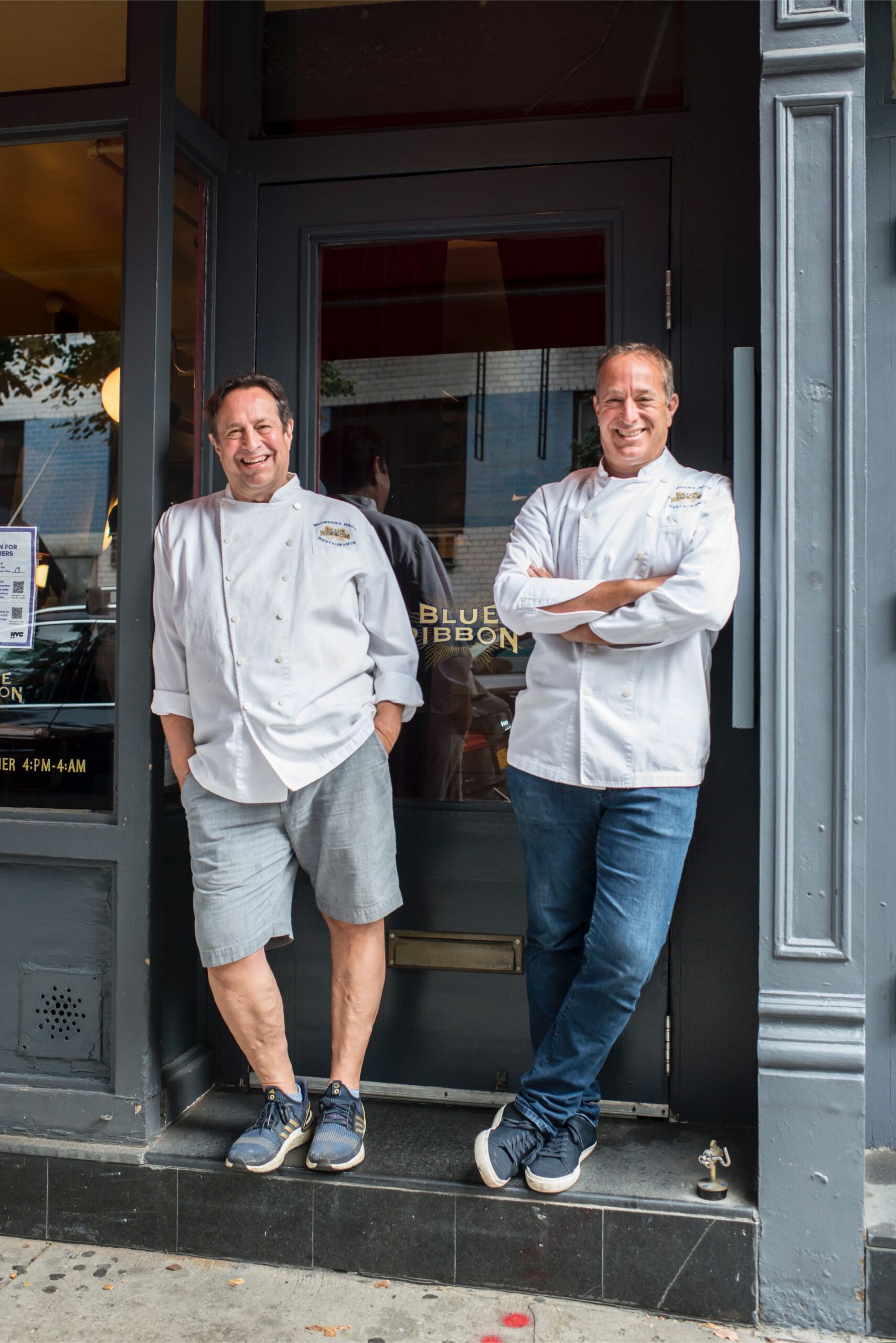
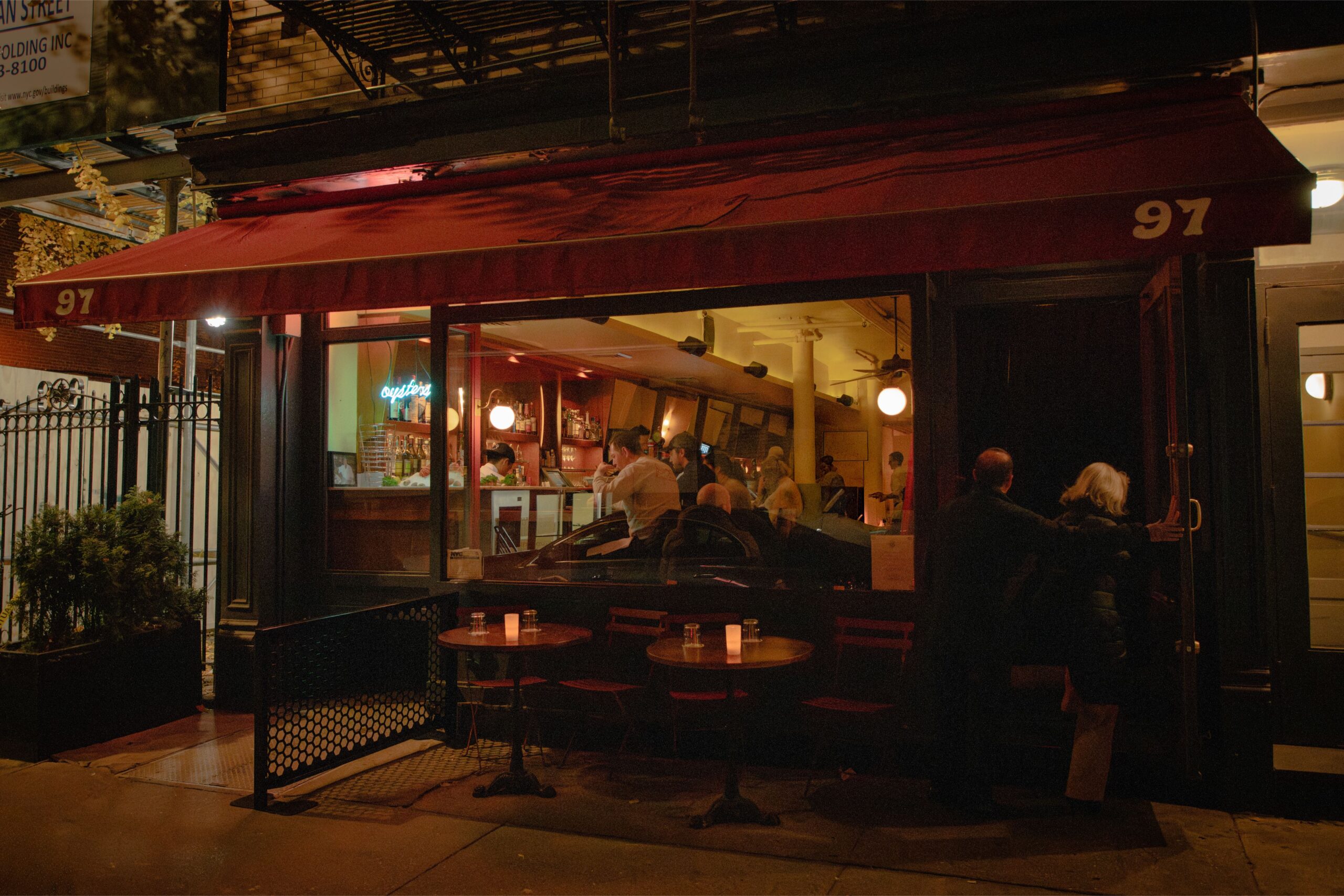
For much of the early 2000s, you could find me late at night eating oysters, fried chicken, or matzoh ball soup at Blue Ribbon Brasserie, a cult restaurant in SoHo that was open until 4 a.m. It’s forever part of my love story with my chosen city of New York.
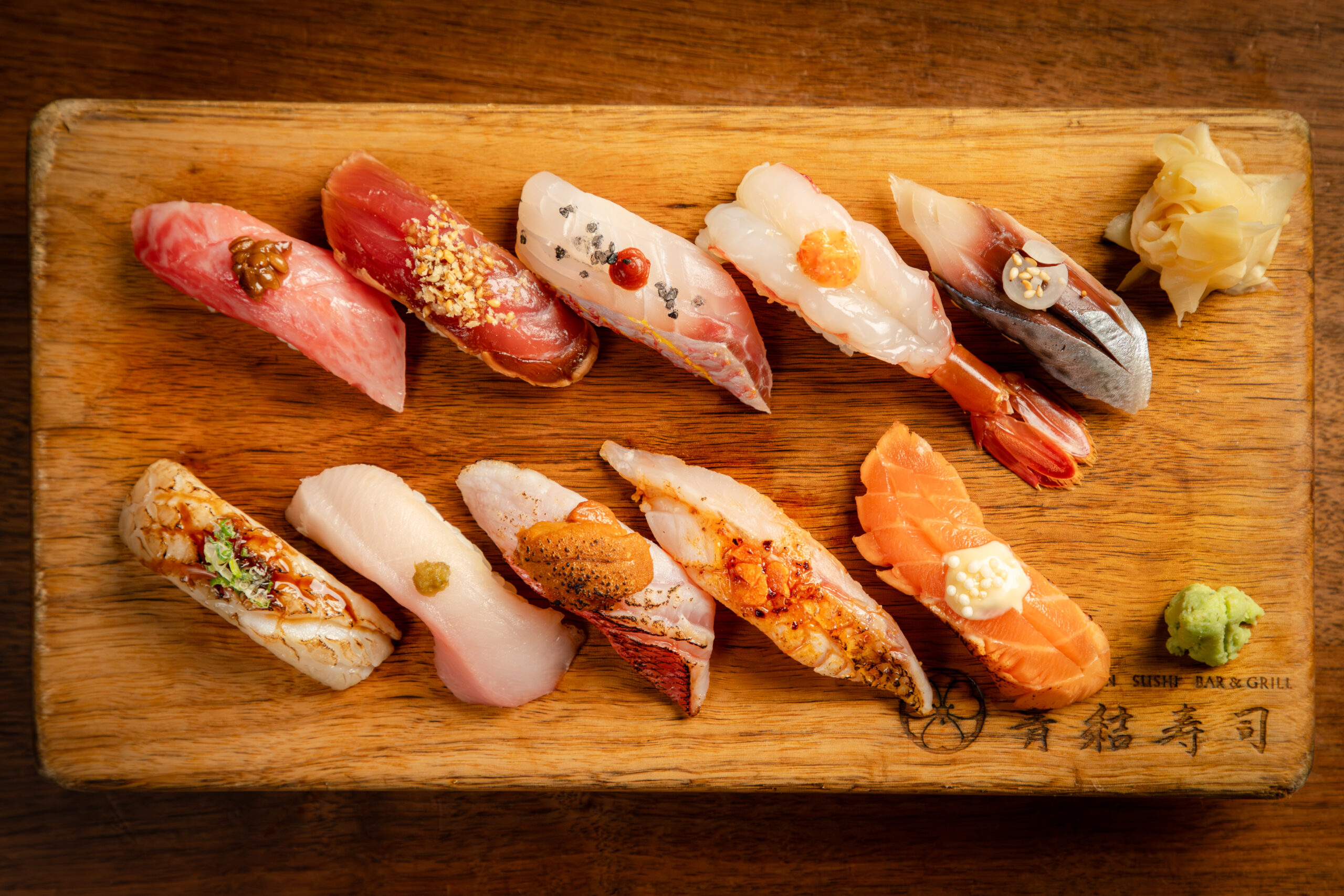
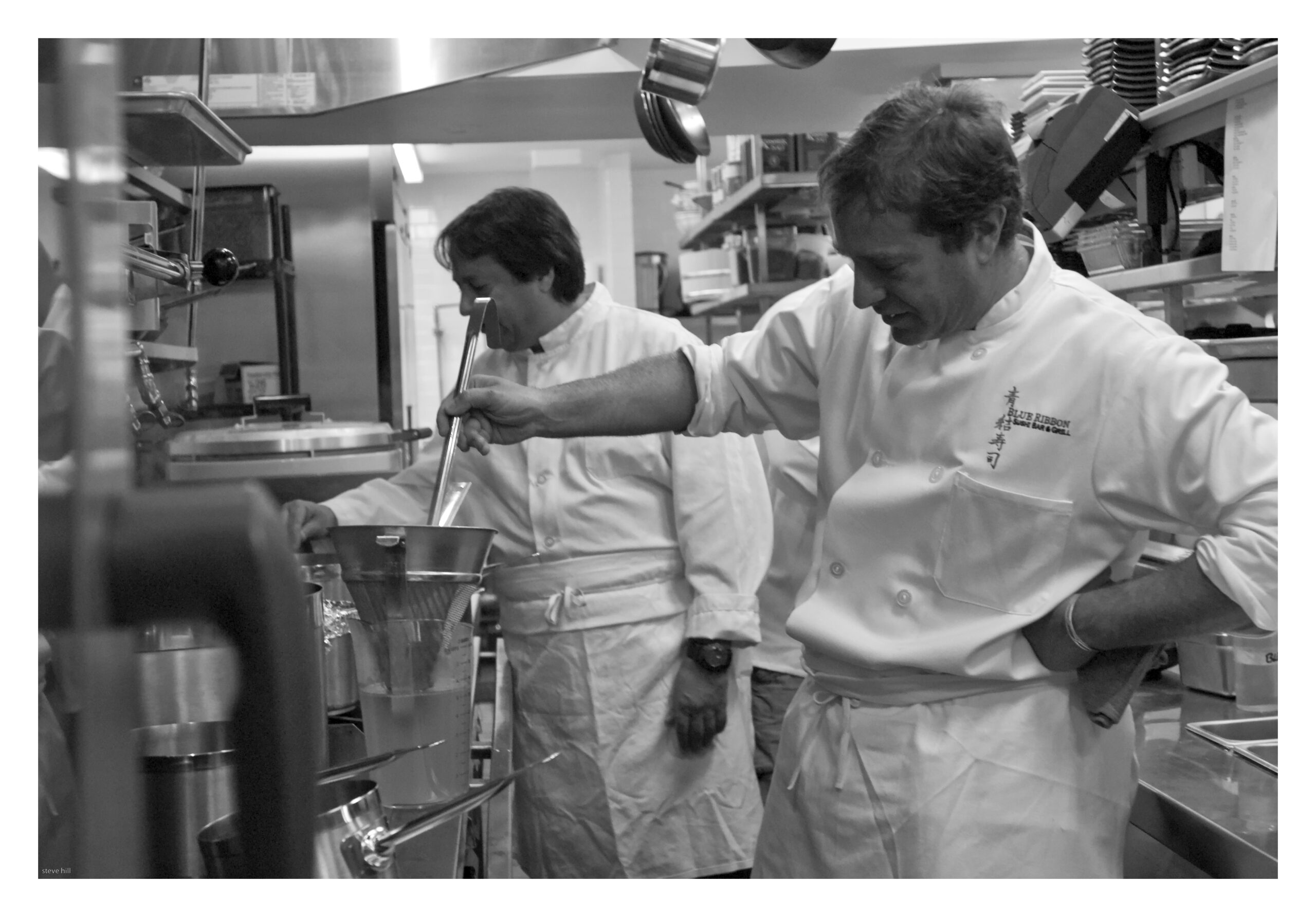
Bruce and Eric Bromberg opened the first Blue Ribbon on Sullivan Street in 1992. (You know the ’90s are back!) The brothers, both Le Cordon Bleu-trained chefs, wanted to create a place where you could have an 8 p.m. dinner at 2 a.m. Since then, Blue Ribbon has expanded to Las Vegas, Miami, Nashville, and Philadelphia and added a well-regarded sushi chain, Blue Ribbon Sushi, to its name.
These days, quality late-night dining is not an oxymoron. But it was before Blue Ribbon. The restaurant marked the first time New York chefs getting off work had somewhere to eat that wasn’t a diner. Anthony Bourdain and Wolfgang Puck rubbed shoulders with figures from the city’s art and music scenes, like Mary Boone, Julian Schnabel, Mos Def, and Lauryn Hill.
The nighttime shift, at its best, is democratic. Blue Ribbon harnesses the best of that spirit and the best of New York. On Blue Ribbon Sushi’s 30th anniversary, I spoke to the Brombergs about how they changed New York dining, ushered in a wave of chef-owned restaurants, and even survived the Genovese crime family.
Where are you, and what’s in your system?
Eric Bromberg: The last thing I ate was an American hero from Faicco’s. I was starving because I had to go to the dentist yesterday and couldn’t eat before or after. So finally at like 11 o’clock last night, I had it.
Bruce Bromberg: I’m driving from our mom’s, where I was last night. She lives about 45 minutes outside New York, where Eric and I grew up. We went to Whole Foods and we got bok choy and organic Atlantic salmon and lentils. And we had a lovely dinner.
Breakfast, lunch, or dinner, and why?
Eric: Dinner, always. I generally don’t eat until lunchtime.
Bruce: I would say dinner, too. We used to joke that we’d do lunch at 8 p.m. and then dinner at 2 a.m. at Blue Ribbon. I think just the aura around the dinner experience—being a chef and a restaurateur—that’s always been the focus. Eric and I refused to do brunch and breakfast for years.
I was such a frequent Blue Ribbon restaurant-goer. I’m now in Athens, but I miss New York. How did you come to open Blue Ribbon, and what did New York look like when you embarked on this project?
Bruce: I’ll try to keep it condensed.
Eric had opened a restaurant right across the street from where Blue Ribbon lives today in 1989. It was called Nick & Eddie. It was kind of a turning point in New York from high-end French restaurants in Midtown to bringing refined cooking into a casual environment.
Eric’s partners had an idea to expand because of the success of Nick & Eddie. So they found the space across the street and opened something called The Crystal Room, where Eric was head chef. I returned from France, where I was training at Cordon Bleu.
The Crystal Room lasted 10 weeks and went out of business. It did not resonate with any of the Nick & Eddie clientele. Eric was saddled with a rather miserable reality that his first ownership in a restaurant lasted this long. On that last night, when Eric told us we couldn’t make payroll and we were going to close, the whole team refused to let it go. We said, “We’re going to figure this out.”
We started tearing the restaurant apart. We built Blue Ribbon over the next three and a half months and opened November 3, 1992. It was a response to a lot of the experiences we’d had up to then. I had just come back from very formal training in France. We decided we didn’t want to have a Michelin-star fancy restaurant where our friends couldn’t go, where you couldn’t speak loudly, where everything was very refined.
Eric’s vision at Nick & Eddie—a casual corner bar with real cooking going on—became the cornerstone. We were also both obsessed with L’Opéra de Paris, which is a 24-hour brasserie that hasn’t closed its doors since the Germans left Paris in 1945. For the city that never sleeps, we were kind of shocked that there were only a handful of places around New York you could go to. The chef had gone home. The manager had left at 11 or 12 o’clock. There wasn’t a place where chefs and musicians and everyone could go and have that same 8 p.m. experience until 4 a.m.
There were a bunch of things we were pushing back against. We had both come from kitchens where people weren’t treated well. There was division between front of house and back of house. We just didn’t want to play with those rules anymore.
Eric: The wave of restaurants in the ’80s were big party restaurants. Most, if not all, were owned by front-of-house people, with chefs as employees as opposed to owners. Blue Ribbon was at the beginning of the wave of chef-owned and -operated restaurants. The fact that Blue Ribbon was only 45 seats—really compact—resonated with people in the business. It opened the door for small, manageable restaurants serving high-quality food.
When restaurateurs and chefs manage to create that vibe, you just want to keep going back.
Eric: The fact that James is behind the bar and has been since the day we opened 33 years ago—that’s a pretty special thing. Half the staff has been there 20-plus years.
How did you guys manage to make each location feel like it was part of the neighborhood?
Bruce: Not to sound flippant, but the food’s kind of the easy part. What’s always been paramount to us is that there is a sense of respect and ownership and belonging for every employee. We strive for that. We work at that. We talk to everyone about it. It’s elemental to Blue Ribbon, and I think that’s the common thread.
Eric: It’s an egoless environment.
When you opened up, late-night dining didn’t really exist in New York. Who was your clientele at 3 a.m.?
Eric: The first six months, there were like four people. There was this guy who played piano at the Carlyle Hotel on the Upper East Side. Seventy-five-year-old guy, gray hair, pink bow tie. He’d come with a different lady each night and sit in our dining room and order his glass of wine. It was such a funny scene.
Then there was Billy Gilroy—he was the general manager at Lucky Strike. And then there was a guy named Kimball—he’s actually still in our restaurant six nights a week. He just had his 91st birthday. He’s been coming for 33 years.
We used to have a band set up in the basement—drum set, guitar amp—and we would sit there from 10 p.m. until 4 a.m. and just jam. And when somebody would walk through the door, our manager would run downstairs and tell us we had to get back into the kitchen. That’s how quiet it was at times. It was a slow build. A couple of local folks. A couple of guys who were out working late.
Then [restaurateur and Nobu owner] Drew Nieporent came maybe three or four months in. I remember him just standing in the middle of the dining room, like, “What in God’s name is happening in this restaurant? I can get a rack of lamb and onion soup at 2 a.m.? And it’s all good?” And he said, “I am going to tell everyone.”
Eric: He was the messenger. All of a sudden, Bobby Flay and Mario Batali [started coming in]. Mario wasn’t even a chef-owner yet. He had just arrived from Seattle and was working in a restaurant three blocks away. Then Jonathan Waxman, Daniel [Boulud], Jean-Georges all started coming. Wolfgang Puck came in with Nieporent. These were our idols.
It was also musicians getting out of recording studios: Mos Def, Talib Kweli, the Beastie Boys, De La Soul, A Tribe Called Quest, and Lauryn Hill started coming in. The vibe in the dining room transformed over a matter of months. It became like a clubhouse. You knew everyone would be there. It was before Food Network. We were all starting out; there were no celebrity chefs.
You don’t really hear about a hub where all these chefs go anymore. How do you feel about late-night dining in New York today?
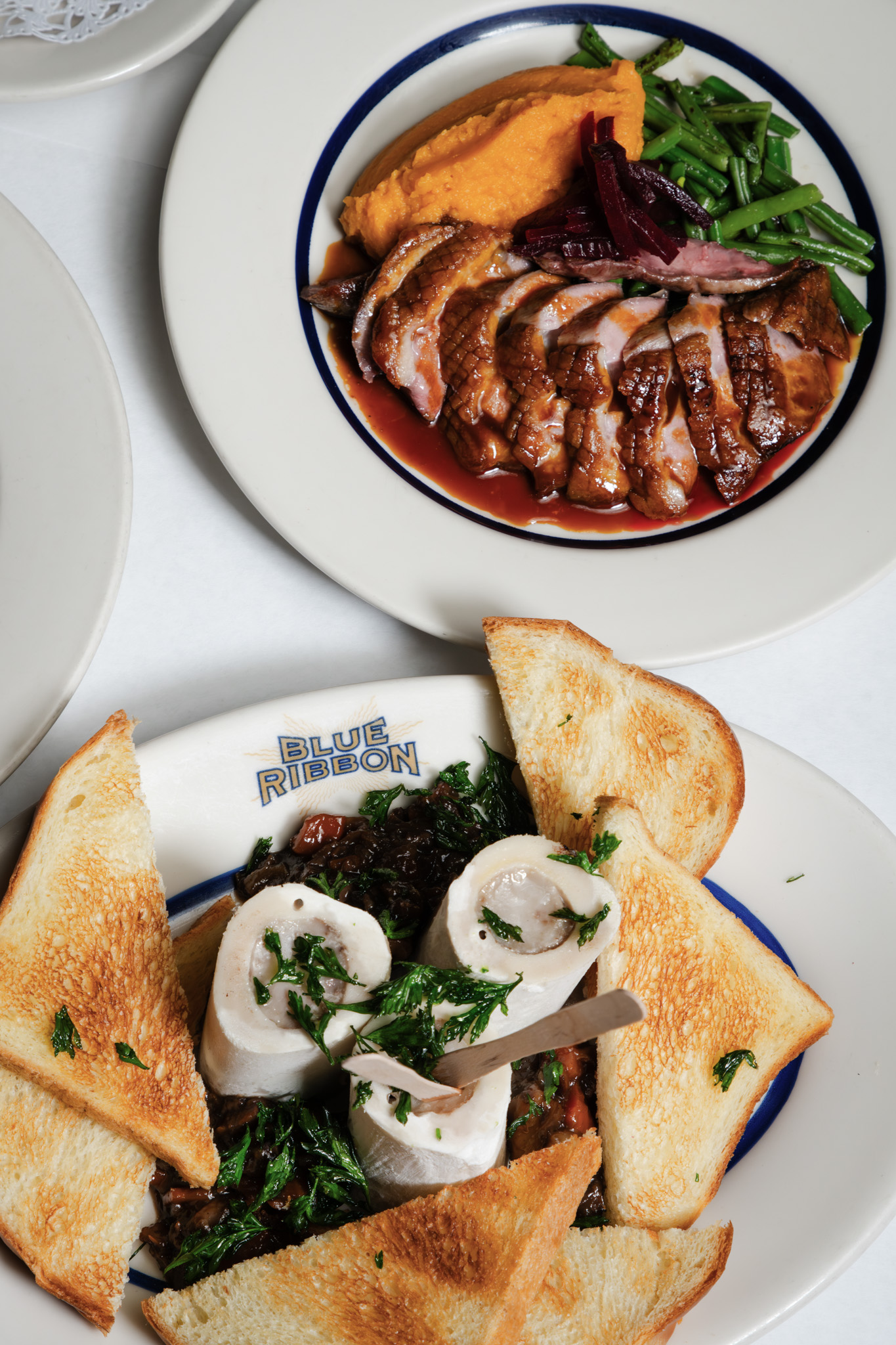
Bruce: It’s been an amazing progression. Eric and I aren’t in the restaurant every night until 4 a.m. like we were for the first decade or two. But there’s a new guard. We’re not the only ones serving bone marrow now. I think we’re still among the best restaurants open late in the country. Our menu has basically stayed the same. We changed it the first six months and haven’t messed with it much since. When Covid hit, we still had 11 of our original 15 employees. Covid was devastating to all of us in hospitality. It changed the world in ways we’re still feeling.
I’d love some stories—the juicier the better. Something that went horribly wrong? A setback? The greatest celebrity that came into Blue Ribbon?
Bruce: When we were first opening, Sullivan Street was a radically different place. It was kind of controlled by the Genovese crime family. It was where they had their social club. We did have some fairly significant run-ins. Eric’s old partner had slighted the guy who ran the social club. His name was Eddie—Eddie the Blonde or Eddie the Machete. Evidently, Eddie thought Eric’s partner Philip disrespected him. A few hours later that evening, a brick came flying through the window of The Crystal Room. James, our bartender, and Sean, our food runner, ran after the culprit, caught him. The police were obviously called, and when the cops showed up, they just said, “You don’t want to have anything to do with this. Let him go.” But James just had a brick miss his head by two inches and smashed into our back bar. So he was pretty wound up.
Anyway, to make a long story short, the cops said no, they weren’t going to arrest him. We were furious. And all of a sudden, two cars pull up on Sullivan Street and turned sideways to block the street. Guys get out with metal pipes and baseball bats and they start approaching the restaurant. Eric walked up to the door. They said, “We want the guy. We have no problem with you. We just want the guy with the shiny black shoes,” which was James. The whole thing went into just utter disaster for the next four hours.
Eric: We were cornered in the restaurant and they had, I don’t know, maybe eight or 10 guys with baseball bats and lead pipes in a semi-circle around Eddie, waiting for the guy with the black shoes to come out. We were terrified, staying inside.
Bruce: It lasted about two and a half hours. Luckily, my partner’s wife had gone to school with someone in the family. That guy’s name was Salvatore. The scene was kind of unbelievable. He pulled up in a white Cadillac El Dorado, got out with a white suit, white shoes, and a white hat. Walked down the street to the middle of the semicircle where Eddie was standing. The two of them talked for about 20 minutes. And then Salvatore came to our door and said, “Everything’s taken care of. You guys can go back to normal.” That was the end of The Crystal Room. I had just come back from cooking in Paris, and I was just like, “Hold on. What in God’s name did I come back here for?” I was trying to learn how to cook. I didn’t know being a chef involved everything under the sun.
Bruce: James would not get out of the boiler room for hours. We wanted to change his hair color. And one of the worst parts was the cops—we couldn’t call the cops. We tried. They told us to get over it.
And the polar opposite—like a sweet, quick story?
Bruce: Oh, there are so many. First dates turning into engagements, turning into marriages, turning into anniversaries, turning into the birth of a kid. Now we’re hosting the kids’ weddings, engagement parties, rehearsal dinners. Eric and I, in our high school years, were the biggest Todd Rundgren fans. I don’t know if you even know who that is. He’s an amazing musician. One night, maybe 10 or 12 years ago, our manager calls. He’s like, “You are not going to believe this. Todd Rundgren just walked into the restaurant.”
Over time, Todd started coming in regularly. We befriended him. Eric, me, and my brother Ken had dinner with him at Blue Ribbon maybe six or seven years ago. He told us how impactful we were on his life. It wasn’t the biggest celebrity thing, like Mick Jagger and Paul McCartney arriving the same night, but to me, it’s probably the best story.
Eric: One other thing that’s feel-good is the fact that a lot of the employees who started 33 years ago who were dishwashers are now head chefs of restaurants. Their kids are at NYU, they’re living these completely transformed lives. And the fact that we played any role in that is pretty spectacular.
It’s almost like your restaurant is a microcosm of New York.
Eric: It’s a mix of all these characters who are New York. Patti Smith was in our restaurant four or five nights a week. Julian Schnabel and that whole scene. Mary Boone used to come in all the time.
Time for the rapid-fire questions. What’s a kitchen tool you can’t live without?
Eric: I’d say 12-inch tongs. It becomes part of your anatomy.
Bruce: A squeegee. We do a lot of cleaning during service, and I think that’s the most brilliant tool. There was a point 30 years ago where I was determined to start a squeegee company for kitchens.
What’s a kitchen etiquette rule you live by?
Bruce: Zero yelling. No aggressive behavior whatsoever, ever. No nicknames. No misunderstandings. Respect for the person next to you.
I love that. No nicknames—I’m going to put that in my back pocket. Slippery slope.
Bruce: They always seem funny in the beginning. Then someone gets upset.
Anything else you want to share before we end?
Bruce: I think the importance of Blue Ribbon to so many people is the biggest thing to us. We occupy a period of time when the chef community grew and really changed in New York. A lot of that movement happened at Blue Ribbon. As a chef, there’s nothing better than cooking for other chefs. Better than cooking for critics, and I mean that in the nicest way.
More of our favorite stories from CULTURED
James Cahill Saw the Best and Worst of the Art World. His Latest Novel Exposes It All.
Marc Jacobs Doc ‘Marc by Sofia’ Makes the Designer Look Cool. But Is That It?
Margaret Cho Grew Up in a Gay Bookstore. Of Course Her Reading List Is Incredible.
20 Years and $720 Million Later, Michael Govan Takes Us Inside the New LACMA Galleries
Revisit 5 of the Late Legend Calvin Tomkins’s Most Essential Art-World Profiles
Sign up for our newsletter here to get these stories direct to your inbox.

 in your life?