
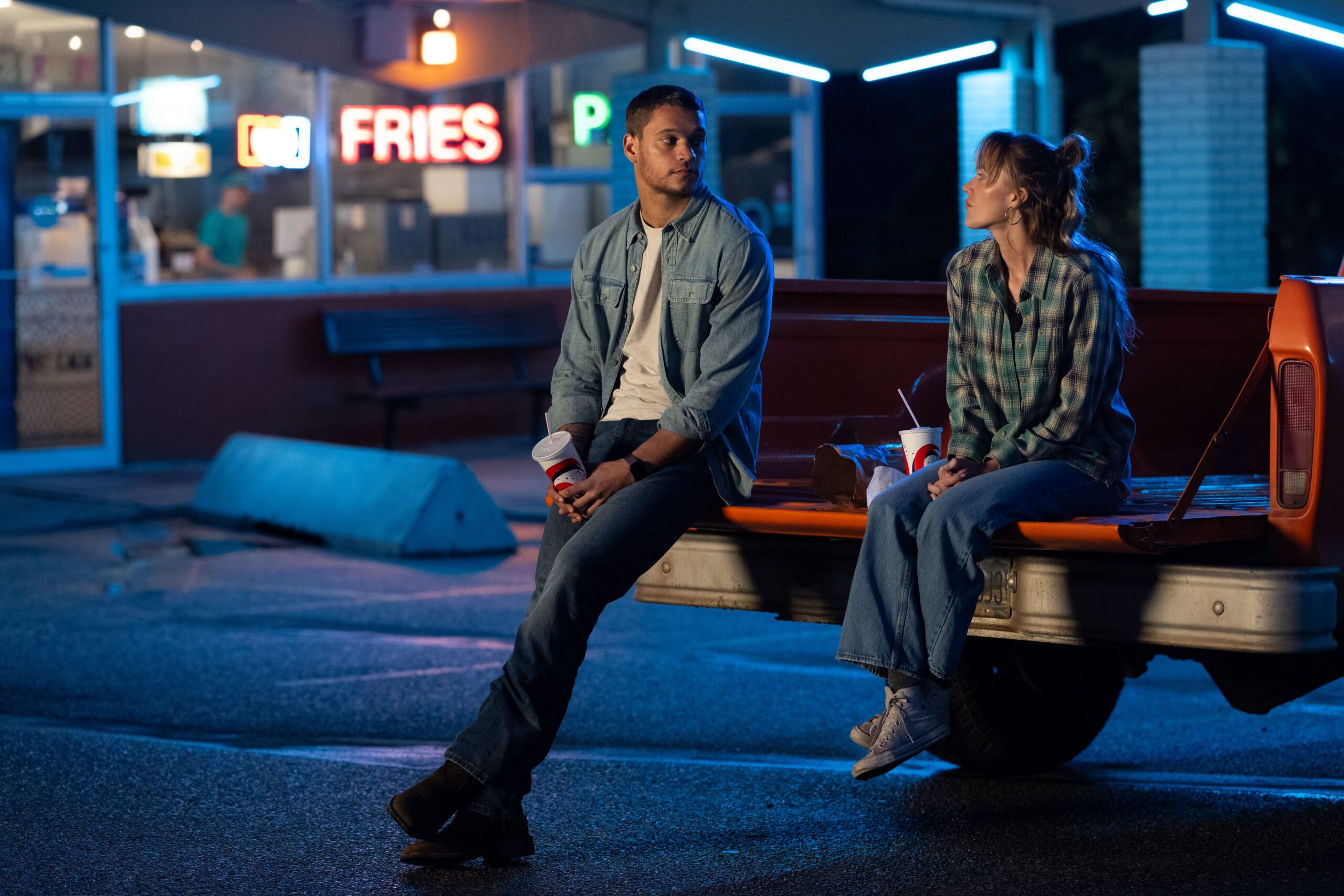
The arrival of a Colleen Hoover adaptation tends to produce forehead-smacking groans for some. For others—millions upon millions of others—the occasion is akin to the rapture, complete with sobbing in the theater. Hoover, the 46-year-old juggernaut of contemporary romantic fiction whose books, including Regretting You and It Ends With Us, have sold more than 35 million copies, occupies rare and often besmirched air in the vicinity of Nicholas Sparks and Danielle Steel. Her stories reliably force beautiful people to reckon with outright catastrophe—deaths by turns banal, tragic, and predictable—harnessing the ensuing trauma as a catalyst for romance and transcendence. The emotional tenor is heightened, the complexity thoroughly distilled, like those inspirational wall decals that read Live, Laugh, Love.
So it’s surprising that Reminders of Him, despite being engineered by the same machine for maximum emotional yield, makes such a soft landing. Early reviews dub it a shameless tearjerker, a critique that mirrors those of the book: Readers criticized Hoover for underwriting characters and skipping the emotional stages of courtship that her fans tend to savor. The film follows Kenna (Maika Monroe), a young woman returning to her hometown after seven years locked up—for the accidental killing of her boyfriend Scotty (Rudy Pankow), no less. She attempts to reconnect with her young daughter Diem, but faces resistance from the child’s protective grandparents (Lauren Graham and Bradley Whitford) and turns her focus to falling—swiftly and inevitably—in love with her late boyfriend’s impossibly handsome best friend, an ex-NFL player she’s somehow never met. Ledger (Tyriq Withers, who reprises the athlete role less than a year after his breakthrough in Him), graciously gives Kenna a job at his bar, unaware of her story. Kenna, for her part, doesn’t know that Ledger is a steady presence in her daughter’s life.
As a film, Reminders of Him ends up oddly inert—less cathartic than generic. It’s more polished than the previous two adaptations (thanks to director Vanessa Caswill), but also more muted—and gloomy. Nevertheless, there’s plenty here to pick apart. Here’s what you should know about the film—whether you plan to watch or not.

The Names Aren’t Subtle.
Hoover has an affinity for naming her characters in ways that offer a glimpse at their psyche and purpose—this time, her monikers might compensate for a lack of character development. Kenna has Celtic roots and means “fiery”—appropriate for a mother who will stop at nothing to reclaim her daughter (except that, occasionally, she does). Ledger could be the name of a B-list celebrity couple’s lovechild. Presumably it’s a metaphor—records wiped clean, debts forgiven. That, or it’s a nod to this love interest’s occupation—he’s a bar owner who literally keeps the books.
During the preview screening I caught, I could’ve sworn that Kenna’s daughter’s name was D.M.—an idea that made me bury my face in my hands. Only once the credits rolled did I realize it’s actually Diem, Latin for “day,” and half of carpe diem. (Again, very Live, Laugh, Love). In a movie so bluntly about redemption, I’m actually shocked the phrase was never uttered aloud.

Don’t Expect a Nuanced Take on the Carceral System.
Reminders of Him has its origins in conversations between Hoover and her younger sister, who was studying prison reform in graduate school. The author has said she wanted a protagonist “whose life is shaped by a tragedy that sends her to prison, and what it means to rebuild after she is released.”
That’s all well and good, but the film treats prison as a convenient plot device for separating mother and daughter. Beyond Kenna’s struggle to find work with a record, Reminders of Him shows little curiosity, save for a stray remark about Kenna’s years as a dishwasher, about how incarceration might actually change a person.
In recent years, projects like Nomadland and Sean Baker’s oeuvre have pulled back the curtain on economic precarity, revealing the textured humanity that dwells there—but depending on who you talk you, they might also have the effect of romanticizing poverty. Reminders of Him gestures toward a kind of social realism (Kenna lives at a low-rent motel), but never commits to themes of redemption or forgiveness, let alone the complex relationships between incarcerated mothers and their children.

Two Horror Actors Try Something New.
Maika Monroe tries her hand at romance—that is, romance tempered by seven years of trauma. It’s a softer register than audiences expect from her, and a departure from her fashion cool of her online persona. Here, she gets to be something closer to vulnerable, or at least a different kind of vulnerable that doesn’t involve being chased through the dark by paranormal forces.
Tyriq Withers—who recently starred in Him and Scream—meanwhile, arrives with genuine breakout energy. The former D1 college football player has an easy physical charm, and a goofy charisma on social media that suggests a Channing Tatum-style star in the making.
Reminders of Him may not give either actor an especially nuanced emotional palette to work with, but both do the best with what they have to work with—even if several conversations revolve around making coffee.

One of Pop Culture History’s Most Deplored Songs Makes a Cameo.
Author and commentator Chuck Klosterman once wrote that Coldplay is “shittiest fucking band I’ve ever heard in my entire fucking life,” which was not so much a provocation as a tidy estimation of a certain kind of mass-produced sentiment. In the ensuing years, the band has reached the pinnacle of fame and ubiquity by “manufacturing fake love as frenetically as the Ford fucking Motor Company manufactures Mustangs.”
This brings us to the “Yellow,” the second single from the band’s debut album and a perennial hate-listen. It already floated through movies like Boyhood and My Oxford Year—always signaling sincerity. In Reminders of Him, it’s the song Kenna is listening to while driving drunk during the accident that sends her life off the rails. Naturally, it is later reclaimed as part of her redemption arc.

The White Suburban Dad Trope Is Still a Little Scary.
Bradley Whitford’s casting as a protective grandfather grieving his dead son, carries a persistent echo. The modern suburban dad, after all, has become one of pop culture’s favorite quietly sinister figures, equal parts NPR tote bag, pearly bland smile, and repressed rage. Whitford’s casting is a playful nod, conjuring the sense of menace, even when the movie and his character don’t spiral into evil. As the wary, middle-class father guarding his granddaughter from harm, Whitford’s character seems like the spiritual cousin of the affluent “woke” patriarch he played in Get Out. As I watched him deliver stern warnings in a tidy green backyard, I half expected him to casually mention that he would have voted for Obama a third time if he could.
More of our favorite stories from CULTURED
Dries Van Noten Opens Up About His Next Chapter: ‘We Didn’t Stop to Have a Quiet Life’
Psychoanalysts Jamieson Webster and Adam Phillips on How to Get the Life You Want
The Best Oscars Red Carpet Looks of All Time, According to 14 Very Opinionated People
Love Story’s Costumes Could Have Tanked the Show. Then Rudy Mance Stepped In.
Is the 82nd Whitney Biennial Weird Enough to Match Our Chaotic National Mood? John Vincler Thinks So
Sign up for our newsletter here to get these stories direct to your inbox.










 in your life?