You might find the work of Taína Cruz scary. She doesn’t see it that way.
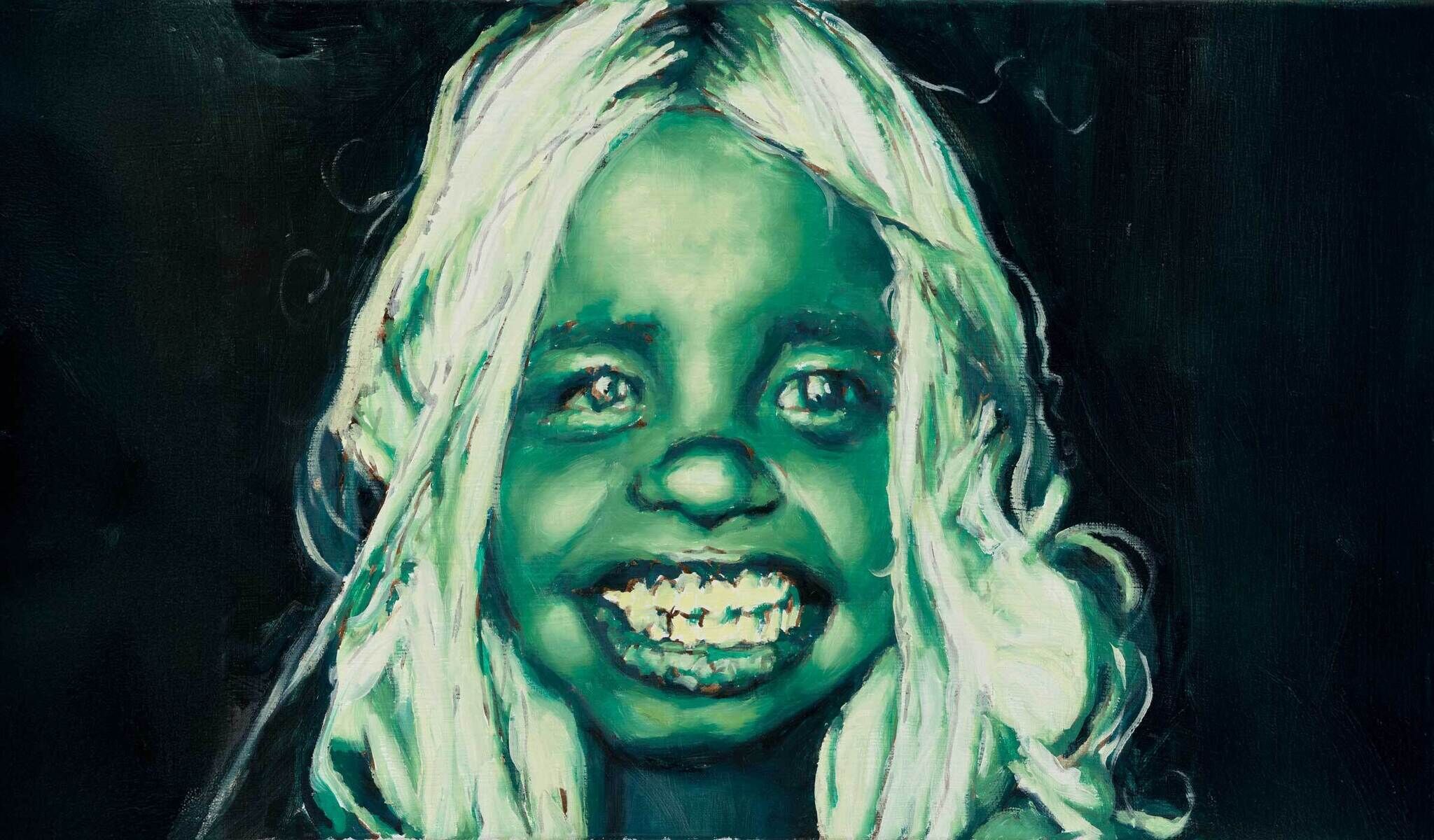
The native New Yorker (b. 1998) began making waves in the art world with her paintings of ghoulish, grimacing figures. She managed to secure gallery representation (with Berlin’s Kraupa-Tuskany Zeidler) before she even graduated from Yale’s MFA program. And fresh out of graduate school, she’s been selected for two of New York’s most coveted exhibitions this spring: the Whitney Biennial (where she is the youngest artist in the show) and the Greater New York quinquennial at MoMA PS1 (opening April 16).
In a practice that spans video, sculpture, and painting, digital-native Cruz uses 3D animation as one tool among many. At the Whitney, she’s created a billboard—holding court above Gansevoort Street—of one of her haunting young girls. (Several more of her more modestly sized paintings are included inside the museum.) “I was thinking about how the future can feel both beautiful and terrifying at the same time,” Cruz says in the audioguide. “I wanted to paint a moment that feels like hope and danger mixed together, like looking at the sun even when you know it might hurt your eyes.”
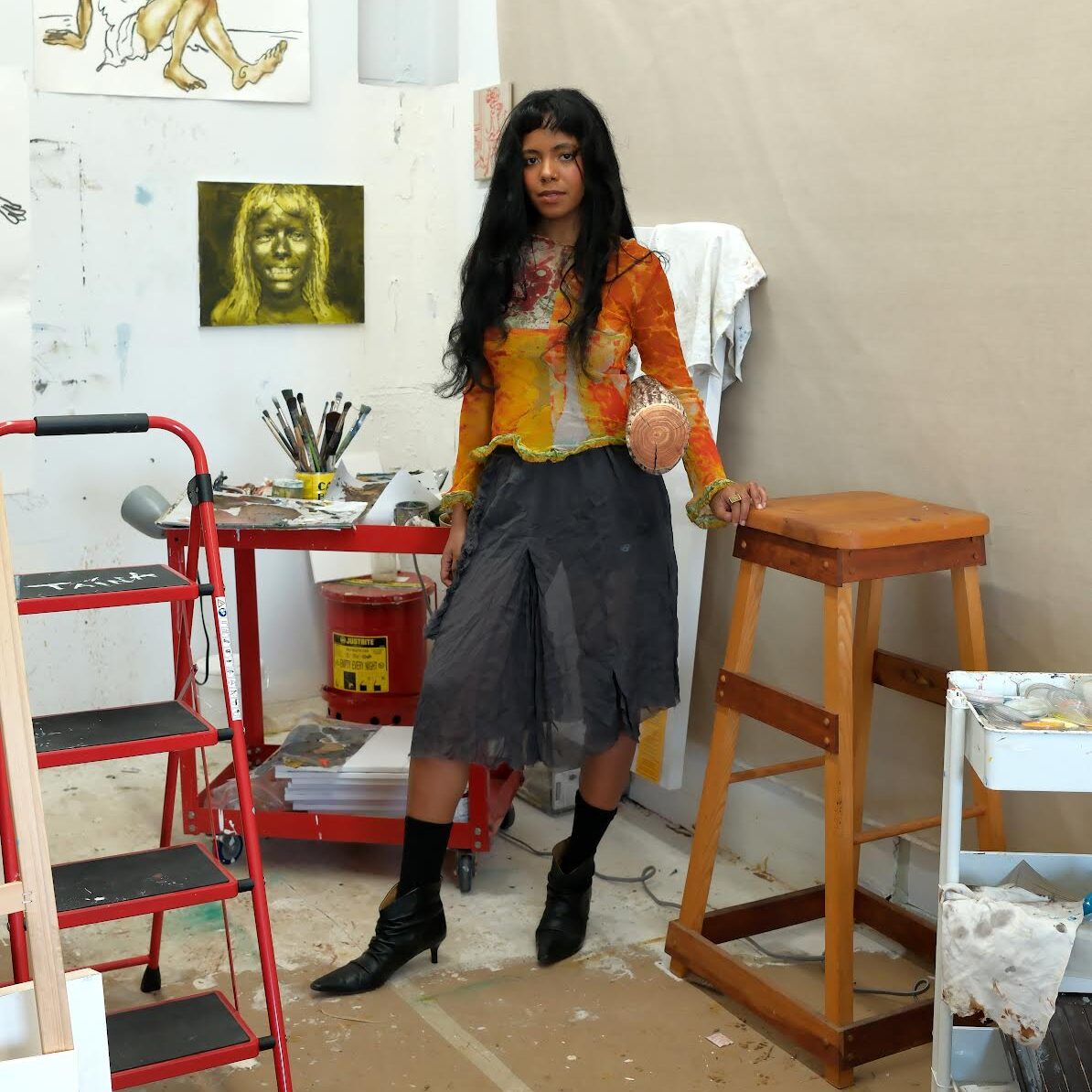
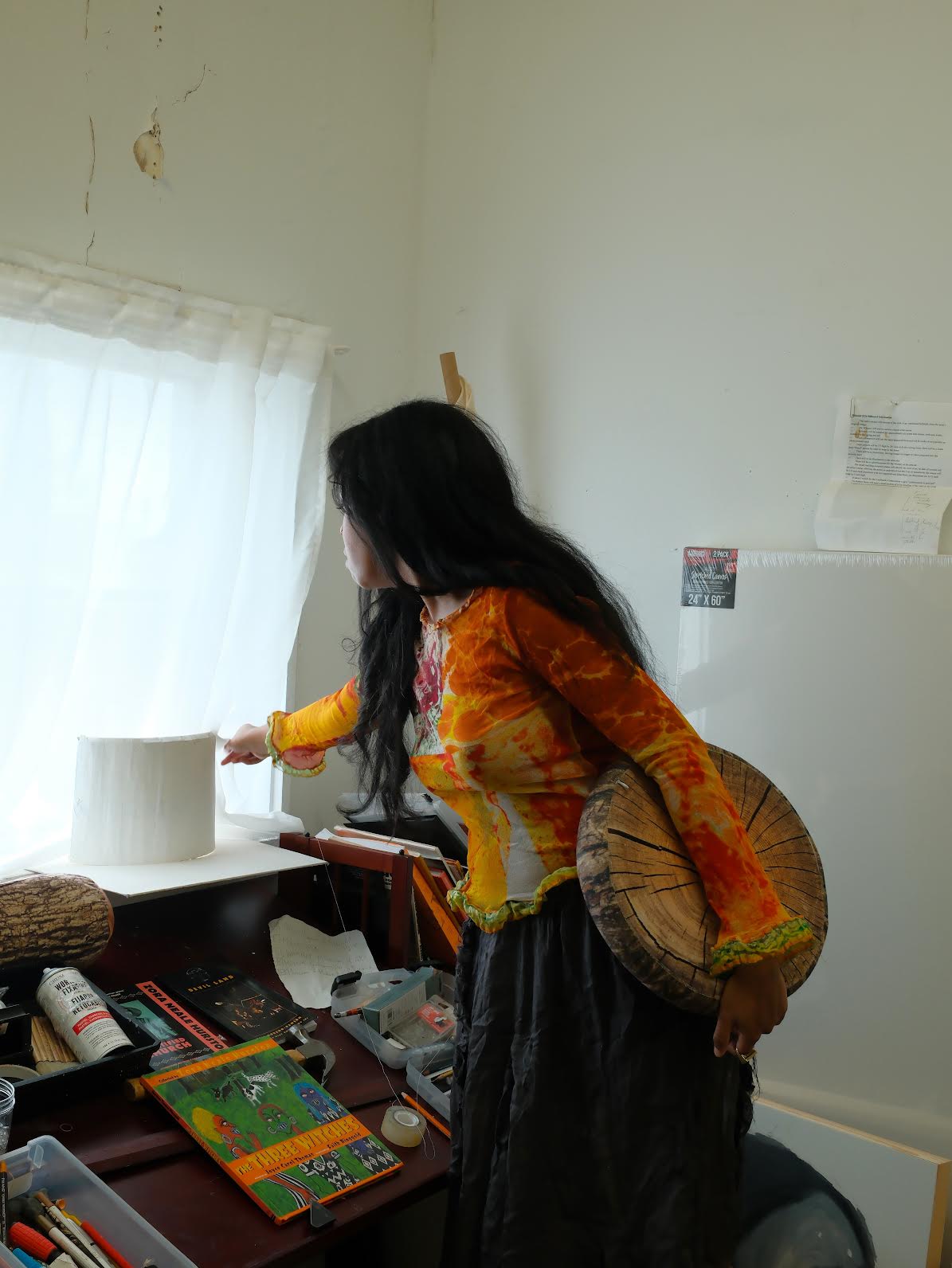
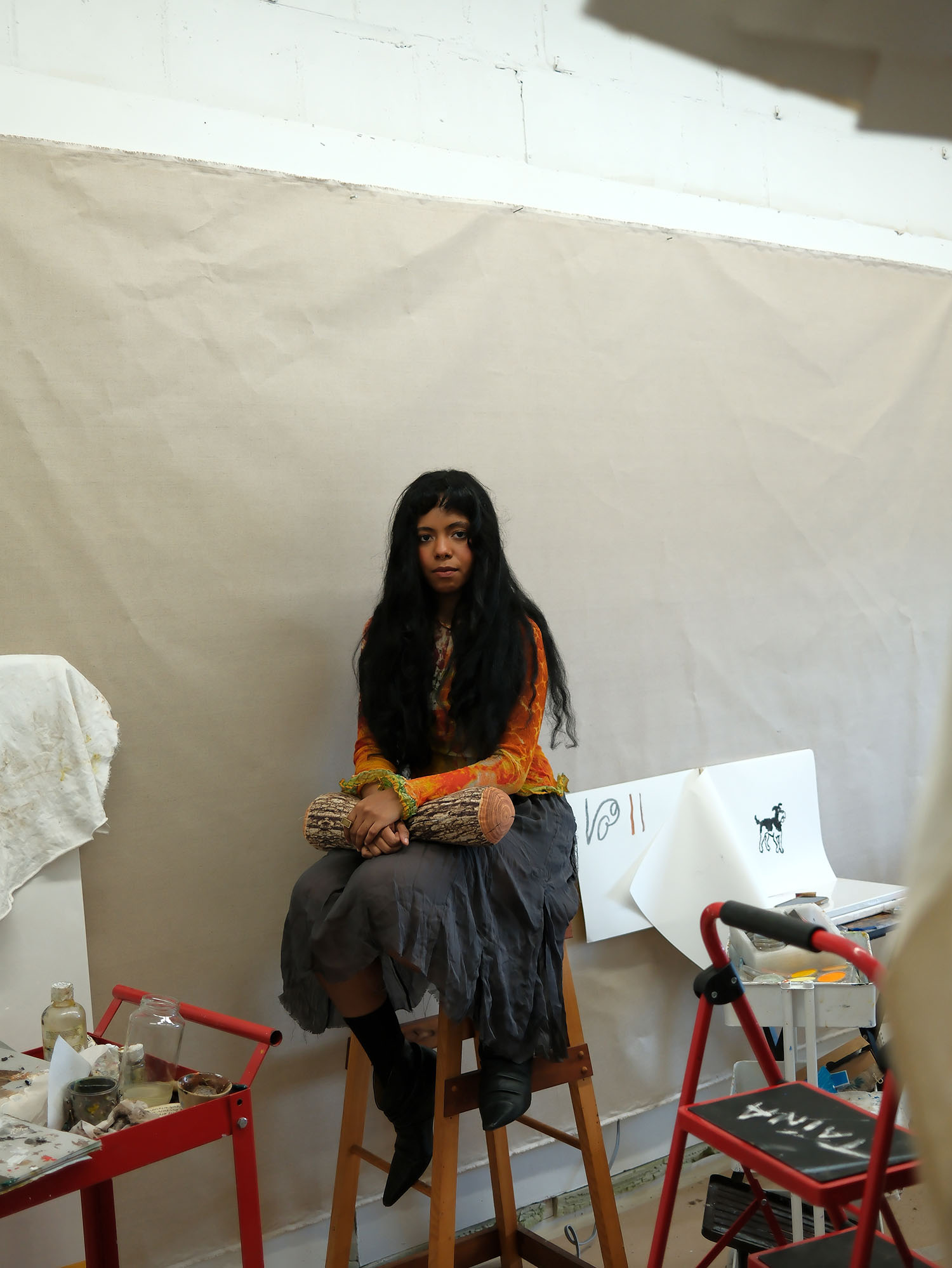
Ahead of her big New York moment, Cruz let CULTURED take a look around her New Haven studio.
What’s the first thing you do when you enter your studio?
Take a deep breath.
What’s on your studio playlist?
I prefer to work in silence, but when I need to remember a certain tone, I’ll turn on Bronx drill, Nina Simone, Aventura, Michael Jackson, or Tchaikovsky’s Swan Lake.
If you could have a studio visit with one artist, dead or alive, who would it be?
Francisco Goya.
What’s the weirdest tool/instrument you can’t live without?
Lanterns and my pillows that imitate a tree stump or a wooden log.
When do you do your best work?
Mornings.
Who’s the first person you show something to?
My inner self, to be honest. She decides if the work is done or not.
Do you work with any assistants or do you work alone?
My dog, Oya.
Is there a studio rule you live by?
I trust my body. When it tells me to go home, I go home.
If your studio were an animal, what would it be?
A brown bear.
What’s your studio uniform?
I definitely dress seasonally. In the north, we get all four seasons, which feels special.
Tell us about the best studio visit you’ve ever had.
Sometimes I FaceTime my mom and show her what I’ve been working on. She comes up
with the best interpretations, truly creative with her words, often seeing something I
hadn’t thought of before.
Any rituals to prepare for a studio visit?
A prayer.
What book changed the way you think about art?
Eloise by Kay Thompson.
More of our favorite stories from CULTURED
A Movie Deal Is a Writer’s Dream—or Is It? 5 Authors Get Real About the IP Machine
Shrinking Actors Sherry Cola and Jessica Williams Talk Therapy (On Screen and Off)
The Pitt’s Shawn Hatosy Is an Emmy Winner, a TikTok Star, and a Secret Literature Nerd
Why Are Artists So Interested in Making Playgrounds?
Sign up for our newsletter here to get these stories direct to your inbox.




 in your life?