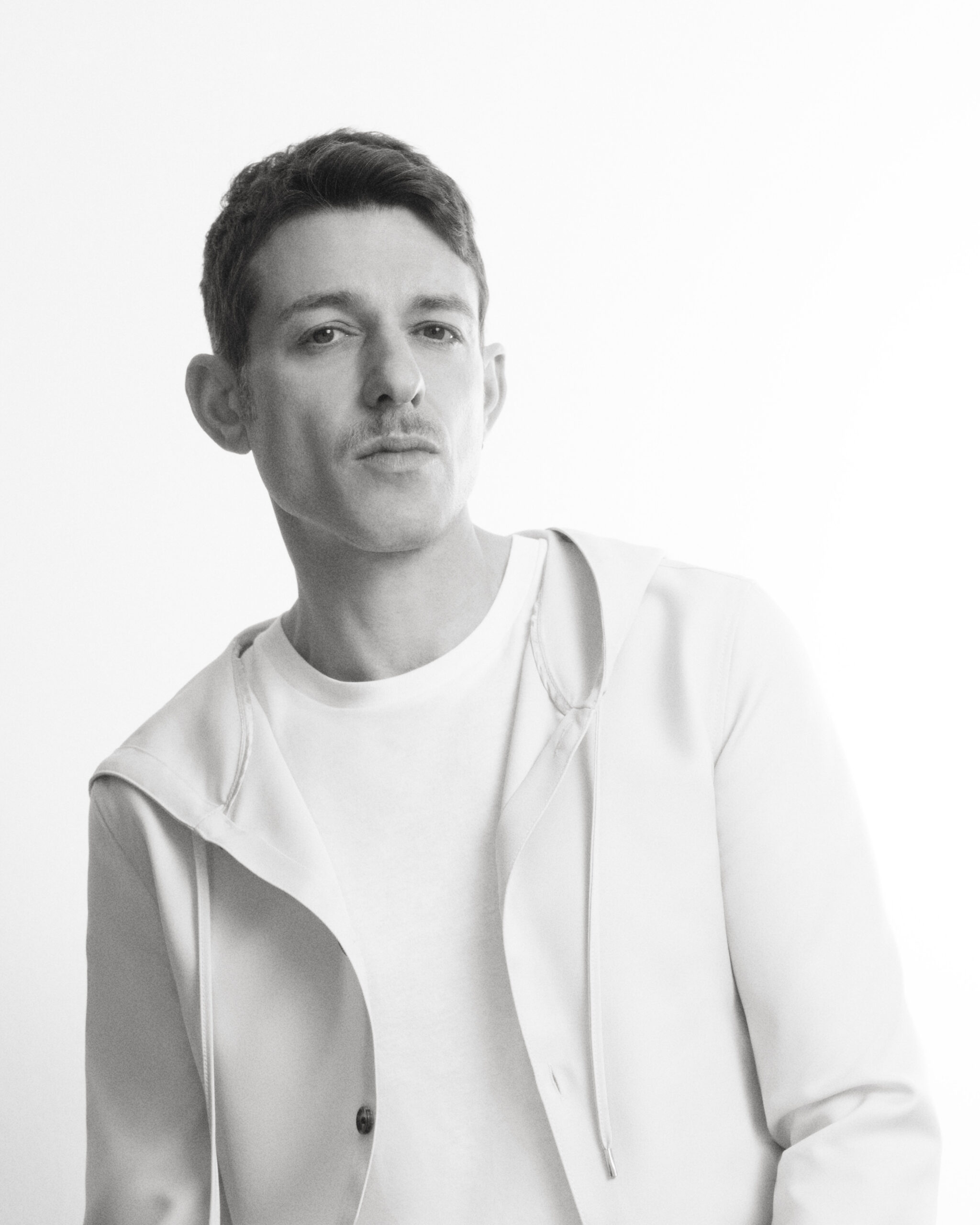
Courrèges creative director Nicolas Di Felice doesn’t consider himself an artist, but friend and actor Juliette Binoche disagrees. Having worn his looks on some of the world’s most camera flash-heavy stages (the Cannes Film Festival and César Awards among them), she has placed utmost trust in Di Felice’s creative vision. When they sit down to chat upon the fifth anniversary of the Belgian-born designer’s tenure at Courrèges, it becomes clear that their shared artistry has evolved alongside the Maison’s.
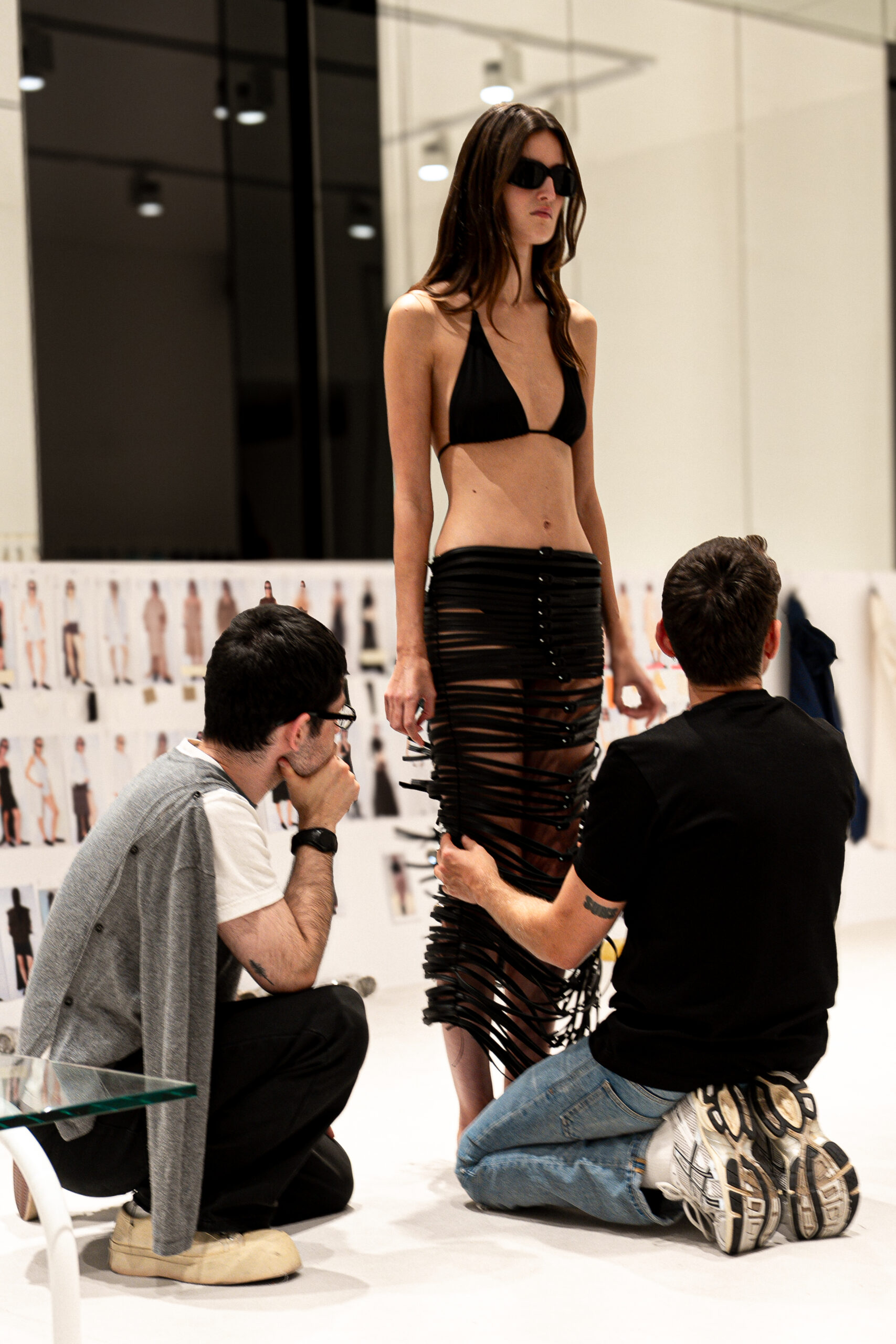
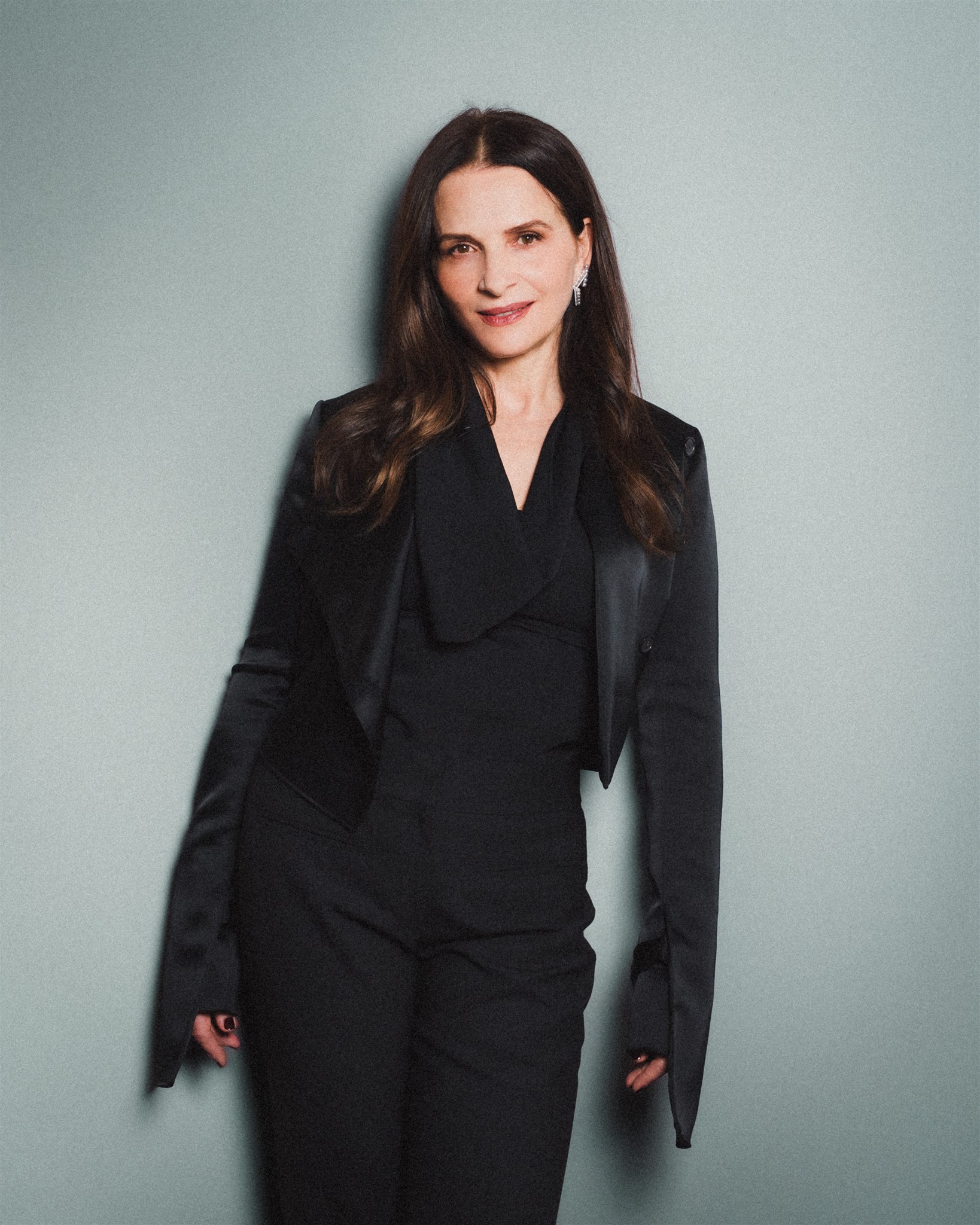
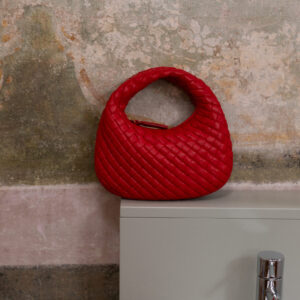
The exchange is like a chess match played in real time—two practitioners circling the same question from opposite ends of the board. Runway versus red carpet. Process versus product. Di Felice unpacks his vision for the House that André Courrèges built (think the calf-leather Strip bag—a slim, taut tube with space-age swoop handles that channels its founding codes) while Binoche deconstructs her forthcoming summer release and directorial debut, In-I In Motion. Drawn from her 2008 dance performance In-I, the documentary will complete a 28-festival run worldwide. “It’s been intense,” she admits, “but very meaningful.”
By the end of the conversation, no check mate is called—there’s just a small, telling gesture: The two exchange phone numbers and a promise of further collaboration. See if you can find a tease of its contents below.
Juliette Binoche: Your shows feel like such clear and decisive statements. How do you hold onto that vision?
Nicolas Di Felice: Thank you—that really touches me. It’s only by stepping back and talking with others, that I’ve realized this more clearly. Fashion is a strange mix: You’re supposed to please too many people, and of course there’s a business reality. But for 10 minutes, I want to propose a story, a vision, an idea, something that’s touched me.
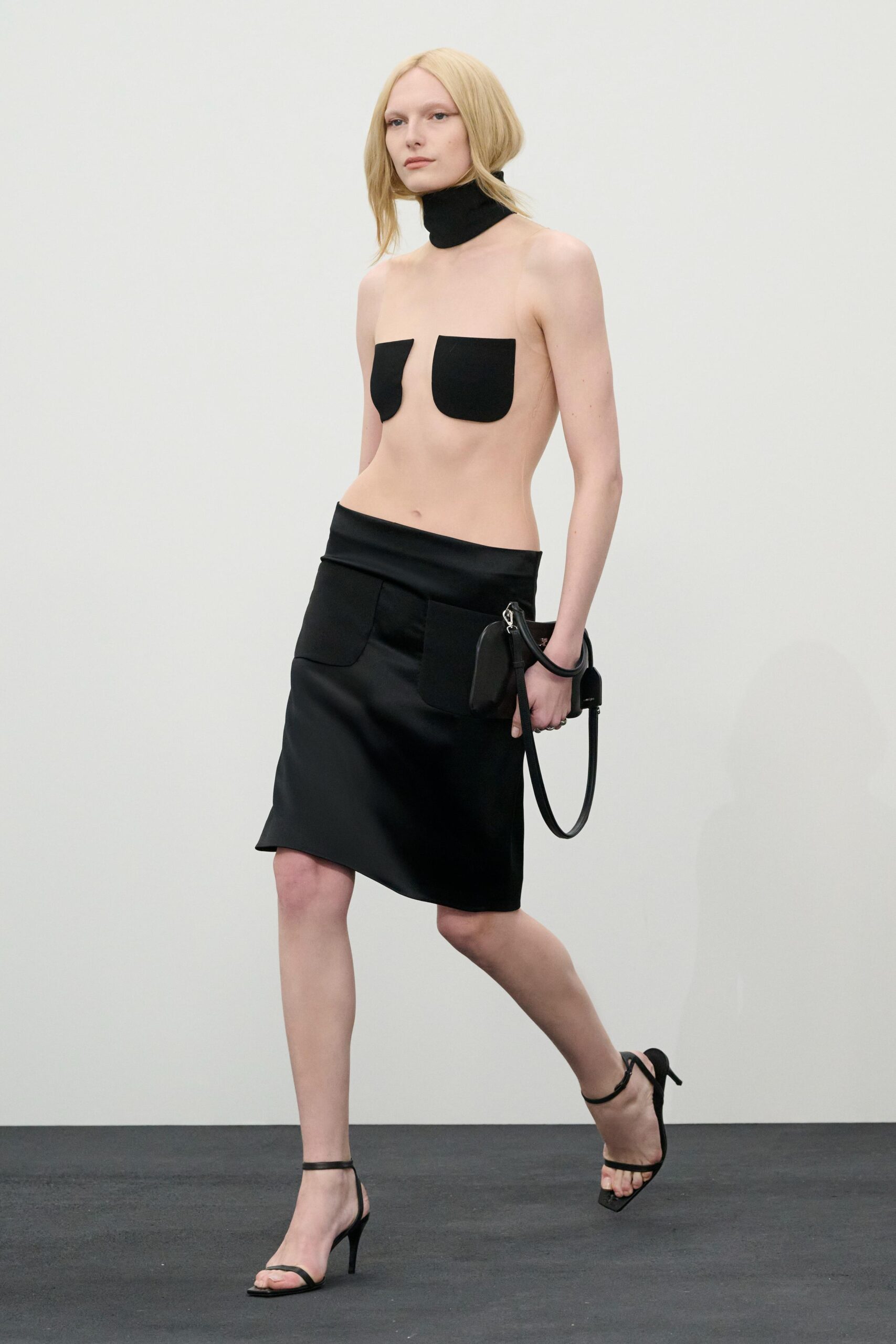
Most of the time, it starts with a single flash, a feeling that I try to put into those 10 minutes. And yes, usually it is one clear choice. I need to justify every design decision through storytelling. I also love seeing people wear my clothes; that’s one of the best feelings. But when it comes to the show, I need coherence. Everything could be beautiful—shorter, longer, more decorative—but I always return to the idea I wanted to express. Some silhouettes may feel very conceptual, and people may like them or not, but at least I know why I made them at that moment.
Juliette, as an actress, how does this idea of making clear choices resonate with your own process?
Binoche: It resonates deeply. As an actress, you also have to make choices—starting with the needs of the character, their flaws, what drives and disrupts them. You analyze the journey, and of course you try different approaches while acting, but you always have to come back to that need.
That’s what keeps you from losing the inside of the character. It’s about staying connected to the initial intuition, the feeling you decided to start with. Often, great directors don’t try to direct you too much. They trust you, and because of that trust, the best comes out of you.
Di Felice: It’s incredible what you can create when you feel trusted. Fashion is not something you can do alone, even though one person’s name is on the show at the end. There are so many people involved, from fabric sourcing to pattern cutting… What I love most about this job is being surrounded by people. We have to trust each other, otherwise nothing works.
Binoche: What do you love most about creating a fashion show?
Di Felice: Most of the time, it starts with a single flash, a feeling that I try to put into those ten minutes. I see a show as almost like a short film. The clothes are central, but everything works together, including the space, the movement, the music. Music, especially, is crucial. For the next show, it will be more important than ever in telling the story of the collection.
Much of it is very homemade. We record sounds in friends’ bedrooms, breathing tracks, raw elements. Everything has to come together. I love every part of that process, except maybe the moment when I go out to greet everyone. That’s not my favorite part.
Binoche: When I go to see your show, there’s always a very strong idea. Somehow, there’s a spirit of courage, touch, and architecture, the clarity of the lines. I find it exciting because it’s not about whether someone’s going to hate it or love it, you know? It’s more like an affirmation of the needs you’re exposing, and that’s what I love.
Di Felice: How do you feel now, stepping into directing while continuing your work as an actress?
Binoche: I’m a director in a particular way, because I didn’t shoot the film myself. I was in it. Marion Stalens filmed us, and I worked with her footage, editing for about a year.
Now, I feel like a new life is starting. I raised my children, and they’ve left the house. I feel free again, almost like a teenager. I have many stories I want to tell, and I still want to act. Acting remains wonderful to me.
Di Felice: Can you tell us about this latest project you’re working on?
Binoche: The film is coming out worldwide on June 2, and in France on June 10. I’ve been traveling a lot to prepare its release. We organized screenings at different festivals (I counted about 28 dates recently).
It’s been a long process and, in a way, a completely different world for me. Even though it’s still cinema, I was suddenly on the other side. What surprised me most was dealing with sound. I really discovered sound, how much you can do with it in a film, how it can create different worlds, different stories, and even change the story itself. That was eye-opening for me.
I worked very precisely on that aspect, and in fact, I was still working on the film until last Sunday. It’s a bit like what you experience in fashion, when you look at a dress and think you could have done it differently. You’re still discovering the work as you go.
Di Felice: I agree. We have a deadline every three months. So sometimes, yes, you obviously wish that you would have pushed a look in another way, but it’s actually funny. I’ve never really thought about this, but you’re so right. It’s difficult to accept ultimately, but you just have to let it go.
Binoche: Building on that, what first drew you to Courrèges?
Di Felice: I was always attracted to it in some way. The clothes are clean, minimal–one shape, one fabric. It resonates with a very Belgian way of creating. It also comes from one strong vision. André Courrèges didn’t change direction every season. He believed in something and stayed with it. He spoke simply, with clarity. That simplicity, that clarity of line, feels grounding in a chaotic world.
Binoche: And why do you always say that what you’re doing is not art?
Di Felice: I work with lots of artists around me. Musicians, for me, are more artists, even if it’s a big business. I mean, art is a huge business as well. You can say that [I’m an artist] and you’re right, but I mean, we’re supposed to sell clothes at the end of the day, you know?
Binoche: Yes, but you’re giving a spirit to the clothes. Never forget that it needs to be linked! The material needs to have a life, to be alive inside. So putting a thought and feeling into it changes the matter, and changes the clothes.
Di Felice: I hope so. I really truly hope so. Whether you like it or not, there’s a story of why the look is going around your neck, and some people do see that which makes me very happy and grateful.
Binoche: The outside shows something from the inside.
Di Felice: Exactly, Juliette. Vraiment. Je suis d’accord. At the end of the day, I’m not an artist. I wouldn’t say that, or I don’t know.
Binoche: I know, it’s because you’re pudique.
Di Felice: Oui, I don’t know! [Laughs]
The first time Juliette came to a show, I felt true happiness. I realized she was daring and comfortable in the clothes, choosing strong looks. People from my team would visit her, and they’d come back energized for months. That just means everything.
Binoche: Wearing clothes you feel connected to (and knowing who made them) makes a real difference. Each time I come to your shows, I love them. You connect with other artists, and that exchange brings something new. In a world where we need to unite more than ever, that matters deeply.
More of our favorite stories from CULTURED
The Substack Stars: 21 Newsletters That Your Favorite Writers Can’t Get Enough Of
In Wayne Koestenbaum’s First Novel in Two Decades, Gay Lust Incarnate Is a Rabbi With a Dad Bod
Eva Victor Made the Breakout Indie of the Year. Now, They Have to Do It All Over Again.
What Is It Really Like to Work at a Black Art Institution Right Now?
In Paris for Fashion Week? Catch These 11 Must-See Exhibitions While You’re There
Sign up for our newsletter here to get these stories direct to your inbox.

 in your life?