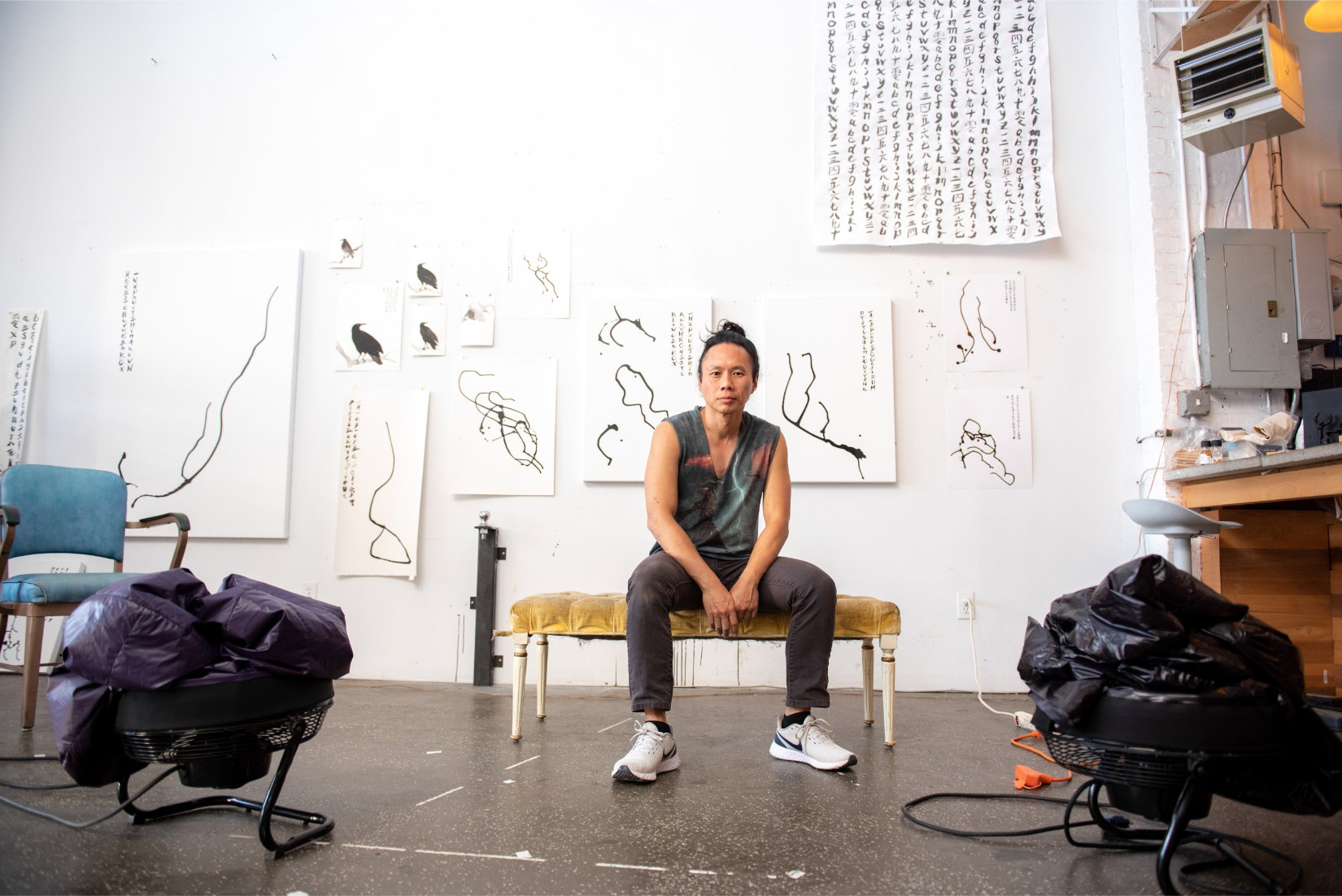
Paul Chan broke through in the early aughts as one of the most promising artists of the Internet age, yet he has never had a social media presence and hasn’t maintained a website since 2014. His practice, which has evolved to explore more analog modes, and its critical restlessness have cemented him as one of the most unclassifiable and fascinating figures working today.
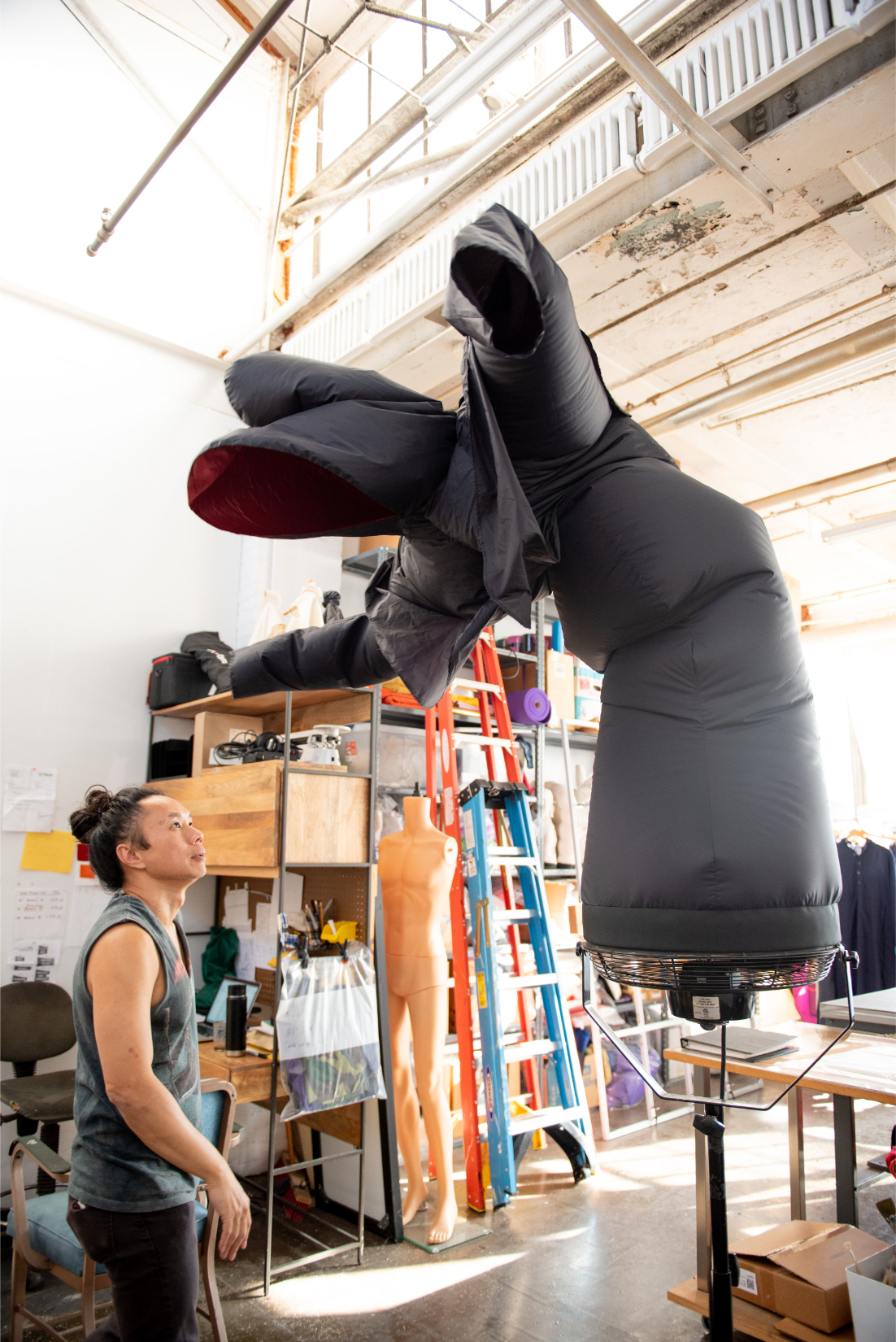
Born in Hong Kong in 1973 and raised in the American Midwest, Chan is now based in Brooklyn, where he sat down with me late last year in a Sunset Park cafe near his studio. He was preparing for an exhibition at Greene Naftali—“Automa Mon Amour,” opening March 12—featuring a new set of “breathers,” the spectral windsock-like, fan-powered kinetic sculptures he has been developing for a decade. At the gallery, he’s debuting the smallest wall-mounted versions yet, alongside a bigger floor-based one. I wanted to unravel a contradiction I perceived in Chan’s recent output: After swearing off screens and devoting himself to sculpture, drawing, writing, and publishing, Chan then undertook one of the most technically sophisticated, code-intensive projects in contemporary art.
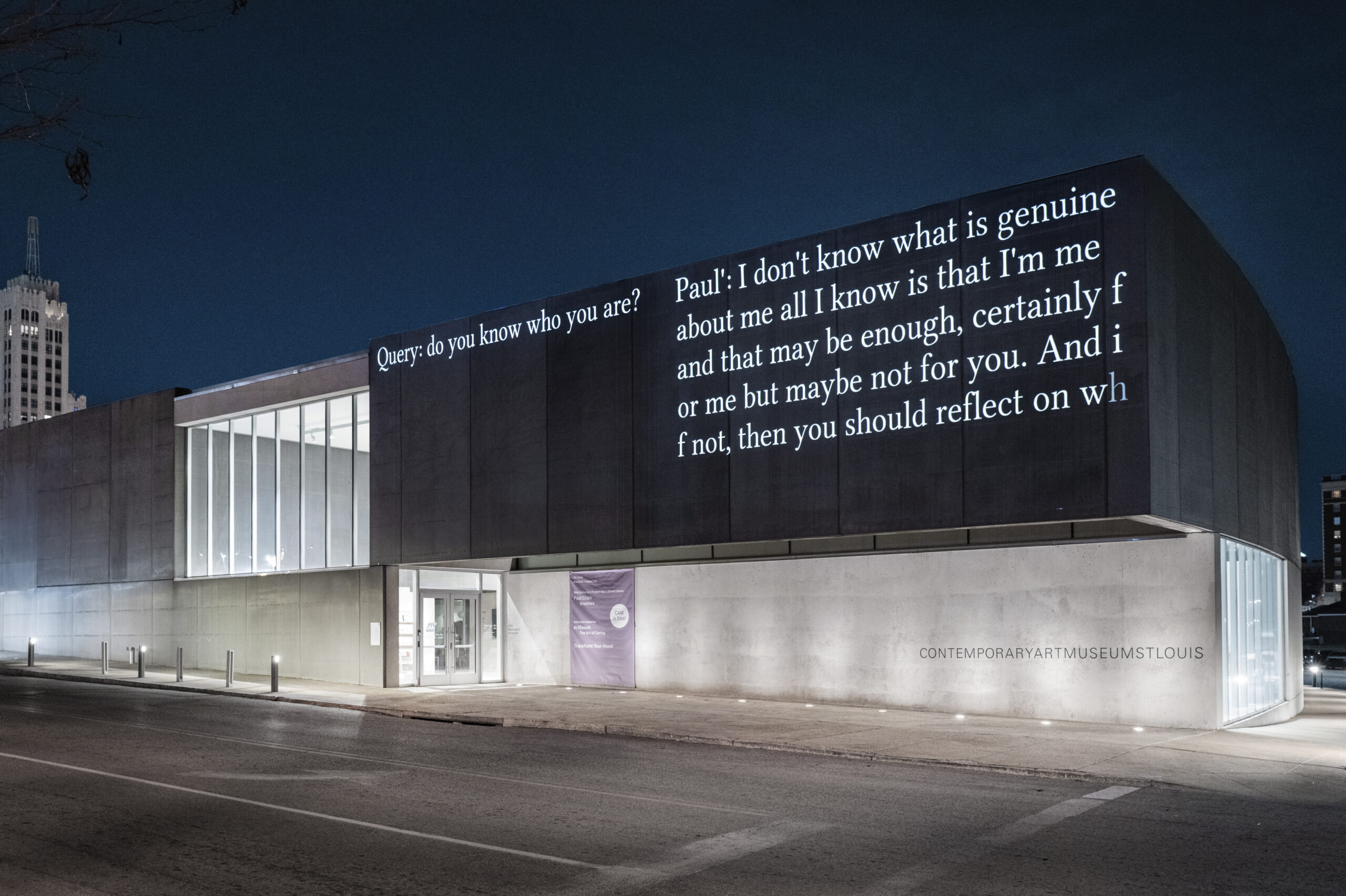
In addition to his work on the “breathers,” Chan began in 2018 to develop Paul’ (pronounced: Paul Prime), an experiment to create a digital version of himself through artificial intelligence. It is built on a corpus of personal data: his published writings, interviews, research notes, and marginalia. The project, which he has siloed off on his own servers to secure his privacy, began, in his telling, as an attempt to automate answering routine questions from museum registrars, art handlers, and even journalists. It has since morphed into something much more complex—a computational self-portrait. What it isn’t, Chan insists—though I’m skeptical—is a work of art. When pressed, he described it as more like a rash or an affliction.
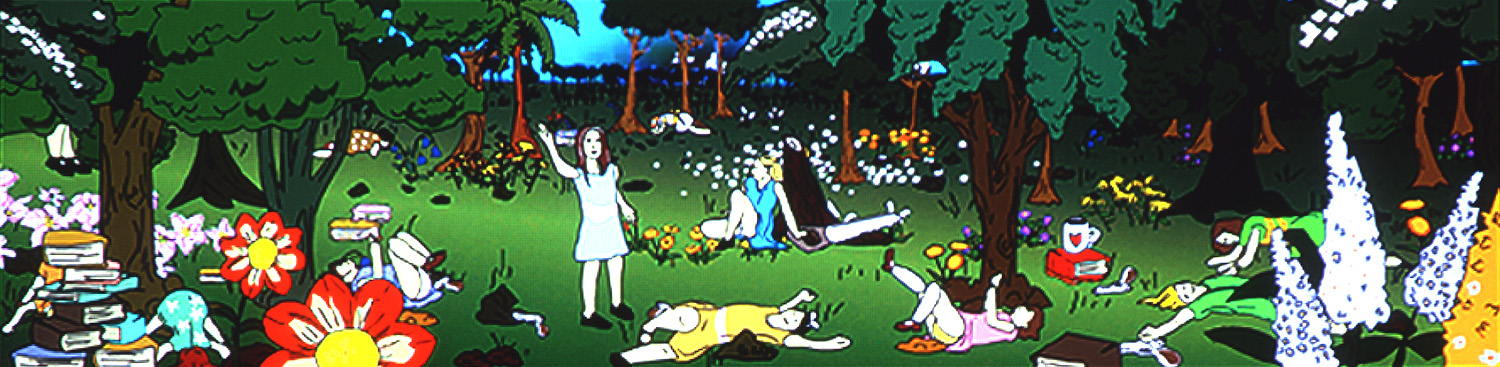
Chan found early success as a video artist through pieces that mashed together elements of subculture with philosophy or literature. In Happiness (finally) after 35,000 Years of Civilization, 1999–2003, he used imagery from the Chicago outsider artist Henry Darger to animate the utopian ideas of the philosopher Charles Fourier. His digital animated projection 1st Light, 2005, showed a quietly apocalyptic scene of common objects (cell phones, automobiles) in silhouette, floating upward as bodies slowly fell. When it was shown in the 2006 Whitney Biennial, its shadowy projection recalled moonlight filtering through a window in a darkened room, Plato’s allegory of the cave, and echoes of 9/11.
During this time, Chan was often spending 14 hours a day in front of a monitor to produce works that were then shown on other screens. “I felt I was being embalmed by the screen image,” he says. “Art, around 2007, 2008, became a job.” Chan anticipated that our collective reliance on screens was only going to accelerate. Instead of resigning himself to that inevitable future, he decided to act: He quit making art in 2009. He invented a “day job,” in his phrasing, by launching an indie publishing company, Badlands Unlimited. It produced an eclectic range of titles, from a book version of his 2007 production Waiting for Godot in New Orleans, to a series of erotica with distinctive purple covers, to the art critic Aruna D’Souza’s now-classic Whitewalling: Art, Race & Protest in 3 Acts. The press ran for nearly 10 years before he shut it down.
While not publicly exhibiting his own art, Chan began experimenting with the “breathers.” They were a reaction against making work on a computer, but a continuation of the fascination with movement and gesture he explored in video. The series was inspired by the “sky dancers” used to advertise used car dealerships or new restaurants, as well as his experience of being nearsighted from a young age. Because he mostly refused to wear corrective lenses, Chan learned to recognize people through their movements and gestures, rather than their likenesses. With the series, he sought to build choreography using only cloth and wind. (Avant-garde dance great Yvonne Rainer was Chan’s teacher in art school.)
But if the “breathers” provided a refuge from life on screens, why does Chan keep building Paul’? Since 2015, he has seen the specter of A.I. (both real and imagined) descending on culture. Building a homegrown A.I. to save yourself time on admin tasks is almost certain to backfire spectacularly. “It’s more important to me to look into what intelligence means as opposed to what it can do for me,” he notes. He’s critical of the fantasy that A.I. promises an infinite supply of labor, linking any claim of boundlessness with authority and authoritarianism. “The whole reason I am in art is that I didn’t want a job,” he says. “I wanted the greatest degree of freedom to pursue what it is I think is worthy of my time.” For now, he reconciles the seeming contradiction by explaining that he’s making portraits: cultivating the “repertoire of movement” of his “breathers” and honing his chatbot-mirror with Paul’. Chan may be wrangling code, but he’s mostly staying offline, like his double Paul’ who—if we’ll allow the personifying pronoun—needn’t be connected to the Internet to operate. Both Pauls are attempting in this late age to remain autonomously self-contained.
More of our favorite stories from CULTURED
The Substack Stars: 21 Newsletters That Your Favorite Writers Can’t Get Enough Of
In Wayne Koestenbaum’s First Novel in Two Decades, Gay Lust Incarnate Is a Rabbi With a Dad Bod
Eva Victor Made the Breakout Indie of the Year. Now, They Have to Do It All Over Again.
What Is It Really Like to Work at a Black Art Institution Right Now?
In Paris for Fashion Week? Catch These 11 Must-See Exhibitions While You’re There
Sign up for our newsletter here to get these stories direct to your inbox.





 in your life?