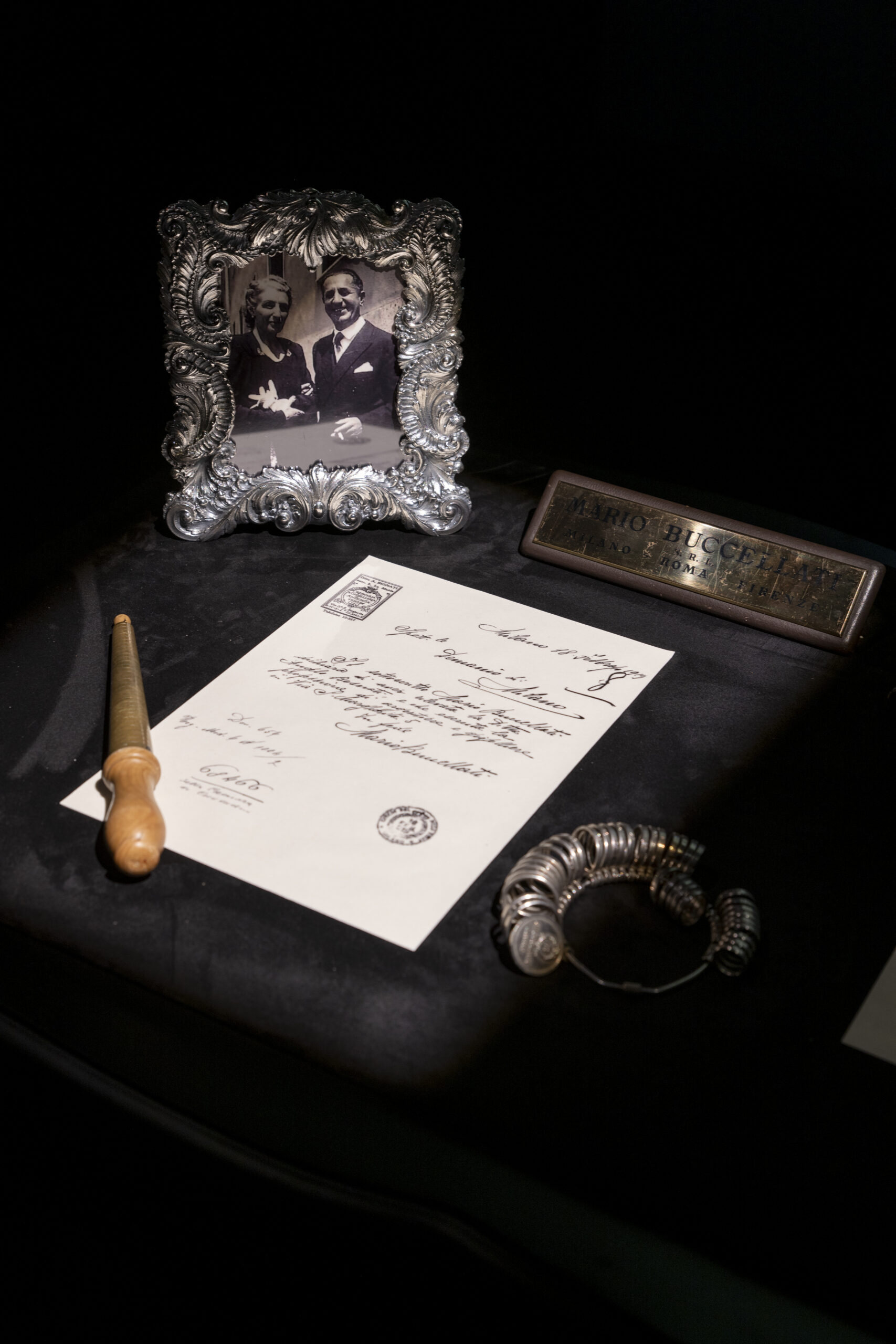
Despite having legions of rare stones, red carpet-worthy necklaces, and hand-etched minaudières on hand, the essence of Buccellati’s history may best be embodied in just four brooches shaped like butterflies, a long-standing signature motif. Each was included in the house’s major retrospective in Shanghai, which closed just a few weeks ago. The exhibition, titled “The Prince of Goldsmiths,” tracked the family-founded enterprise’s history over the past 100-plus years and traced the interplay between the endurance of timeless design and the necessity of artistic evolution. (The esteemed house launched in 1919, and is now owned by Richemont).
These brooches represent descending generations of the Buccellati family, who remain involved to this day: Mario (the founder), Gianmaria (his son), Andrea (his grandson), and Lucrezia (his great-granddaughter). Lucrezia’s takes the biggest leap, or rather flight, forward. Its antennae have been removed and its thorax stylized as two large teardrop diamonds. The wings remain intricate like the bug’s predecessors’, but are more streamlined, too. “You can see,” said Andrea during a tour, “it becomes more clean, more sleek over time. There’s honeycomb work in the wings. Notice the metal doesn’t shine, but it’s always strong.”
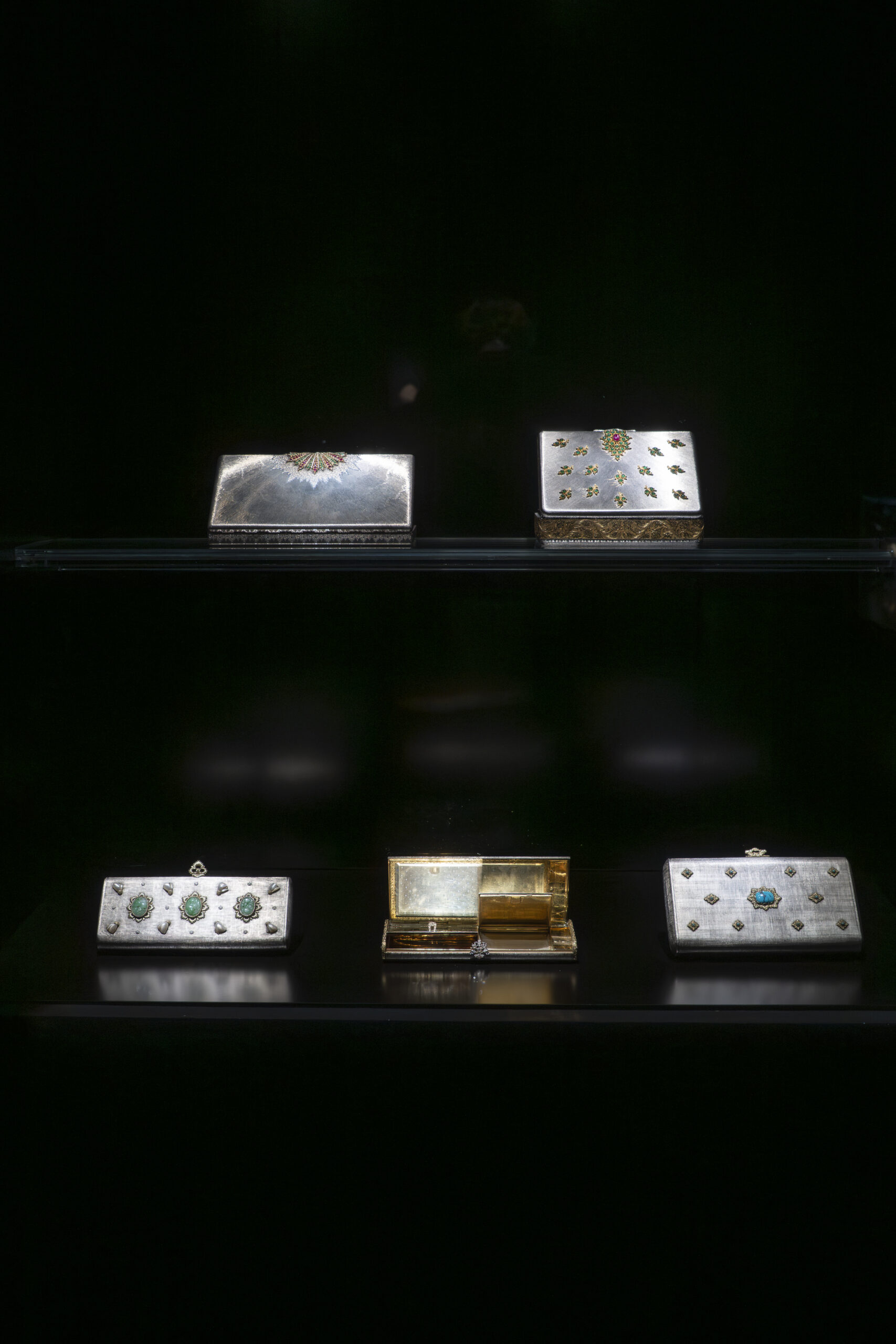
The label still makes the kind of sumptuous traditional pieces shown in the exhibition, but it also has glimmers of contemporary flash. See, for example, its “Hawaii” series, which features interlinked gold hearts and circles. In addition to the jewelry that the designer is most known for, the exhibition highlighted its lesser-known but even more beguiling home decor, particularly that evoking animals and wildlife. In one room, the works were gathered as if in a décor zoo: a gigantic chrome lobster, bowls in the shapes of dahlias or sunflowers. Ducks, foxes, and fawns all appeared wrapped in “furry” silver, a technique developed by of individually cutting “strips” of hair into the metal by hand.
Buccellati’s enduring legacy balances these botanical flourishes with tasteful reserve. Its primary motifs, the butterflies and an ornate, almost cross-like shape called “Opera,” are graphic but not loud. Pieces carry a renowned global pedigree but can still fly under the radar. Ultimately, the exhibition shows what Buccellati does best: skillfully balancing a degree of understatement with its unmistakable Milanese flourishes.
More of our favorite stories from CULTURED
10 Collectors Share the Book That Changed How They Think About Art
Nobody Sings About Sex Like Peaches. With Her First New Album in a Decade, She Shows Us Why.
Stylist Jason Bolden Spotlights 3 Young Black Designers You’ll Soon Be Seeing a Lot More Of
The 14 Horniest Places in New York, According to Jordan Firstman, Francesca Scorsese, and More
Sign up for our newsletter here to get these stories direct to your inbox.






 in your life?