How to encapsulate Industry in a sentence? Four seasons of premium television chronicling the Machiavellian antics of a group of young London financiers—sex, drug, and gambling addicts from various sides of the socioeconomic tracks—who are slaves to risk. The HBO show debuted in 2020 with a cast of, as Sagar Radia puts it, “nobodies” and has minted stars: Myha’la and Marisa Abela chief among them. But one of the most surprising rises of all happened within the confines of Industry itself.
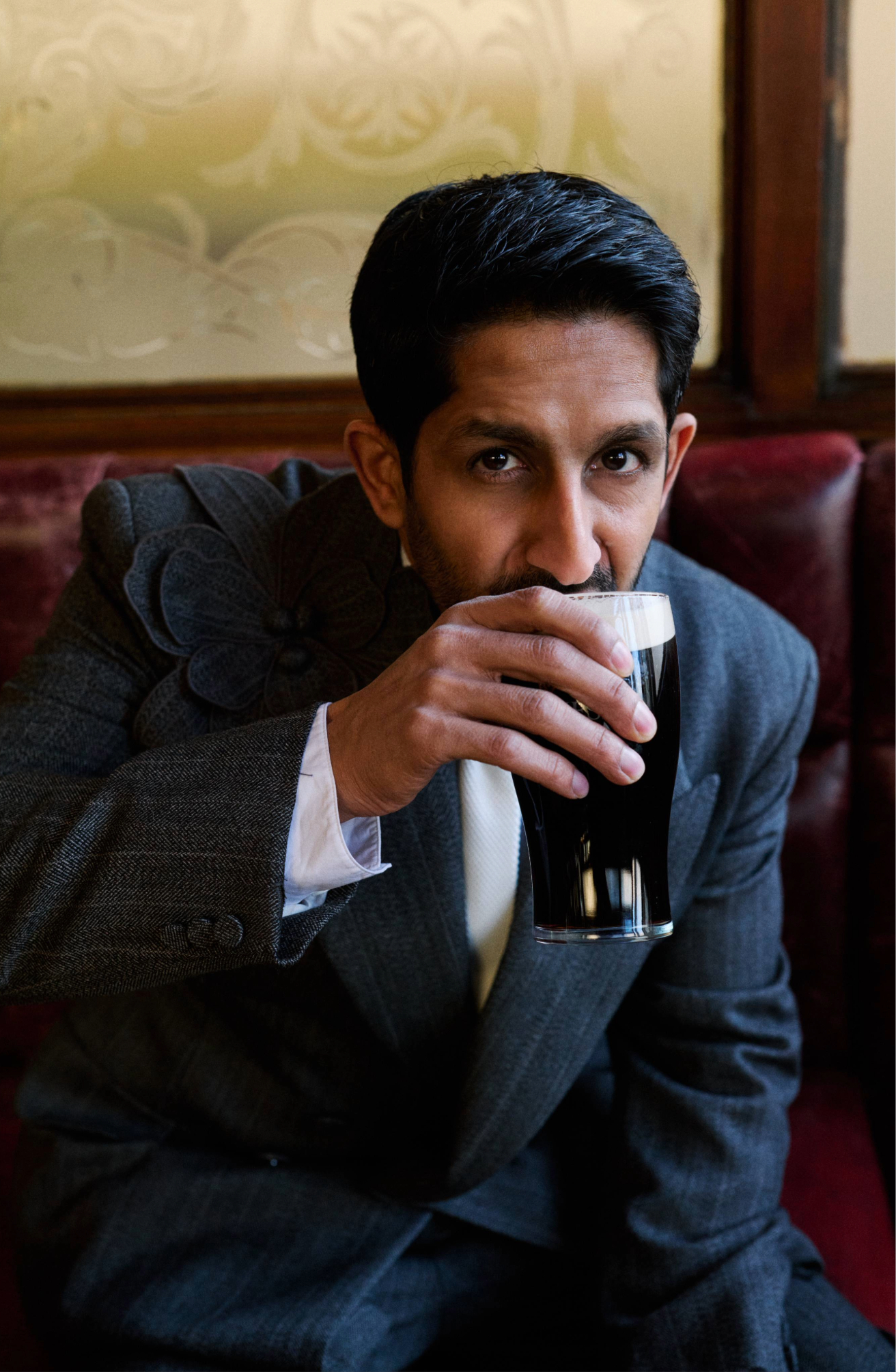
London-born Sagar Radia had a recurring role in a U.K. medical soap, The Good Karma Hospital (“I was on the poster”), before he landed the role of Rishi Ramdani, a foul-mouthed mid-level trader with a penchant for roasting subordinates. In Industry’s first season, his impact is ambient at best—volleying the occasional hair-singeing jab across the trading floor. But Radia wanted more. By the time season three came around with a coveted HBO Sunday-night slot in 2024, he had his chance.
“Mickey [Down, the show’s co-creator] said, ‘Hey, man, we’ve got some really cool ideas for Rishi. We’re thinking about a standalone episode,'” Radia tells his season four co-star Charlie Heaton. “Honestly, I didn’t believe him.” That promise came true, though: Over the course of a dedicated episode involving untold quantities of cocaine, brutal loan sharks, and a night at a low-grade casino so ill-fated that security breaks his nose, Radia laid his character—and himself—utterly bare. His performance of a tormented, narcissistic, and hopelessly in debt adrenaline junkie embracing the void was so stirring that it brought the entire cast (and a handful of HBO execs) to their feet during rehearsals. It also rewrote the future of Radia’s career.
This season, Industry is raunchier, more lavish, and more diabolical than ever. With the actor’s latest (and final) turn as Rishi now behind him, he sat down with Heaton—who recently bid farewell to his Stranger Things character after a decade—to recap the greatest hits of a wild, six-year ride.
Charlie Heaton: Take me back to the beginning of Industry.
Sagar Radia: Wow, Charlie, that was so professional. Industry has always been the little engine that could—low-budget in HBO terms. In season one—all due respect—nobody was a name. We all put our heads down, did the work, and just hoped for the best. Then Covid hit, and everyone watched the show because there was nothing else to do. With season two, something similar happened. Season three, HBO had an empty slot, so they bumped us up to the Sunday-night prime-time position. By now, we’ve got a bit of confidence and a tiny bit of swagger. We’ve got Kiernan Shipka. We’ve got Stranger Things stars.
Heaton: I was terrified to join this cast. I’ve been on Stranger Things for the better part of 10 years, but I was on that from the beginning. With this, I auditioned on a Wednesday, and I Skyped with the boys [creators Mickey Down and Konrad Kay] that Friday. I was on a plane on Sunday and filming on Tuesday. In season one, your character is more of a supporting role, but we like Rishi because he’s awful. He’s so cocky that we want to know more about him. Konrad and Mickey obviously saw that, too.
Radia: On one of my last few days shooting season one, I remember trying to muster up the courage to talk to them. I was like, How do I stay on their minds so they don’t forget me for season two? At one point, we were all at the craft table, and I was like, “Hey, I’d love to discuss if there’s a Rishi in season two.” I tried to be really demure, because I felt like a nothing in the show.
At the time, I was on another show called The Good Karma Hospital. I’d done that for three seasons; I was on the poster. They wanted me to come back. Eventually, I had a meeting with Mickey and Konrad, and they were like, “Listen, we’ve seen the response to Rishi, and we want to write him up a bit.” Truthfully, I was a bit torn because we all know the industry. People say things, and they don’t always materialize.
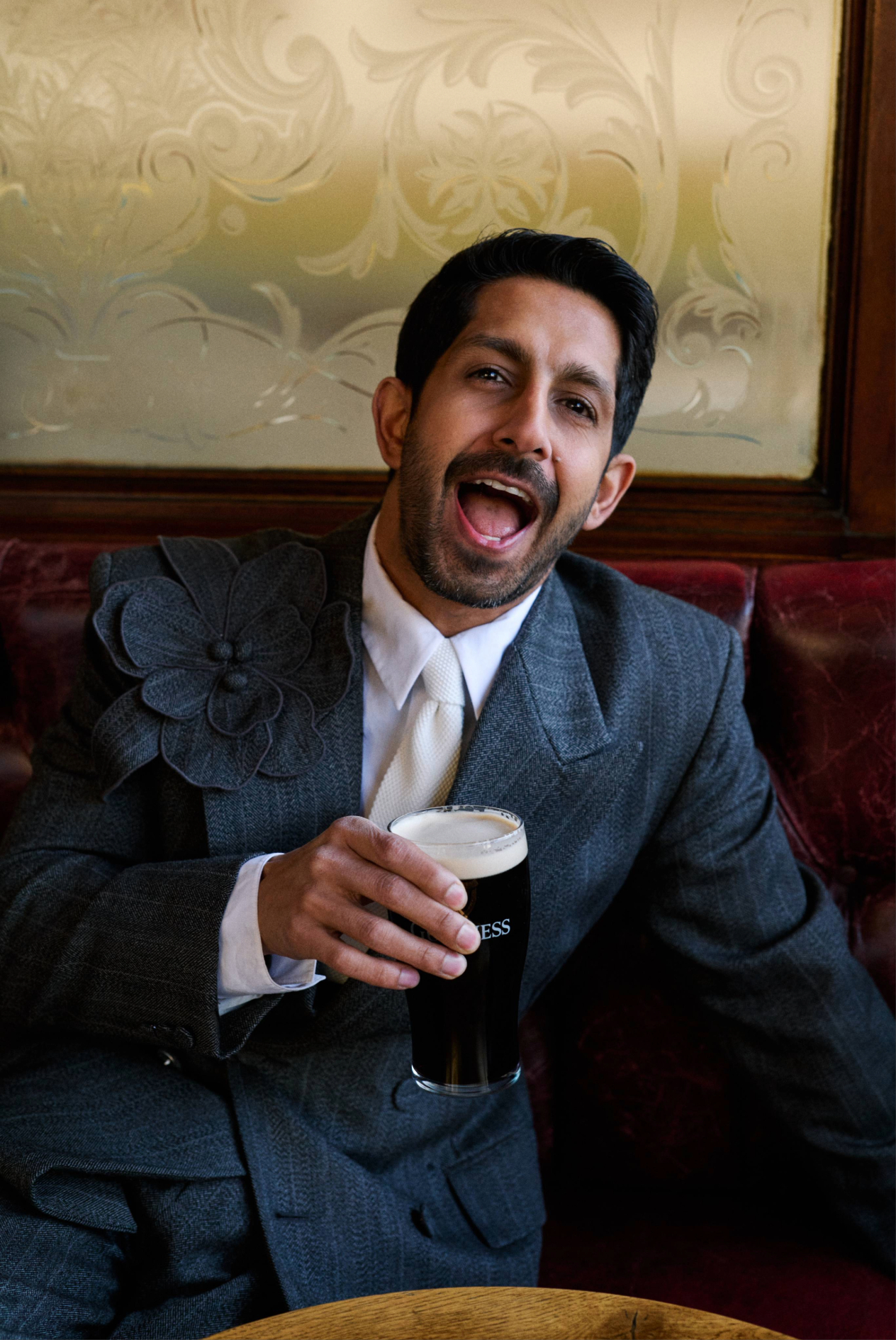
Heaton: It’s so tough. You’re like, If I say yes, I might be sitting around for months. I might come in for one day. And in that time, I can’t really do anything else.
Radia: I nearly did say no. Thankfully, I came back, and we got to see a little bit more of Rishi.
Heaton: Your big season three episode is basically standalone. It’s so intense, man. You’re such a mellow guy. Where did all that come from?
Radia: I have no idea. Maybe it’s a secret admiration for the kinds of people who have that kind of chest-out type of personality. It was a great episode. We actors can go our whole careers and never get an experience like that. I was like, I’m going to grab it with both hands. I was actually more scared about the read-through than I was about anything else, because you’re sitting around a table, with all the big execs, you’ve got the entire cast around you. And you are speaking non-stop for 90 percent of that.
Heaton: Did you get a heads-up about it?
Radia: When it was confirmed, I was like, “Holy shit. Are you sure?” When the read-through finished, Myha’la—who is an amazing champion and leader for us on the show—got to her feet and started clapping. She was like, “Yeah, Sagar!” Everyone got up.
Later, I look out into the car park, and there’s Mickey, Konrad, Jane Tranter, Flynn MacDonnell, Kate Crowther standing outside. It was like a little mothers’ meeting between the top execs. I was like, They think I’m crap. They’re gonna write up some scenes with Marisa and Myha’la to water down the episode. That wasn’t the case. Did you have any fears during shooting?
Heaton: Absolutely. I’d come from Stranger Things, where it’s all very large group scenes, or lots of action where you might have one or two lines. I got the Industry scripts and saw our scene alone at the end—the intensity in that dialogue! I was re-reading that for weeks before we shot it.
Radia: It’s not one of those scenes you glance at in the makeup trailer the morning of?
Heaton: I finished Stranger Things this year. Rishi’s done for you as well. How do you feel?
Radia: I’m genuinely torn. Sometimes I feel sad about it, because I’ve enjoyed this character. There’s also that fear as an actor: Am I going to land cool characters like this again? Have I already peaked? On the other hand, I’ve showcased to the industry what I can do. The rest is up to the powers that be. Did you feel similarly with Stranger Things?
Heaton: I’m still processing. It’s going to be one of those things that I’ll look back on as the years go by and be like, What was that? It was all of my 20s, first job, the people. Obviously, you can’t just be like, “This is the best thing in the world” for 10 years straight. You have days where you turn up, and it feels like a job. But it’s not often you get to have such closure, where you really close chapters in your life. I got to do that on that show. It was really emotional on set, our last day with everyone. We’re shooting a scene on a rooftop. Inside, we were all dying, and that night, we had dinner together, which was really beautiful. When I woke up the next day, I felt a deep loss, like a breakup. Did I tell them I love them enough day, that I’m gonna miss them? That is the beauty: It meant that much.
Radia: I guess it’s the nature of what we do, right? We end up in such close proximity with people for months at a time. Then, suddenly, you don’t see them anymore. It does feel like you’ve just broken up.
Heaton: Even saying goodbye to the character was like saying goodbye to a friend. Is there anything in this industry where you’re like, I really want to—boom—take a stab at that?
Radia: I want something very left-field after Rishi. People who look like me don’t always get to be the object of desire or to be sexualized. I’m also a sports guy, so action is enticing—the chance to do stunts and play with your physicality. I’m trying to stay open.
Heaton: I want to see that. Look, man, I’ll see you in London.
Radia: Give me a shout when you’re here. I owe you a drink for sure.
More of our favorite stories from CULTURED
Julie Delpy Knows She Might Be More Famous If She Were Willing to Compromise. She’s Not.
Our Critics Have Your February Guide to Art on the Upper East Side
Move Over, Hysterical Realism: Debut Novelist Madeline Cash Is Inventing a New Microgenre
Sign up for our newsletter here to get these stories direct to your inbox.




 in your life?