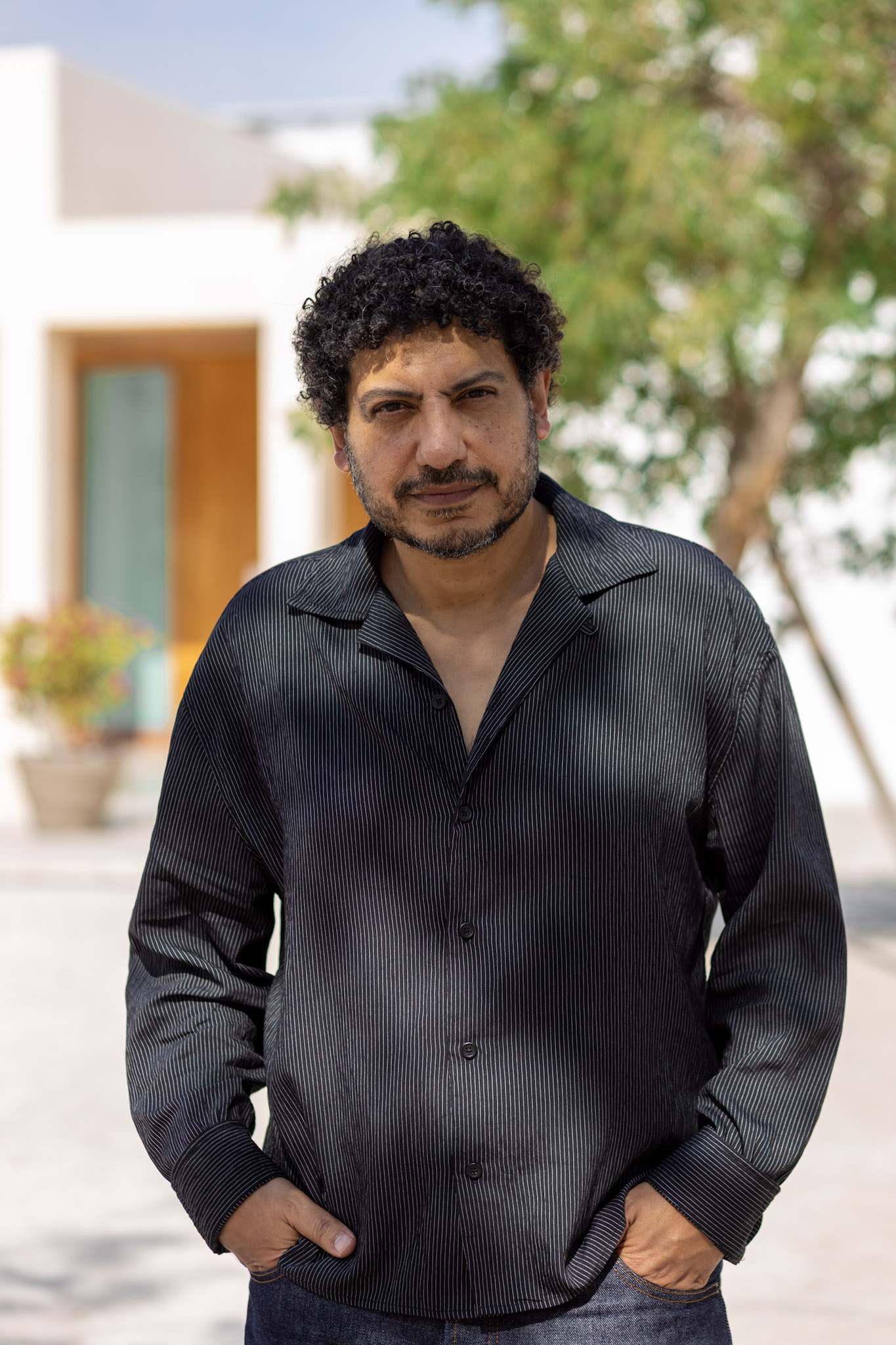
Art fairs, with their back-to-back booths, tend to get little love from artists, admits Wael Shawky. The acclaimed Egyptian artist and his creative friends “didn’t really attend many art fairs,” he told me in a video call earlier this month.
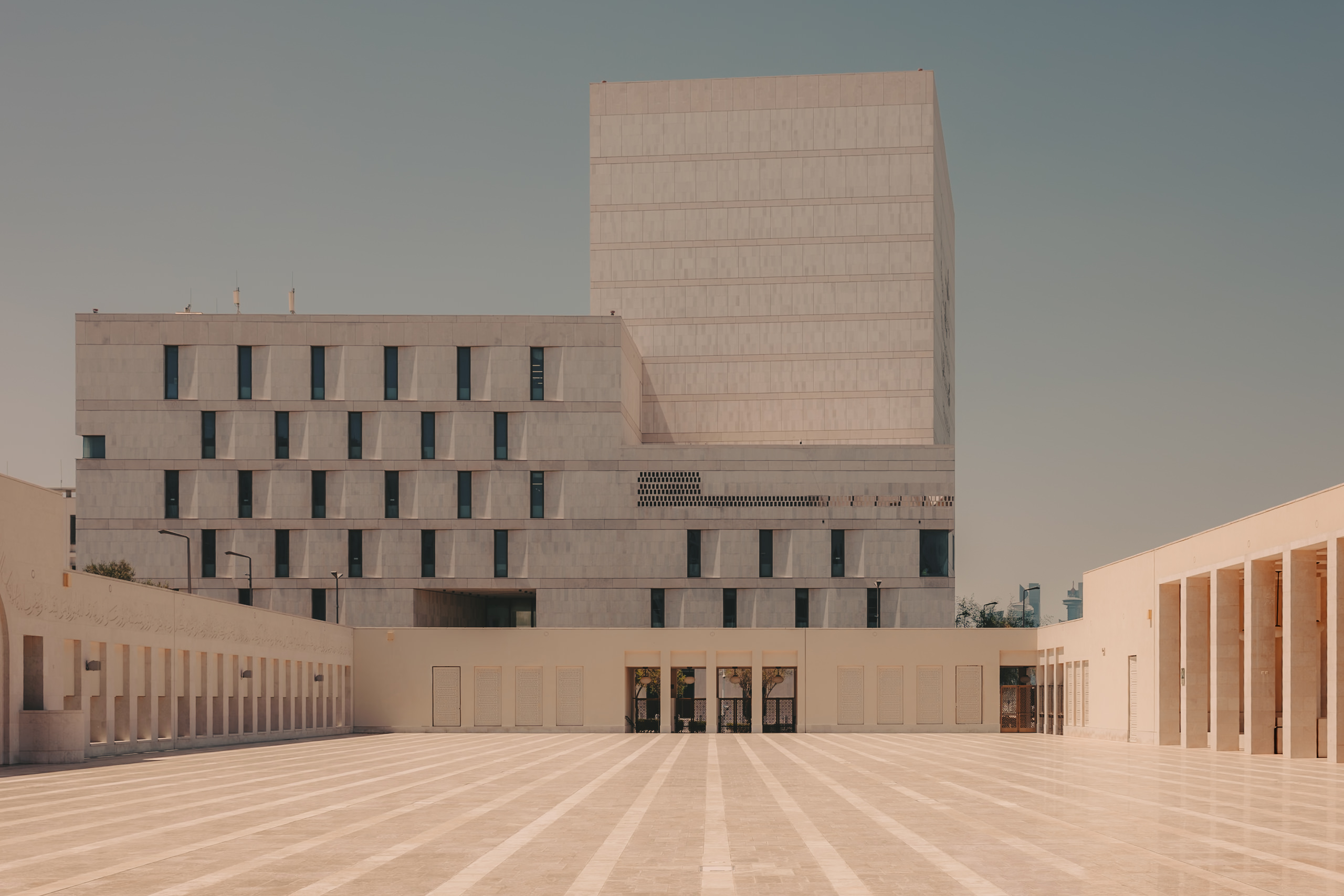
So it was a surprise that Shawky, who represented Egypt with a buzzed-about pavilion at the 2024 Venice Biennale, was tapped as artistic director of the inaugural edition of Art Basel Qatar, located in Doha’s M7 creative hub and Design District and running from Feb. 5–7. (He is working alongside Vincenzo de Bellis, chief artistic officer and global director of fairs for Art Basel.)
As the global art market seeks new clientele following a contraction, the newest edition of the Art Basel fair—its fifth location, announced last spring—aims to spotlight the region’s fast-growing art scene. Organized in partnership with the Qatari government-operated Qatar Sports Investments and their strategic partner QC+, the fair fits within the country’s broader plans to expand its role as a global arts player and diversify its economy, akin to efforts underway in the neighboring United Arab Emirates and Saudi Arabia. For Qatar, this push has included the creation of a new Qatar Pavilion at the Venice Biennale and the addition of the Art Mill Museum and the Lusail Museum to the existing Qatar Museums. Plus, the Gulf’s largest fine art storage and logistics freeport is now under construction in the country.
At the same time, fair fatigue and prohibitive costs have led many to question the traditional art fair model, which is why Shawky’s unconventional role—a first of its kind for such a large fair—makes sense. The Doha-based artist’s performances, films, drawings, paintings, and music reinterpreting regional ancient history and mythology from an Arab perspective have made him one of the region’s most celebrated voices. Shawky studied at the University of Alexandria, received his MFA at the University of Pennsylvania, and then returned to Alexandria, where he created the MASS Alexandria art school. In 2024, he was appointed head of Doha’s Fire Station contemporary art space, where he launched the Arts Intensive Study Program (AISP), a free international residency and educational program.
In response to what he called the “outdated” fair model, Shawky said he hopes to more closely align the Doha edition with the vision of artists, rather than the logic of sales. This, he added, is mirrored by changes in contemporary art, which he sees as less and less centered on sellable objects. To that end, Shawky has organized an open fair format of solo exhibitions from 87 galleries, while highlighting regional artists whose market is still budding. He also invited nine artists for site-specific presentations across Msheireb Downtown Doha. The focus “needs to go back to the power of the artist, and the narration of the artist,” Shawky said.
In a world increasingly restrictive—and sometimes outright hostile—to outsiders, Shawky is convinced Qatar is rising to the fore as a unique, welcoming haven in the region. Below, I speak to the artist about why next month’s fair offers a chance to demonstrate just that.
CULTURED: How did your collaboration with Art Basel come about?
Wael Shawky: The idea was that it was nice to have an artist for the first time from the region, and also to have a new vision for this new edition in Qatar. I was really honored and I thought it would make total sense … I was appointed the artistic director of the Fire Station, which is becoming a school of contemporary art in a different and unique way, but we still need to connect this to the professional art market and institutions. The cycle has to be completed.
CULTURED: How is this inaugural fair distinct?
Shawky: It’s very important to try to reduce the gap between the artistic process itself and the art market, and I think that is what is happening in Doha for this edition. Each gallery is allowed to present only one artist. It looks like many solo shows, so it’s a way to make all these different galleries give a sort of narration … without reducing the original context of the artwork.
CULTURED: Does the traditional fair model need reforming?
Shawky: Yes, but this is much bigger than me … [Within the fair] the gallery needs to be working more like institutions—not only as a place that serves sales. I know this is difficult from an economic point of view, but this is what is really needed more today … I’m very optimistic and I think [this edition] will open a lot of discussions.
CULTURED: Are you seeing changes in the local scene thanks to the fair?
Shawky: Fifty percent of the galleries [in the fair] are coming from the region, which is really great. That was also part of the mission—not to focus only on the big names from European and American galleries, but to have them coming from everywhere. One challenge was that many great Arab or African artists don’t have good galleries representing them, but we know that they are really good… So we need to also focus on the artists themselves.
CULTURED: Why is Doha well-positioned to platform the regional art scene?
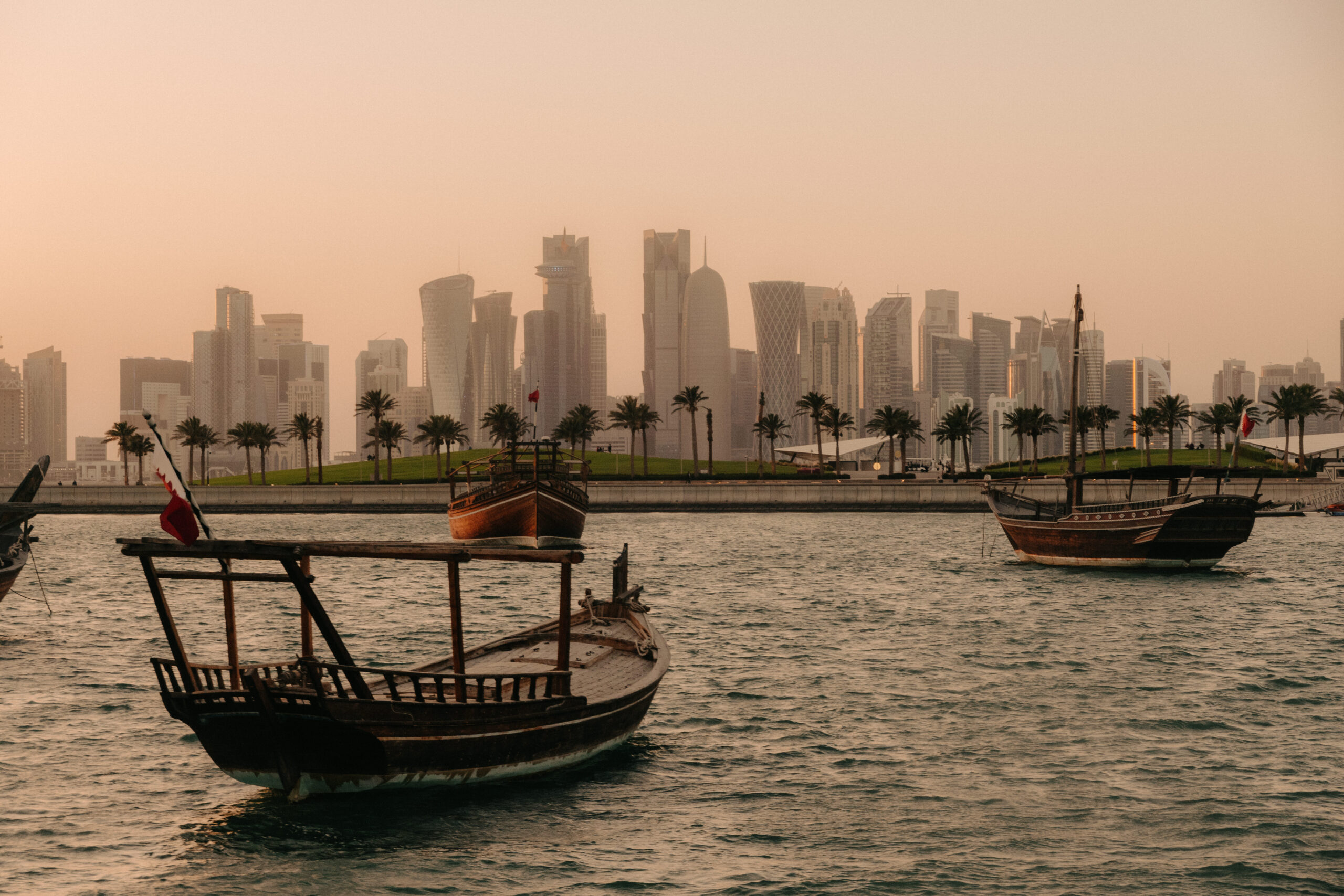
Shawky: Because here, even the idea of nationalism that I see in different Arab countries, for example, [in Qatar] is based on how the country itself can become a hub for everyone.
With Fire Station we are asking: How can we provide 16 different nationalities all these opportunities? Our idea is not only to bring people from Qatar, it’s how to make Qatar itself the place that serves all the world … We really need to work with the world. We don’t want to close in on ourselves.
CULTURED: This ties to the fair concept: Becoming.
Shawky: It’s about the dream of humanity to develop in general. The Gulf can be only a metaphor for this dream. How can you change your system rapidly, because you have this dream to become better? I believe that everything is happening in the right moment, in the correct place.
CULTURED: Are there misunderstandings about censorship of certain subjects in the Gulf, such as nudity or homosexuality?
Shawky: I can be censored in Germany also. This is the same. For me, this is nonsense, these types of discourses. There is a culture here, and it’s normal that we respect the culture. I’ve lived all my life in these countries and consider myself capable of creating everything I want. I talk about all the topics I want … [Some form of cultural sensitivity] is everywhere in the world. There is not 100 percent, endless freedom to say everything. There is a way to respect culture. This is normal … What I see here in Qatar, now, is much more generous than what I see in many places in the world today, and this generosity can even cover the question: How can I accept others?
[Qatar] is inviting all these different nationalities to be part of the discourse, while there are many other places in the world now that are trying to send back all to the other voices—and now we’re still talking about censorship?
More of our favorite stories from CULTURED
Why Are So Many Contemporary Museums Showing Dead Artists Right Now?
Wolfgang Tillmans Became a Household Name Finding Beauty in the Banal. He’s Ready to Re-Evaluate.
19 Design Experts Answer All Your Burning Interiors Questions
Nia DaCosta and Ryan Coogler Compare Notes on Marvel, Genre-Hopping, and Making Films That Shock

 in your life?