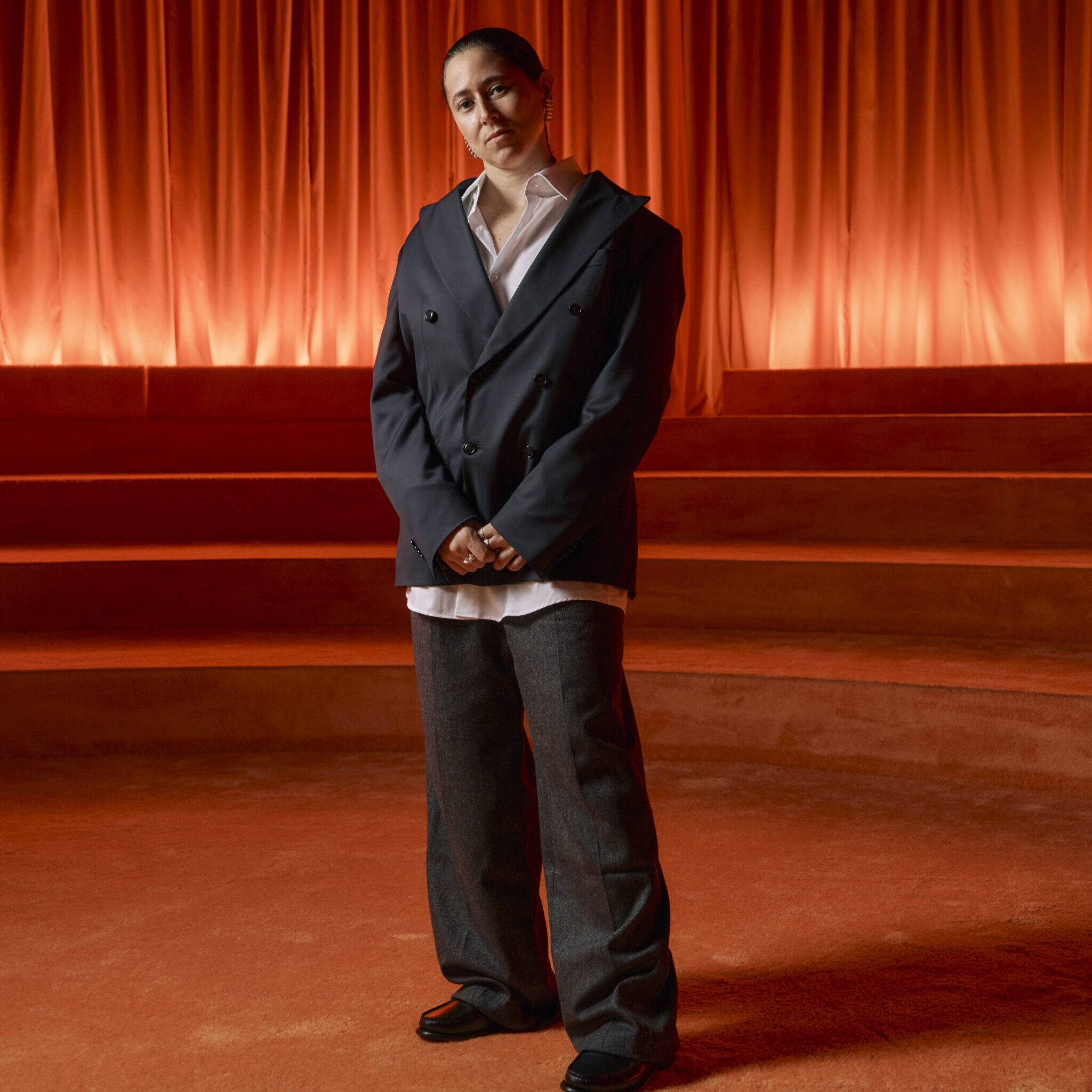
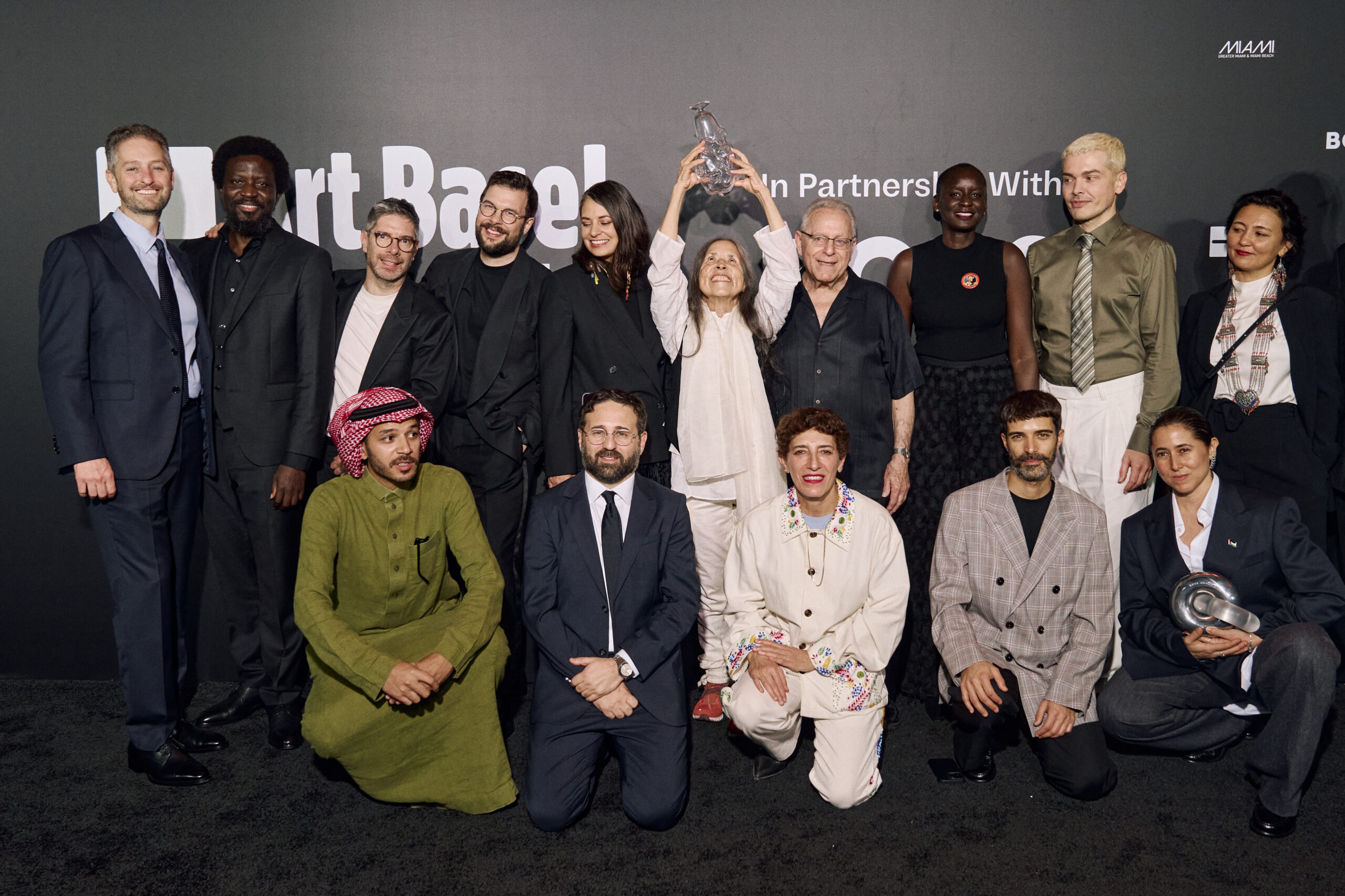
Whether she is staging a flip-flop opera or turning a heliport into the setting for a museum gala, Meriem Bennani relies on the power of fantasy to transport her audiences into mind-bending realms where both timely and timeless questions surface. This ethos earned the Moroccan-born, New York–based artist the inaugural Boss Award for Outstanding Achievement at Art Basel Miami Beach last December, honoring work with cultural resonance that extends beyond the market.
Over the past decade, Bennani has made her mark with a multimedia practice that skewers and softens contemporary life in equal measure, from her 2018–22 “Life on the CAPS” film series, a dystopian meditation on diaspora, to her kinetic exploration of public sculpture on the High Line with Windy, 2022.
Here, Bennani reflects on artistic responsibility and how she plans to allocate the $50,000 grant that is part of the award with Boss Creative Director Marco Falcioni.
Marco Falcioni: What is this award’s significance to you?
Meriem Bennani: I’ve been working for a while and have received a lot of support from fashion, which I really value, especially since my work isn’t very commercial. I tend to make a few large installations and films each year, and my real hope is simply to keep doing that. Support like this gives me time to go deep. That kind of space is rare in a market that pushes artists to constantly stay visible.
Falcioni: Which cause do you wish to personally support with the award?
Bennani: I’m planning to support an organization founded by Palestinian artists, Bilna’es. They directly fund artists and cultural projects in Gaza and the West Bank, particularly where resources are scarce. The focus is on getting money straight to artists.
Falcioni: What advice would you give to emerging creatives looking to make their own path in this industry?
Bennani: Resist the pressure to constantly produce. Saying yes at first is exciting, but slowing down—giving yourself years instead of months to make work—can be a real luxury, and a powerful one.
Falcioni: Finally, Meriem, I wanted to ask you—what makes someone a real boss?
Bennani: I’m too many things to be a boss.
Falcioni: To me, being a boss is about standing by your own decisions. And for us, that’s exactly what you represent. I’ve always tried to break apart the social constraints of suiting and instead offer a sense of empowerment. When you wear a well-cut suit, you feel good—you feel stronger.
Bennani: I’ll admit it—I have way too many suits.
More of our favorite stories from CULTURED
13 Books Our Editors Can’t Wait to Read This SeasonWith Art Basel Qatar, Wael Shawky Is Betting on Artists Over Sales LogicJay Duplass Breaks Down the New Rules For Making Indie Movies in 2026How Growing Up Inside Her Father’s Living Sculpture Trained This Collector’s EyeIt’s Officially Freezing Outside. Samah Dada Has a Few Recipes Guaranteed to Soothe the Cold.
Sign up for our newsletter here to get these stories direct to your inbox.

 in your life?