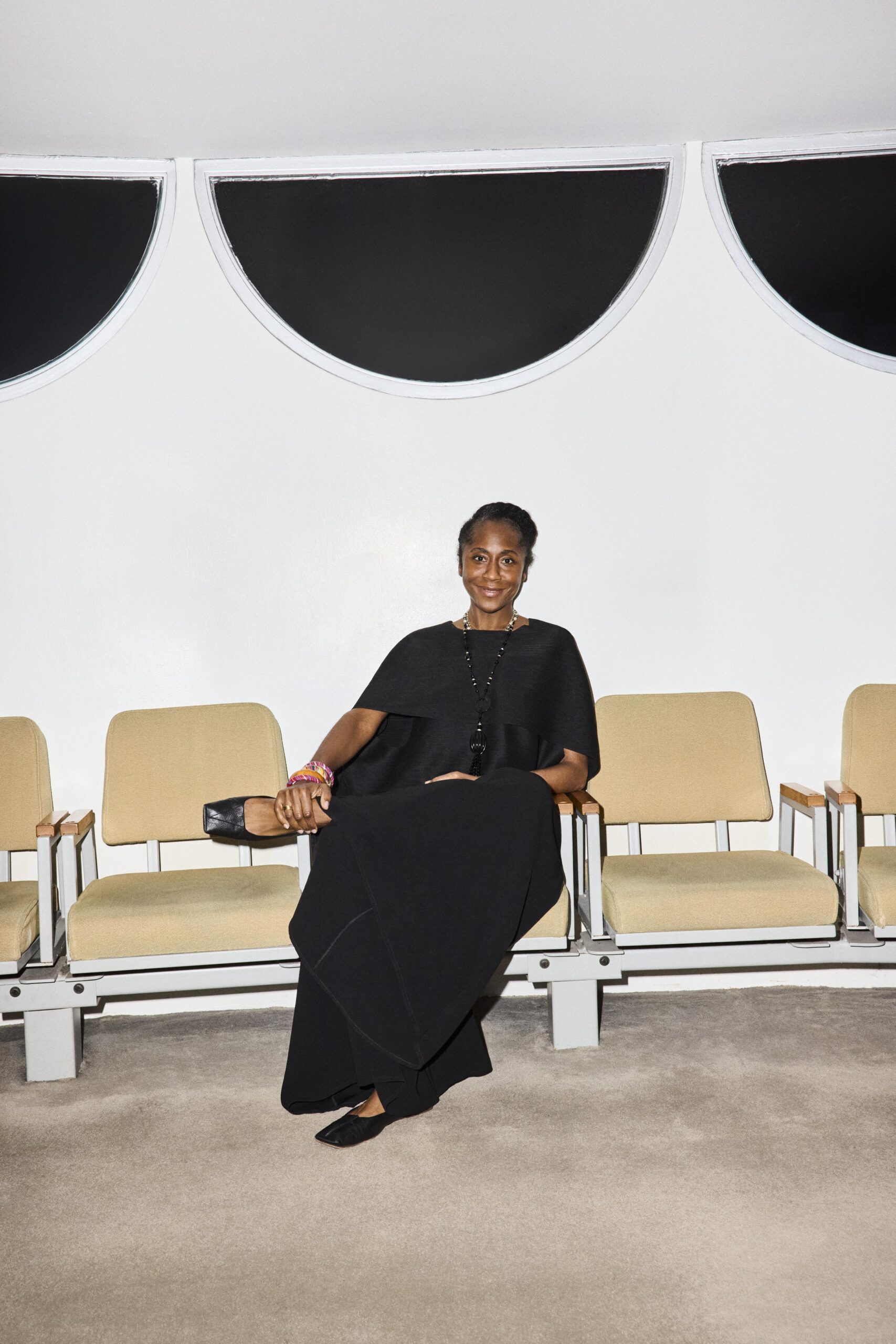
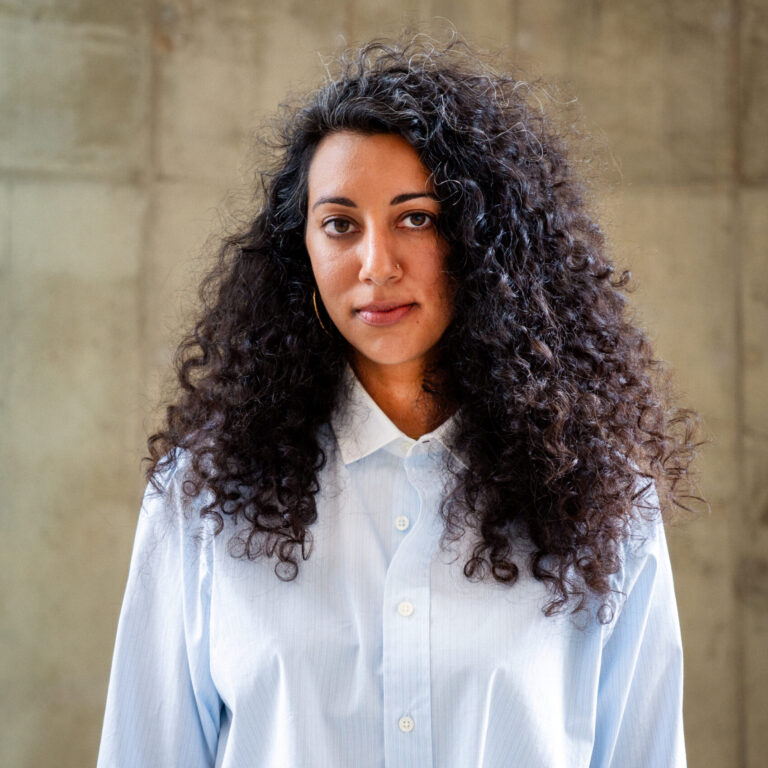
“Well, it seems neither one of us made the rapture, darling.” It’s Sept. 24, 2025—the day the world was supposed to end. Despite a flood of doomsday prophecies and goodbyes on social media, the sun has risen. The curator Naomi Beckwith greets the non-apocalypse with typically wry humor.
Four thousand miles from Chicago, where she was born, and New York, where she continues to serve as deputy director and chief curator of the Guggenheim Museum and Foundation, Beckwith is in Kassel, Germany, where she recently relocated as artistic director of Documenta 16. Every five years, this sprawling, inherently political exhibition—which was founded in 1955 to reinvigorate a ruined city and reestablish Germany as a player in the global art scene after World War II—transforms into the intellectual nerve center of the art world for 100 days. Beckwith’s edition opens in June 2027.
She has arrived to find a nation in flux. “You can be in one Germany and know nothing of another,” she says of the modern nation-state, which unified in 1871, was later divided, then reunified in 1990. “I think everyone forgets that it’s a young country.” Kassel itself has shifted from the country’s center to the eastern edge of postwar West Germany and now back again. “It’s a space that’s still trying to figure itself out—and that’s actually remarkable,” Beckwith says. “When you’re in a place where everyone’s asking questions, possibilities unfold.”
The debate about what it means to be German has sharpened since the former chancellor, Angela Merkel, instituted an open-door policy for refugees in 2015. For Beckwith, it feels “palpable” that Kassel is “shaped by immigration.” She walks to work every day at the Museum Fridericianum on Friedrichsplatz, where immigrant families gather in the evenings. “It feels a bit like Queens,” Beckwith says. “On the skin of the city, you see a place allowing people to exercise their cultural practices.” Art institutions—including Documenta—are part of the ongoing debate. The inclusion of a work with antisemitic imagery in the show’s previous edition led to outcry, sparking contention over free speech and religious persecution in a country still grappling with its past and a cultural realm reckoning with its relationship to the Israel-Gaza conflict.
“We laugh a lot. She’s super smart, but she’s also strategically brilliant in understanding the space she’s working in.”—Nick Cave
For Beckwith, being abroad brings new resonance to conversations about belonging. It’s a theme she has explored throughout her career, from the Studio Museum in Harlem to the Museum of Contemporary Art, Chicago. She earned a reputation as a brilliant curator with a rare ability to surface stories that might otherwise remain untold. She uses her rigorous academic knowledge to crack conversations open, making the complex more inviting and bringing different positions and cultures together.
Those interests also shape a major exhibition she has organized as guest artistic director at the Palais de Tokyo in Paris, entitled “Echo Delay Reverb: American Art, Francophone Thought,” on view through Feb. 15. It examines how French theory has influenced artists in America, and vice versa. Beckwith describes the project as an exploration of how “ideas circulate, get masticated, and spat out in very different ways.” Now living in Germany, those dynamics aren’t theoretical for Beckwith. She speaks little of the language, and finds herself “utterly confused half the time.” But feeling lost has been instructive. “I have to allow myself to become a little bit of an innocent and depend on other people to build a community,” she says.
As Beckwith learns about her new home, the approach of Documenta X curator Catherine David—the first woman and the first non-German speaker to lead the exhibition in 1997—lingers as a model for how movement can shape meaning. “She had a beautiful parcours through Kassel,” Beckwith says of the French curator’s edition, which mapped a path through the city. “I’m deeply interested in how she imagined Kassel as a framework for thinking globally.”
The first Black woman to lead Documenta, Beckwith has appointed an all-woman curatorial team—also a first. She wrote a short list focusing on curators possessing “intellectual acumen and commitment to real collaboration”—all female, as it turned out. “When I drew it up, I thought, Well, look what we have here,” she says. Beckwith is “very open to collaborating,” says Andrea Karnes, the chief curator at the Modern Art Museum of Fort Worth, who has partnered with her on exhibitions including Rashid Johnson’s touring survey. (On view at the Guggenheim through Jan. 19, it opens in Fort Worth in March.)
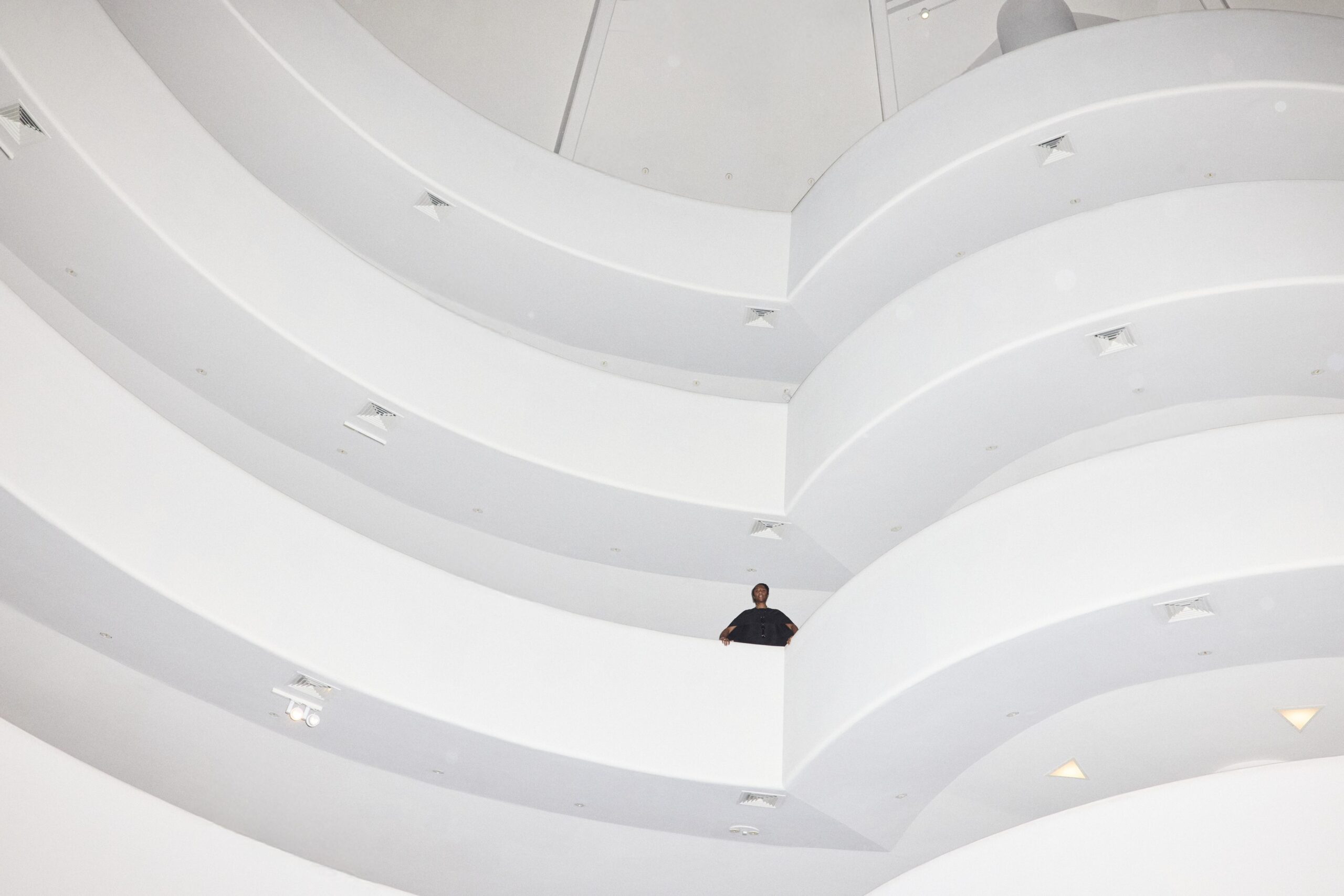
Karnes describes Beckwith as “a visionary” who brings “sweepingly big-picture” ideas into sharp focus. “With Naomi, there’s intellectual rigor but also generosity of spirit. No idea is a bad one. She’s willing to go down any road in her thinking, then has a way of sharpening it that makes the show stronger.”
“Her persona’s very serious, but there’s this other bright side of her,” says artist Nick Cave, who has worked with Beckwith for more than a decade, including on his major survey at the MCA Chicago and Guggenheim. “We laugh a lot. She’s super smart, but she’s also strategically brilliant in understanding the space she’s working in. You have to be like a magician.”
For Beckwith, everything begins in artists’ studios. Cave describes the “great deal of time” she has spent with him there, “understanding the nuances behind what it is I’m trying to do” and “always questioning the work.” Similarly, the Johnson exhibition was “almost 20 years in the making,” she says. “I get to walk into someone’s studio and say, ‘I’d love for you to be in this exhibition and what do you want to do?’” she says. “That’s a real gift.”
Beckwith has less lead time for Documenta than most. The selection committee resigned en masse in 2023 amid controversy over accusations of antisemitism and a broader debate about free expression in Germany, before a new one was appointed in July 2024. It announced Beckwith’s selection later that year. She and her team are adapting accordingly. She quotes a term they learned during a recent research trip to Brazil—mutirão—to define their approach. “It’s about getting things done quick, fast, in whatever way it takes,” she says. “You do it with people, you do it together, collectively.” Rather than imposing a grand theory, Beckwith wants to spotlight what artists are making now. “A lot of people start with their intellectual, academic framework that pulls things in, rather than saying, ‘Oh, something interesting is happening in this little corner of the world, maybe we should pay attention,’” she says.
She proposes that curators “allow ourselves to recede a bit, to let the artists speak and shine.” Beckwith’s curatorial drive is “still very much about inclusion of voices that don’t get included,” she says. “I also want to think about practices that don’t fit so neatly into the history of modernism—which we’re all kind of still beholden to.” That includes multimedia practices, collective practices, self-taught artists, and other traditions that “come out of cultural histories and practices rather than the academy.”
There are many curators who have inspired Beckwith, from Okwui Enwezor of Documenta 11 to Harald Szeemann of Documenta 5. Szeemann “was one of the first curators to say we need to bring what you would call popular culture, basically media culture, into conversation with the arts,” she says, “that it’s not some rarefied realm.” Beckwith is approaching Documenta with the same capacity for flux and possibility she’s found in Kassel itself—aware of the weight of history, and its potential for change. “I’m always imagining that the very structure of this exhibition could be different next time, or two cycles later. Germany could be something very different,” she says. “And I always remind myself that art has a much longer memory than politics.”
For Cave, Beckwith’s curatorial approach is defined by this broad lens. “Something that’s extraordinary about her is that she’s not just of this moment,” he says. “She also is of the future.”


 in your life?