
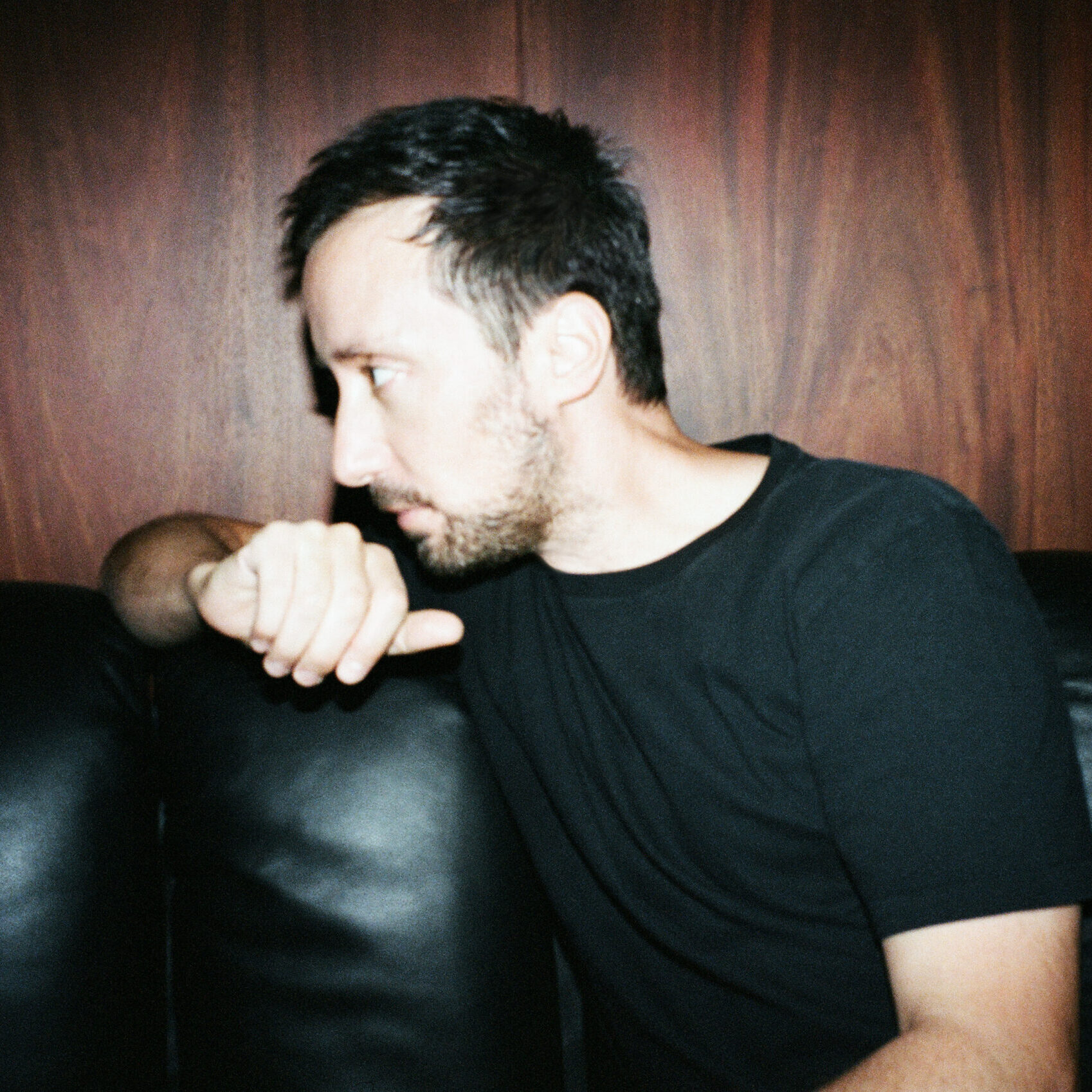
Around closing time on a recent weeknight, there is a serene yet steady hum of activity throughout the Saint Laurent flagship at 37 Avenue Montaigne. While shoppers mill about, gazing at pieces perched atop massive slabs of marble and settling into Jacques Adnet armchairs, Anthony Vaccarello—whose vision permeates every aspect of the Paris store (which opened in late November)—is tucked away in a private salon on the uppermost of its three floors. He’s dressed casually in black and ensconced in a black leather sofa—the same De Sede DS-600 sectional model that encircled the rotunda of the Bourse de Commerce at his Autumn/Winter 2023 menswear presentation.
Next year will mark 10 years at Saint Laurent for Vaccarello, who stepped into the role after Hedi Slimane, and has managed, through his deft mixing of registers (ballgown skirts paired with biker jackets, sinuous men’s tailoring) to produce collections that maintain a delicate balance of steely sex appeal and creative consistency. At the same time, he has evolved this most emblematic of Parisian houses before our eyes, from expansions into film with Saint Laurent Productions in 2023, to the revival and reproduction of several rare Charlotte Perriand furniture designs earlier this year—part of a preoccupation with design reflected in the new flagship’s modern interpretation of Paris chic. It is, all of it, an impressive feat in the often-fickle world of fashion.
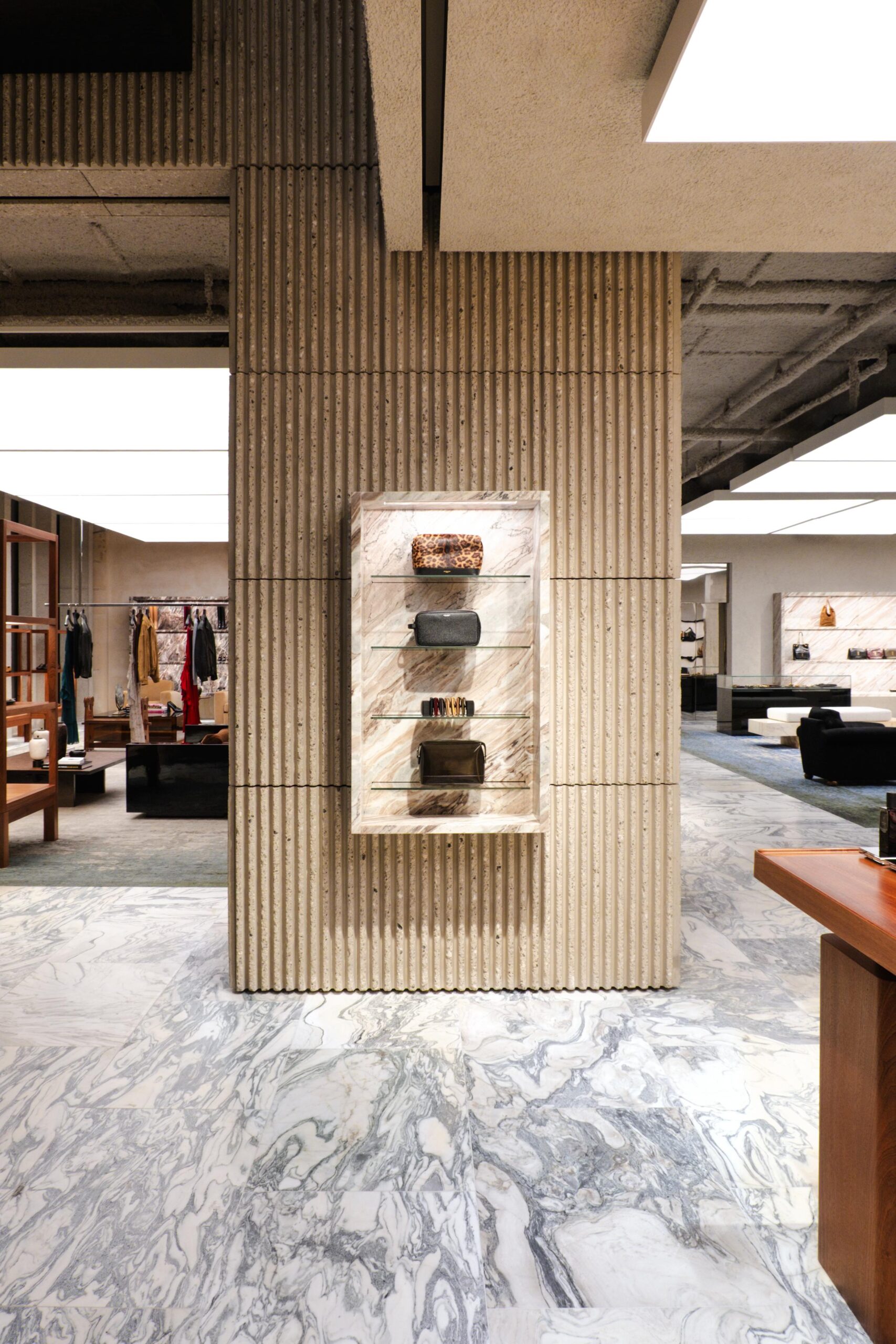
“When I started at Saint Laurent, the stores were right for the time. They were minimal and disruptive because of what was there before. But the concept didn’t slowly fit my work anymore. Everything was kind of stagnant in that environment,” he explains of the previous—achingly sleek, mausoleum-esque—retail direction. “I think it’s been nice to give context—when you see the clothes, you think, Okay, that woman or man would live in this space.”
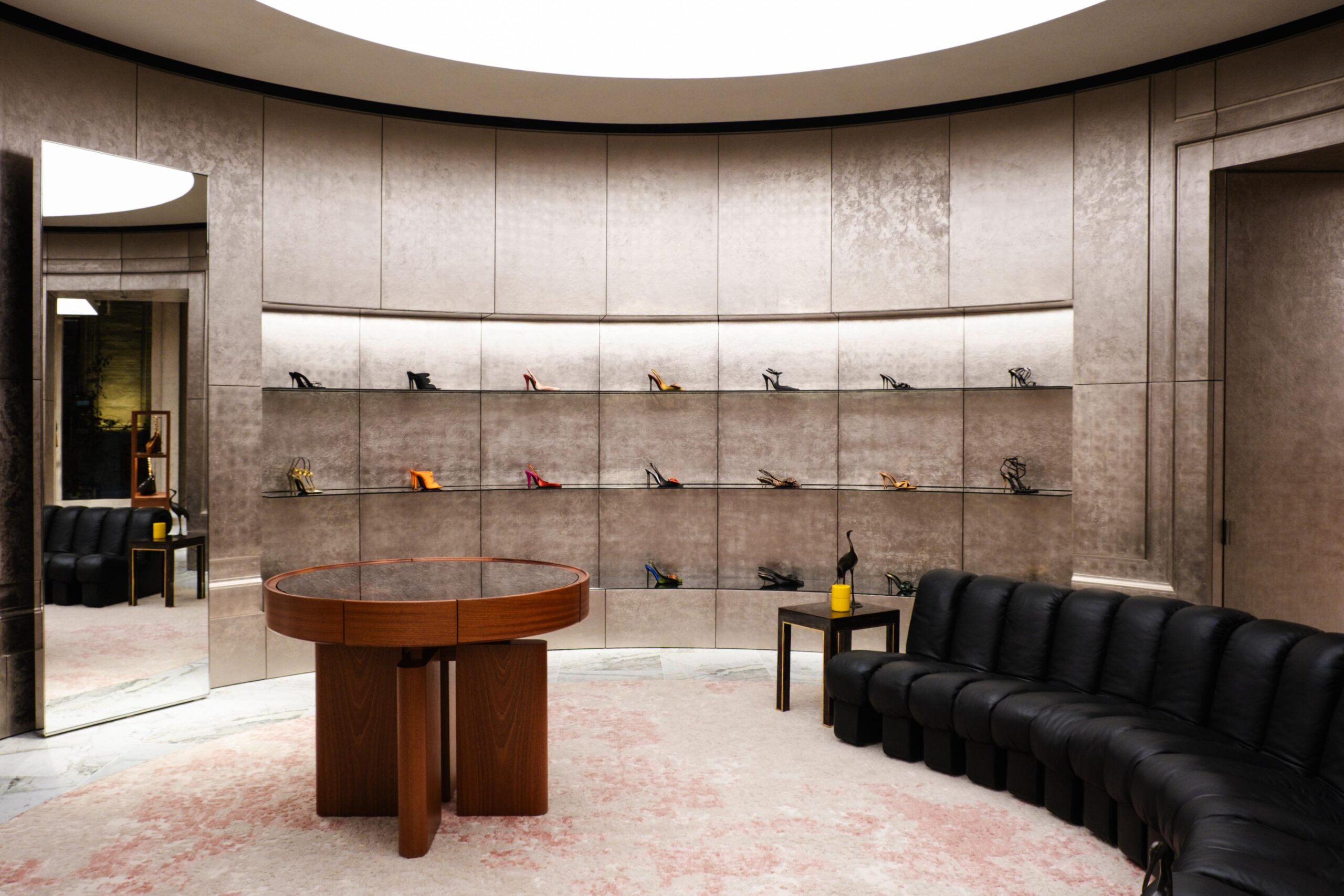
The flagship, which previously housed the Canadian embassy, was completely transformed over two years to conjure the spirit of an astute collector—someone with the means to acquire Jean-Michel Frank’s Table Pagode and a metal bird table from François-Xavier Lalanne, along with works from contemporary artists like Mark Bradford, Camille Henrot, and Thomas Houseago (on loan from the Pinault Collection). Among walls and ceilings designed to appear raw and unfinished, flashes of exquisite craftsmanship underscore a sense of luxury: a massive spiral staircase in elegant dark wood, gleaming green-and-blue ceramic display cases, plush carpets, and myriad applications of marble.
Of course, Yves Saint Laurent and Pierre Bergé were insatiable collectors. The store is dotted with pieces—a Paul Poiret daybed, a pair of 18th-century Italian vases, and Michel Boyer’s tobacco-brown tabouret—that belonged to the pair. Vaccarello, however, is adamant that the richness of the house’s new retail setting is not an homage. “I am fascinated by the aesthetic that Pierre Bergé and Yves Saint Laurent created, but it was more of a rigor than an aesthetic point of view. I take that rigor into my world rather than think about what they would have done,” he says, clarifying that their acquisitions were less about possessing an item than living with it. “Their collections were never about accumulation; they were always a reflection. It’s the same for me: when I am designing collections or [involved in] cinema or doing the stores, it’s always essential that every object is in dialogue with something else.”
What makes it all so believable is that Vaccarello has actually been afforded the time to cultivate these streams of creative output while proving that he can balance commercial imperatives with interests. He is, in effect, a testament to the long arc of design. “In fashion, you need constancy—to let the designer develop their language. I have needed these 10 years to build something with meaning versus rushing,” he says. “Nothing is perfect from the beginning. People talk about style, but there can be larger geopolitical forces or considerations that [impede a designer’s work].”
Vaccarello has also benefited from a strong rapport with his bosses: Francesca Bellettini, former chief executive of the brand, and Cedric Charbit, formerly of Balenciaga, who took over the role last year after Bellettini’s 12 years at the helm. “I have been very lucky since day one to be surrounded by a great team, as well as François-Henri [Pinault],” Vaccarello echoes. “I feel their trust. When everyone believes in what you’re doing, that’s how you can go in these directions.”
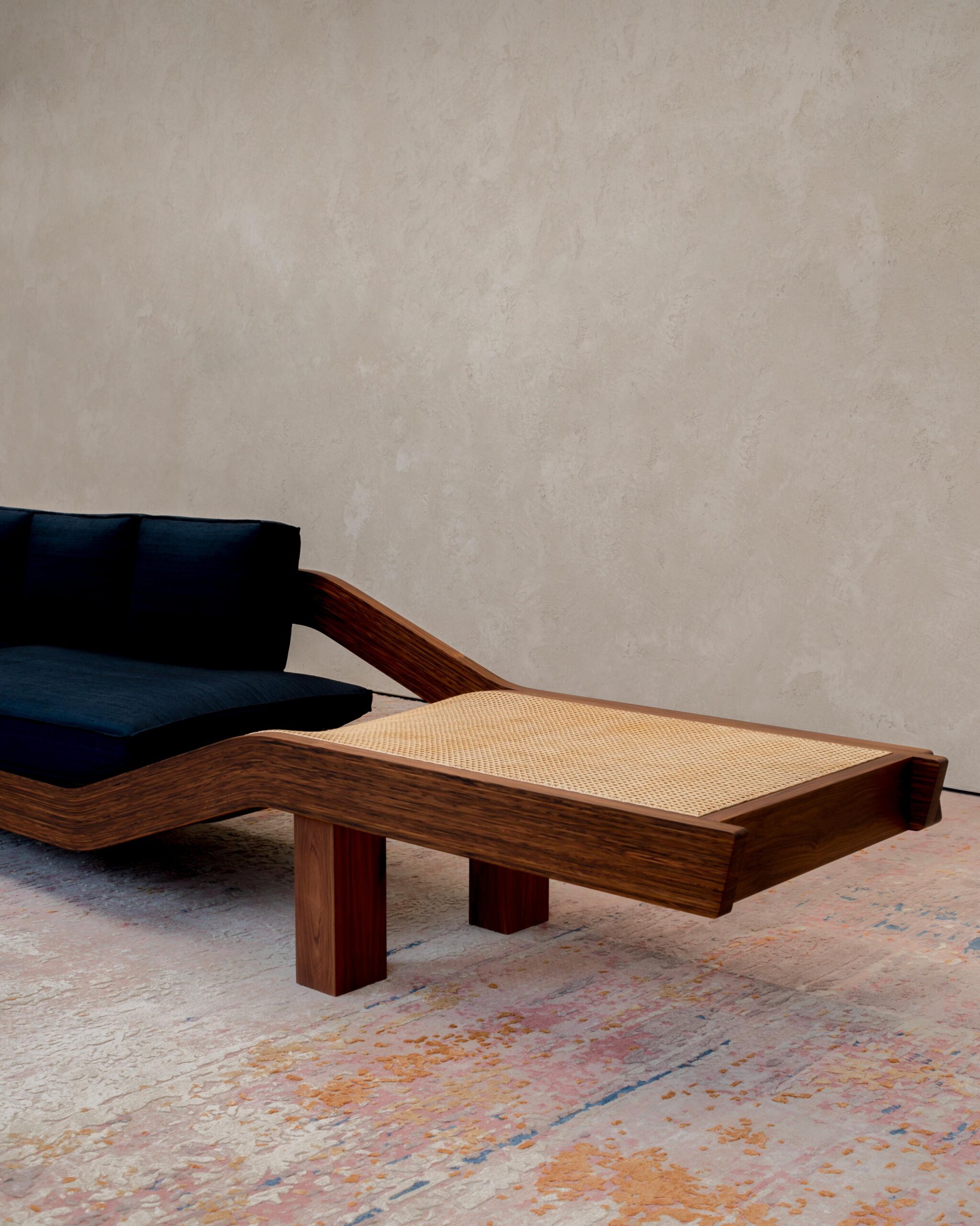
The room next to the one we’re sitting in is filled with gleaming racks of feathery coats, slinky draped gowns and double-breasted men’s suits. The clothes, in gradient tones of grey and burgundy, are juxtaposed with a 1940s reproduction of an antique Roman bust and a majestic Perriand sofa from 1967 originally produced for the Japanese ambassador’s Paris residence. In one corner stands a mirrored bar stocked with bottles of Japanese gin and whiskey—a subtle tribute to this sliver of design history.
Does Vaccarello expect visitors to catch onto and revel in these layered references, as he does? “I think it’s good to inform, to open people’s eyes and taste,” he replies. “Even if you are a novice and you don’t know [the story], your eye is attracted, ready to see beautiful things.”
After all, Vaccarello points out, his own exposure to the arts came later in life. “I was not born in this environment; my parents are not from this,” he says. Vaccarello’s father was a shoemaker; his parents emigrated to Brussels from Sicily. In an interview with the radio station France Inter in October, the soft-spoken designer became emotional when speaking about his parents, who let him pursue his interests. He attended two years of law school before dropping out to study sculpture at La Cambre, the esteemed art school in Brussels. Ultimately, he landed in the school’s fashion department.
“I was curious—and I think curiosity is a big thing,” he says of his eye. “Slowly, one artist brings you to another. But I had to do it by myself. I think that’s better than your parents teaching you what is good taste, what is bad taste. You develop your own.”
That sense of personal taste is also on full display at the creative director’s home, a hôtel particulier in the 7th arrondissement that he shares with husband (and partner in the Saint Laurent design studio) Arnaud Michaux and their two children. Do the two spaces have a similar feel? “Definitely not the light!” he laughs, looking up at the flagship’s starkly illuminated ceiling. “It’s less modern. It’s very minimal and clean but also warm. I like that a home can be more classic and homey—vieille France (old French).”
But back to the house that has defined his career, Vaccarello confesses that the impending 10-year milestone feels like “it is stressful for me,” before adding: “But it’s good.” There’s hardly enough time to ponder it, between the late-December theatrical release of Jim Jarmusch’s Father Mother Sister Brother, a Saint Laurent Production that received the Golden Lion at the Venice Film Festival, and February’s fashion presentations will be here in the blink of an eye. There is also The Fence, director Claire Denis, which premiered at the Toronto International Film Festival and will be released in the U.S. in early April.
There’s a pleasing synchronicity to the timing of the store’s opening this year. 2025 marks the centenary of the International Exhibition of Modern Decorative and Industrial Arts in Paris, recognized as the defining moment for the Art Deco movement. Several of the furnishings Vaccarello selected for the space allude to this period and were designed by artist-decorators such as Adnet, Jules Leleu, André Arbus, and René Prou, who imagined interiors as a single coherent expression upheld by impeccable craftsmanship, elegance of line and the use of noble materials. They were known as Ensembliers—a modern notion for the time that Vaccarello is embracing on his own terms. Today, we’d call it world-building.


 in your life?