
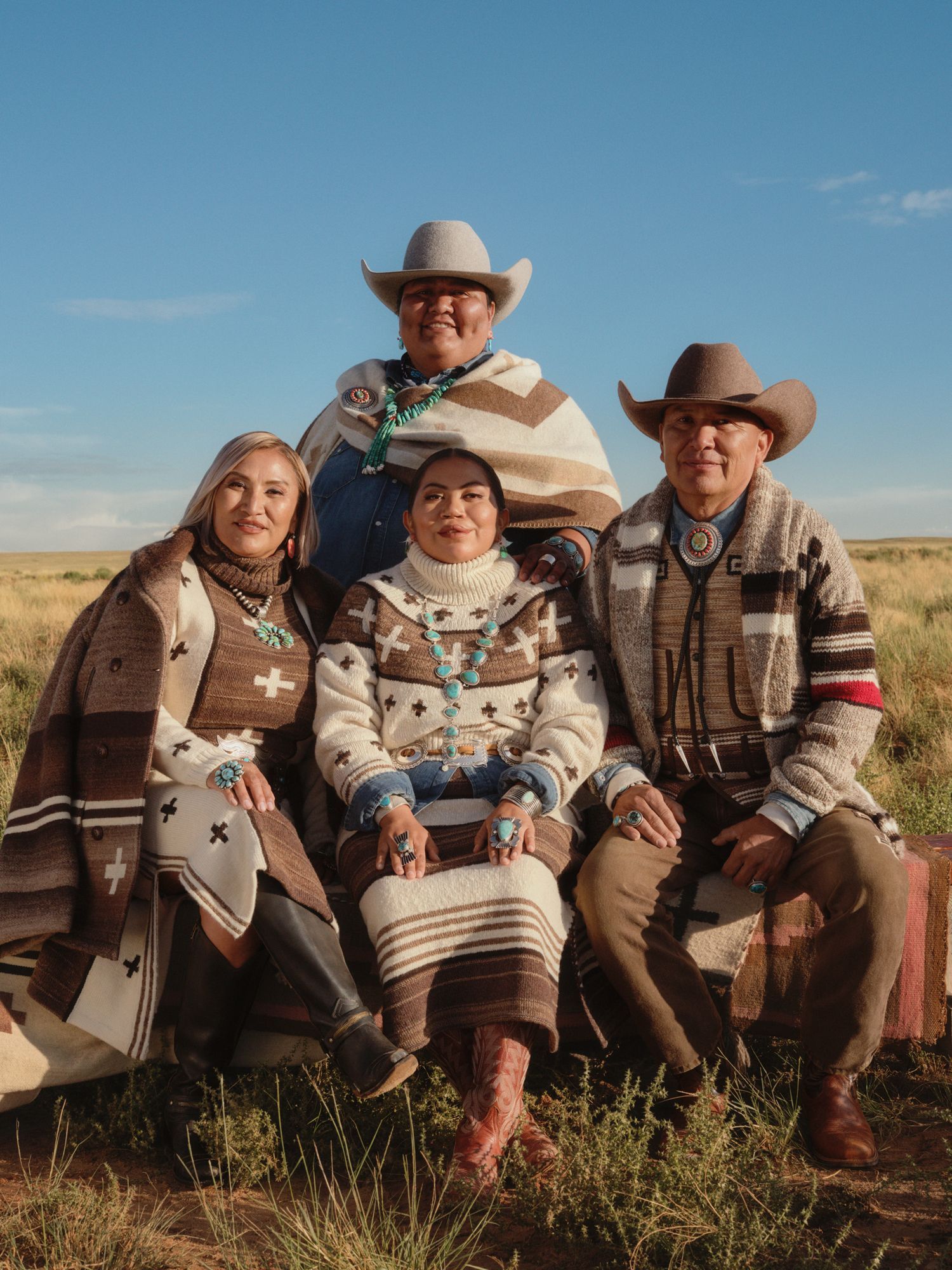
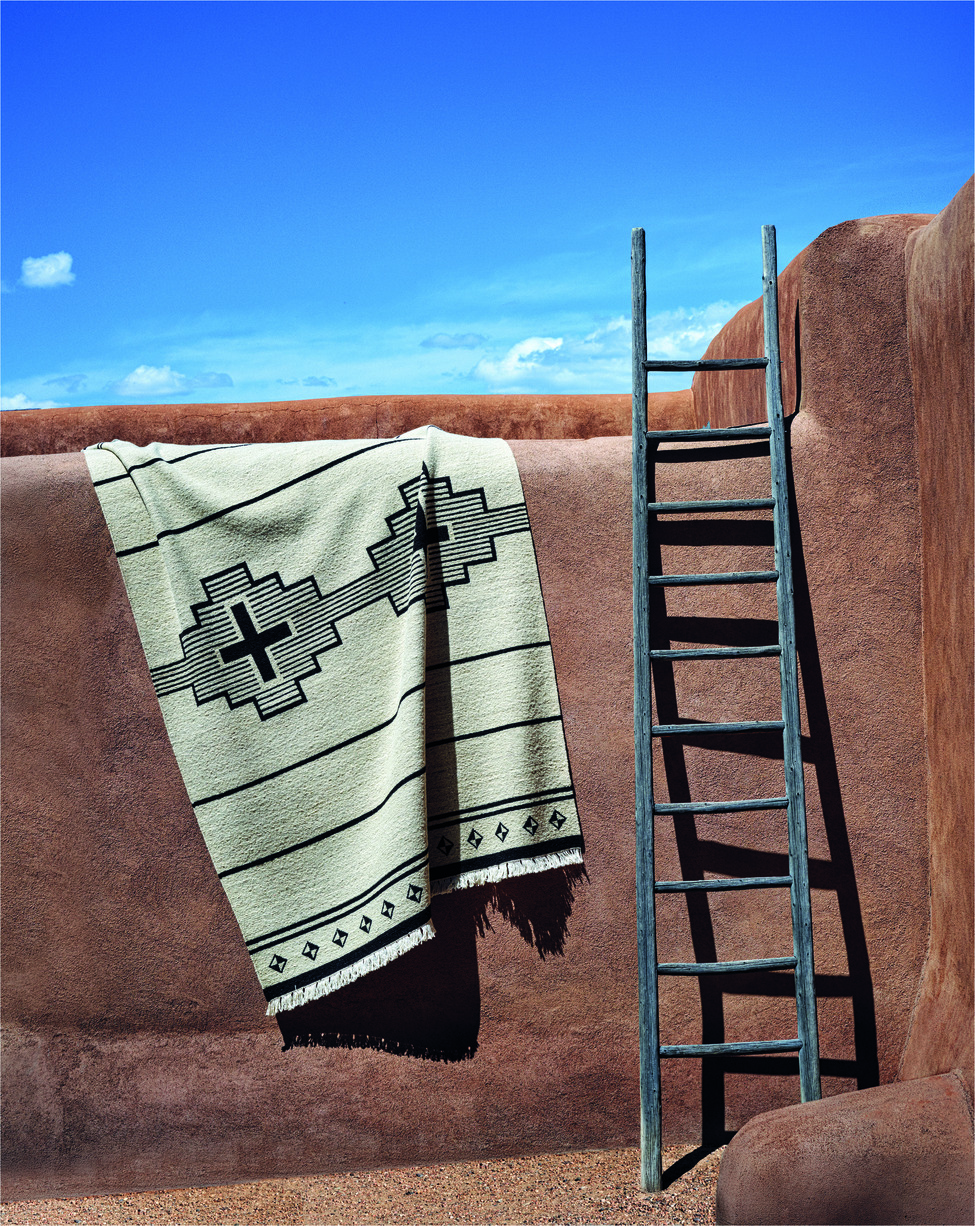
In Ralph Lauren’s Canyon Road Collection, siblings Naiomi and Tyler Glasses—the former returning for a second artist-in-residence collaboration with the storied brand—translate generations of Native craftsmanship into objects that give depth to contemporary life. Traditional Diné motifs such as “eye-dazzler” diamonds and Spider Woman crosses multiply across an array, from bedding to dishware, that has the whole home in mind. It’s a reminder that the roots of American design run deepest in the hands of its first storytellers.
CULTURED: You both come from a long line of weavers. What’s your earliest memory of weaving, and how did your grandmother—a key influence—shape your practice?
Naiomi Glasses: My earliest memory of weaving is when I was 5 years old. We were sitting in my late grandma’s hogan [a traditional Diné structure], and I had just gotten a crochet kit, which I don’t think I had even figured out. At that young age, it really made me appreciate the magic that my grandma was creating on her loom. I always admired the craft and knew that I would eventually learn. I was 16 when she showed us how to hand-spin wool, and allowed us to use her stockpile of undyed wool for our own weavings.
Tyler Glasses: My earliest memory of weaving is when I was 4, hearing the rhythmic thump of the weaving comb on the loom, with our grandma’s radio playing the local station KTNN in the background. It’s a sound that plenty of Diné can relate to hearing, and when I hear that thump of the comb with music playing softly, it’s like she’s still with us. I started weaving at 21. She always told us that weaving would make a life for us, so we fully embraced that.
CULTURED: What does weaving mean to you outside of the physical craft?
Naiomi: We can trace back seven generations of weavers to the darkest time in our history, Hwéeldi, when Navajos were held captive during the Long Walk. I think about all the people and traditions we lost there. One of my grandmothers from generations ago decided to take on and continue this Diné craft. Just the act of weaving and creating something during such a dark time shows the resilience of our people.
CULTURED: Were there patterns and details of Dinétah that you wanted to ensure came through in the collection?
Tyler: The textiles include motifs like eye-dazzlers and horizontal diamonds found in many Navajo weavings and those of other Indigenous communities. There are also geometric elements like zigzags, repeated triangles, and fine stripes, representing the mountains and natural rock striations found throughout our homelands.
CULTURED: Do you see this collection as an example of how design houses can engage with Native artists?
Naiomi: Working with [Ralph Lauren] for several years, there’s a lot of respect and admiration for artisan craft, and I’m proud to be part of an effort to bring even more authenticity through collaboration. I hope this model inspires others, and encourages Native artists to share their work with the world.








 in your life?