Our What’s On column distills Critics’ Table coverage—from our In Brief roundups, Big Picture essays, and Close Look reviews—and organizes our recommendations by neighborhood. Tip: to map our picks and plan your route, enter the Critic’s Table hashtag #TCT in the search bar of the See Saw app. Easy!
CHELSEA
Alex Katz through December 20
Gladstone Gallery | 530 West 21st Street
Alex Katz has been going to the same spot in Maine for 70 years, and the road to his house is the sole subject of the canvases on view at Gladstone this winter. Susurations of Jack Kerouac aside, this road is very modest, very local. Yet the phenomenological experience that Katz aims to pull off in these paintings isn’t untouched by Beat America and a spirit that is searching, wayward, rebellious, and youthful. The singular importance Katz gives to the 1950s in his development might be enough to admit the conjecture. He remembers the purportedly most conventional and “gray” decade in American culture as one that—in the right circles of New York at least—was brimming with invention, radicalism, experimentation, transformation. —David Rimanelli
Read more from Rimanelli’s Close Look here. And watch his video tour of the exhibition here.
Louise Bourgeois through April 18, 2026
Hauser & Wirth | 542 West 22nd Street
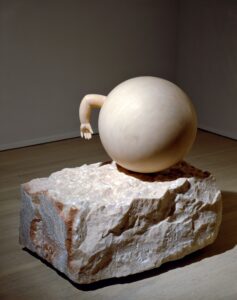
Twosome, 1991, is constructed from a pair of black-painted steel tanks on a Stygian track. The smaller of the horizontal capsules slowly moves away from, then retreats into, the body of the other, while a red light strobes within. Here, a signature Bourgeoisian theme of (un)coupling is enacted at a terrifying industrial scale, in keeping with the artist’s anything-goes scenography of the unconscious. Throughout the exhibition, curated by Philip Larratt-Smith, less severe objects (made from glass, marble, bronze, and all manner of found materials) are just as eerie, angry, sexual, and exquisite. In the next room, the wall-mounted fountain Mamelles, 1991/2005, never before shown in New York, spouts water from more than a dozen breasts. —Johanna Fateman
Read more from Fateman’s “60 Minutes in Chelsea” tour here. And watch her video tour of the exhibitions here.
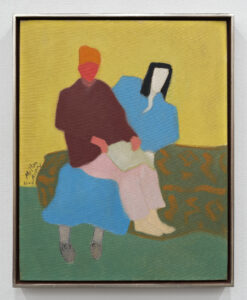
Milton Avery through December 20
Karma | 549 West 26th Street
The American artist is best known for compositions of flat and simplified interlocking forms in seriously piquant and moodily unexpected palettes. The “Avery style,” a distinct approach settled on in the ’40s, was shared by his wife Sally Michel and later his daughter, March, both painters (as well as frequent subjects). The unchronological burst of canvases that kicks things off at Karma proves Milton didn’t always work this way, as do the wildcards peppered throughout, but his color sense always gives him away. In works from the ’30s, the “whites” of a man’s eyes are painted bright cerulean in a portrait otherwise rendered in sand and plum; a giant baby, of blaring bubblegum, is tended to by its blue-green mother against a ground of pea soup, and so on. —Johanna Fateman
Read more from Fateman’s “60 Minutes in Chelsea” tour here.
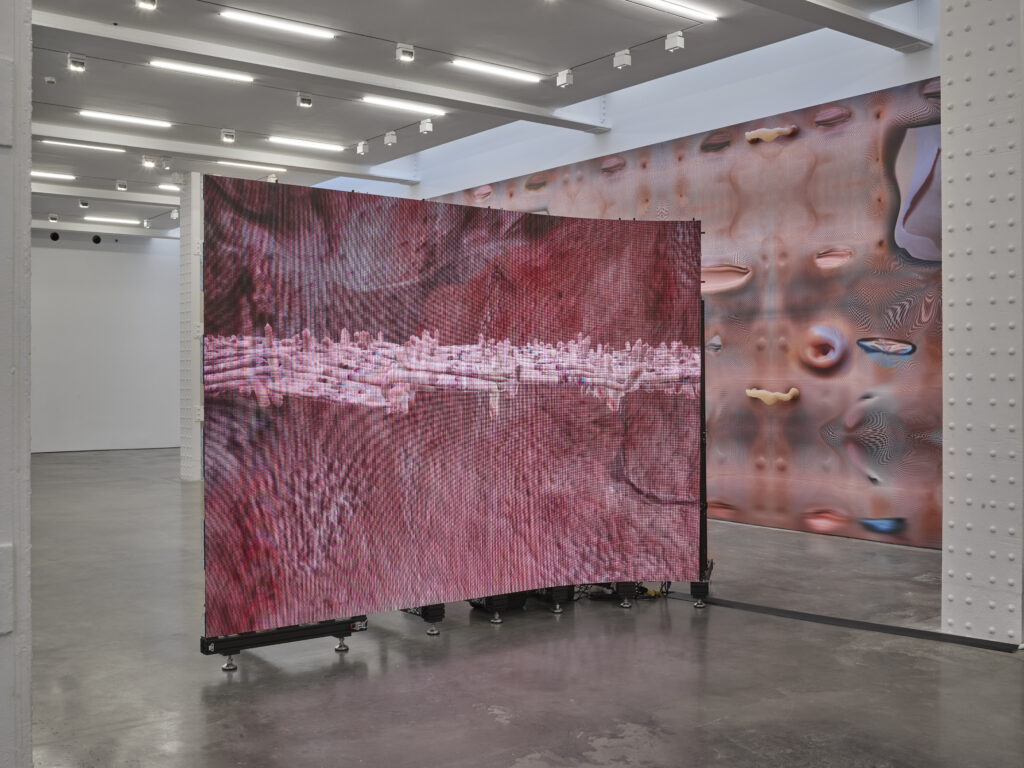
Tishan Hsu through January 24, 2026
Lisson | 504 West 24th Street
The artist, who came up in the East Village scene in the mid-1980s (showing with Pat Hearn and Leo Castelli before slipping from the New York art world’s view for a few decades), is often called prescient for his visualization of the interface between human and machine. Now, collective self-fulfilling prophecies abound, and Hsu’s woozy surfaces of circuitry, morphing orifices, and garbled protheses detail a future foretold by science fiction and body horror tropes that has more or less arrived. The work doesn’t wallow in or fetishize creepy aesthetics—Hsu’s commitment to his subject matter over time is palpable in the considered craft and material heft of his UV-printed, mixed-media painted reliefs especially. —Johanna Fateman
Read more from Fateman’s “60 Minutes in Chelsea” tour here.
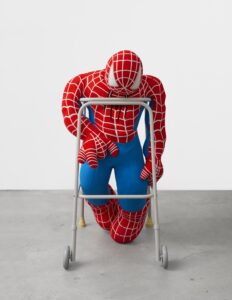
Alex Da Corte through December 20
Matthew Marks | 522 & 526 West 22nd Street
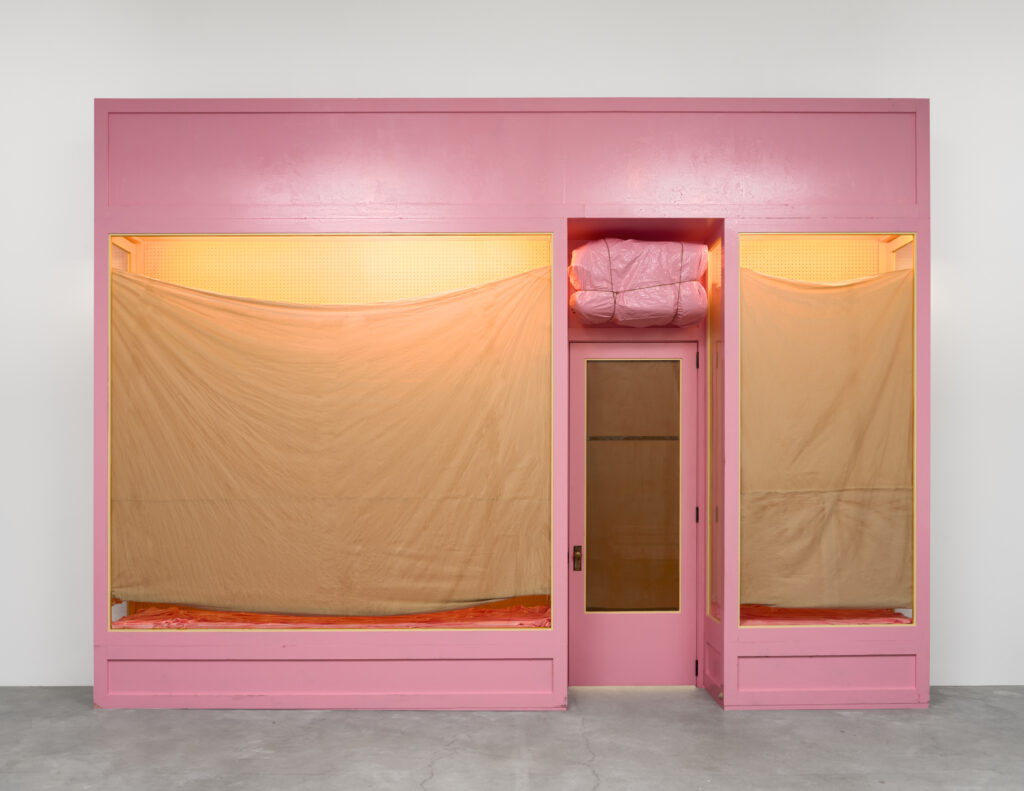
At Matthew Marks’s 522 address, Pepto pink reigns as an animating substance (and embalming fluid) as much as a color, from the storefront “exterior” of the first room to the house-painting scene on the other side of its door, and finally to the breathtaking denouement of The Tomb, 2025. For this reinterpretation of Paul Thek’s destroyed 1967 work of the same name—a ziggurat housing a life-size effigy of the artist—an all-pink environment becomes unironically sepulchral. Da Corte positions what might be read as Barbie camp in a tradition of estranging replication and surreal decontextualization, as employed in the poignant conceptualism of artists like Thek and Robert Gober, as well as Louise Bourgeois. —Johanna Fateman
Read more from Fateman’s “60 Minutes in Chelsea” tour here.
TRIBECA
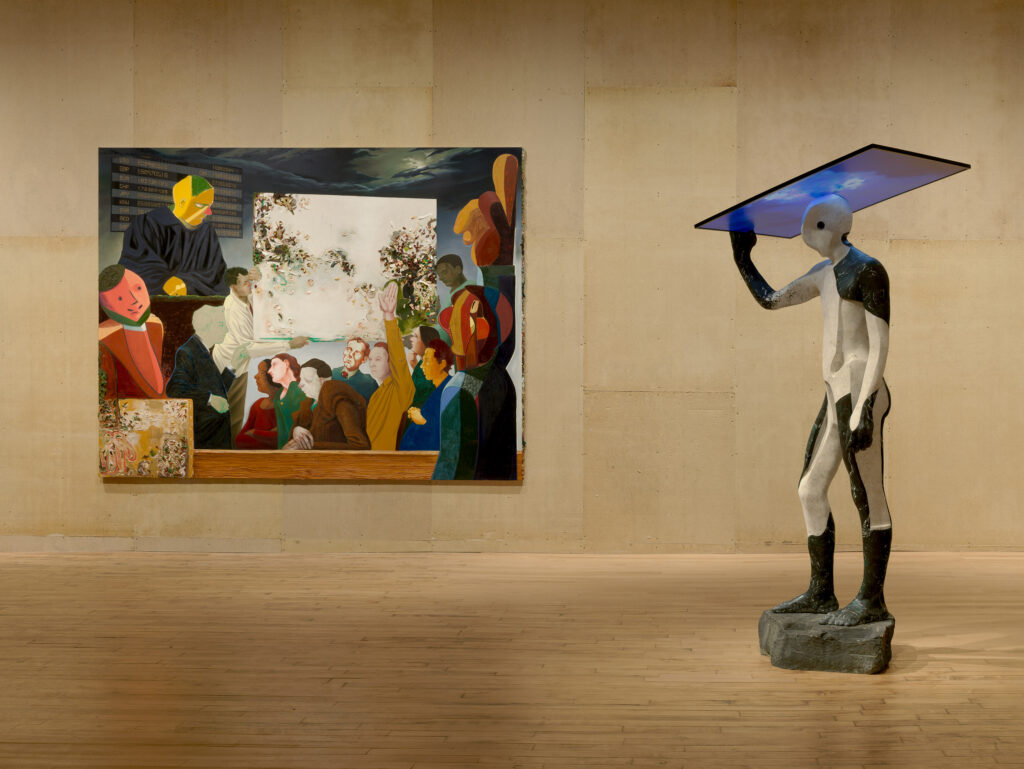
Nicole Eisenman through January 10, 2026
52 Walker | 52 Walker Street
Eisenman’s entire show is like an interactive stage set for contemplating the possibilities and limitations of art’s ability to address the crisis of the present. It dares to juxtapose our contemporary moment with prior historical eras, when authoritarianism, censorship, and fascism were on the rise. It implicates the whole art-world apparatus: the exchange of great sums of money in the auction house, as well as the gallery system of which 52 Walker is part. Eisenman parodies herself, not as a singular genius within that system, but instead—echoing Jean Genet—as a petty thief. —John Vincler
Read more from Vincler’s Close Look on Eisenman here.
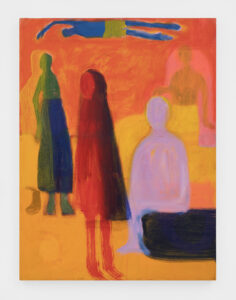
Katherine Bradford through December 13
Canada | 60 Lispenard Street
After many years spent painting, Bradford, now in her 80s, has become in the last decade or so a prominent figure in the New York scene. She is best known for her compositions featuring swimmers and bodies of water. A few of the paintings in “Communal Table” satisfy that expectation, like City River Waders, depicting two women standing in water before a nighttime cityscape. Her simplified figures remind me somewhat of James Castle’s anonymized, abstracting portraits. She usually paints them in groups or pairs. Many of my favorite pictures here include the moon, or several moons (or is it a series of planets?) as in the stand-out While Father Sleeps. —John Vincler
Read more from Vincler’s In Brief review here.
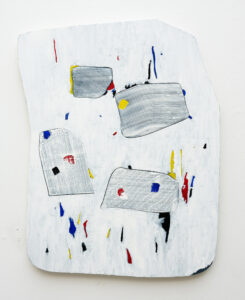
Leslie Smith III through December 20
Chart | 74 Franklin Street
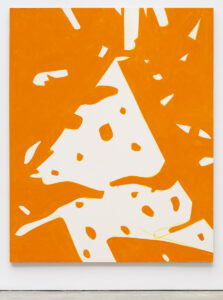
The canvases by the Wisconsin-based artist evoke a zoomed-in view of terrazzo. They immediately give a simple pleasure, which was initially distracting from looking closer and dwelling on what these compositions were doing. The experience reminded me of the effect of the late Texan painter Otis Jones’s minimal oval canvases, which I first saw online but then, in person, surprised me with their material heft. Likewise, Smith’s paintings rewarded further scrutiny. They fuse Jack Whitten‘s raking and mosaic techniques with the bold shapes and colors of Matisse or Ellsworth Kelly pushed to simple organic forms. Delightful and substantial. —John Vincler
Read more of Vincler’s In Brief reviews here.
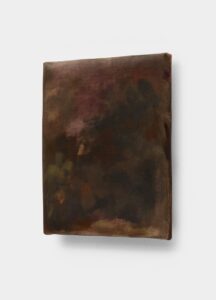
Kate Spencer Stewart through December 20
Bureau | 112 Duane Street
Kate Spencer Stewart’s large paintings are most interesting in how they record rhythms of repetitive gestures in her approach to post-color field abstraction. The Los Angeles-based painter’s canvases (all 2025) conjure diaphanous forms or energetic movements, as in the evocation of wind-blown stalks of wheat or cattails in Ritual, the thick morning fog of Morning Star, or the red heat radiating from Verily Verily, where gestural figure eights suggest licking flames. The smaller floral works downstairs are unpretentious gifts of simple beauty, made more interesting—and, like their subjects, more ephemeral—in the three examples of linen mounted on cardboard, creating a slightly pillowed effect. Painting for painting’s sake, reduced to an essence alternatively floral or vaporous. —John Vincler
Read more of Vincler’s In Brief reviews here.
BROOKLYN
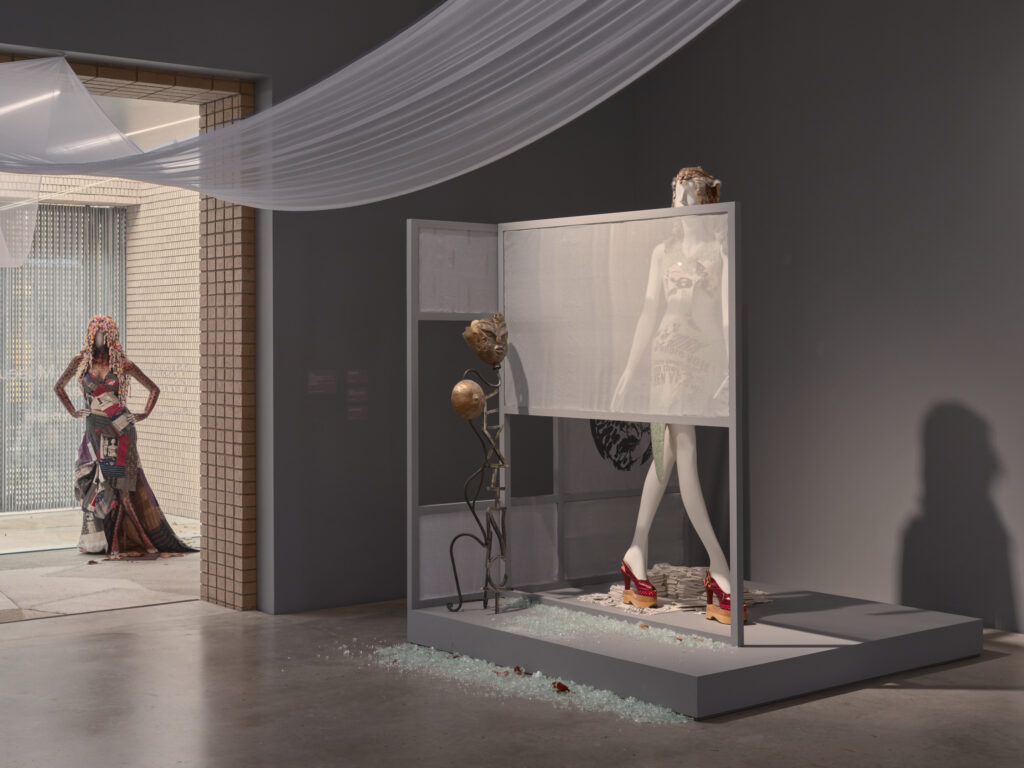
Women’s History Museum through February 15, 2026
Amant | 315 Maujer Street, Brooklyn
The first institutional solo presentation in the U.S. of the duo Women’s History Museum—Mattie Barringer and Amanda McGowan—drops us in hell. Part retrospective, it presents past video, fashion, and sculpture along with new work, inside a re-creation of a shopping experience. Shopowners as well as artists and fashion designers, the artists stretch and extend the fleeting thrill of finding the right dress in the rubble of your life. Hanging over the space like a shop sign, For a Moment I Have No Pain, 2025, is a soft, jewelry-box-flocked message of relief. The velvet, a rich, mourner’s black, promises to absorb suffering. —Devan Díaz
Read more from Díaz’s Close Look here.

 in your life?