
I have a theory about succeeding in middle age that I have never before confessed to anyone. It is this: Embrace your inner clown. Not playing the fool for laughs, but resisting stagnation by regularly pushing yourself into discomfort or vulnerability—yes, even risking appearing like a buffoon—so as to better understand where you end and what you want. Iiu Susiraja, who turned 50 in September, is a paragon of this.
The Finnish artist and photographer’s 2023 exhibition, “A style called a dead fish,” curated by Jody Graf at MoMA PS1, remains one of the most memorable New York shows of the last decade. Susiraja, who still lives in her hometown of Turku, began her career in her 30s. Her pictures prefigure the aggressive yet ambiguous tonal registers of a self-portrait painter like Sasha Gordon, whose David Zwirner debut had people lining up outside the Chelsea gallery this fall. Rooted in the body like the work of Ana Mendieta, able to disarmingly meet the gaze of the camera like Francesca Woodman, and trying on the paraphernalia of gender only to explode it like Claude Cahun, Susiraja’s work is both firmly connected to an art-historical matrix and unlike anything I have ever seen.
We spoke this fall ahead of the opening of her first New York solo since PS1 at Gratin on Dec. 11. After initially also making occasional domestic still lifes, she now only takes self-portraits, while also sometimes producing sculpture and installations (like one involving four office photocopying machines, which will distribute audience keepsakes over the course of the Gratin show). At the time of our video call, she was recovering from bariatric surgery, in her parents’ home—the only other location, beyond her own apartment, where she has staged photographs in recent years. With clowns on my mind, I begin by asking her about great physical comedians like Buster Keaton and Charlie Chaplin. She mentions a fondness for British comedy, but also cites Lars von Trier’s 1998 Dogme 95 classic, The Idiots, as an important influence.
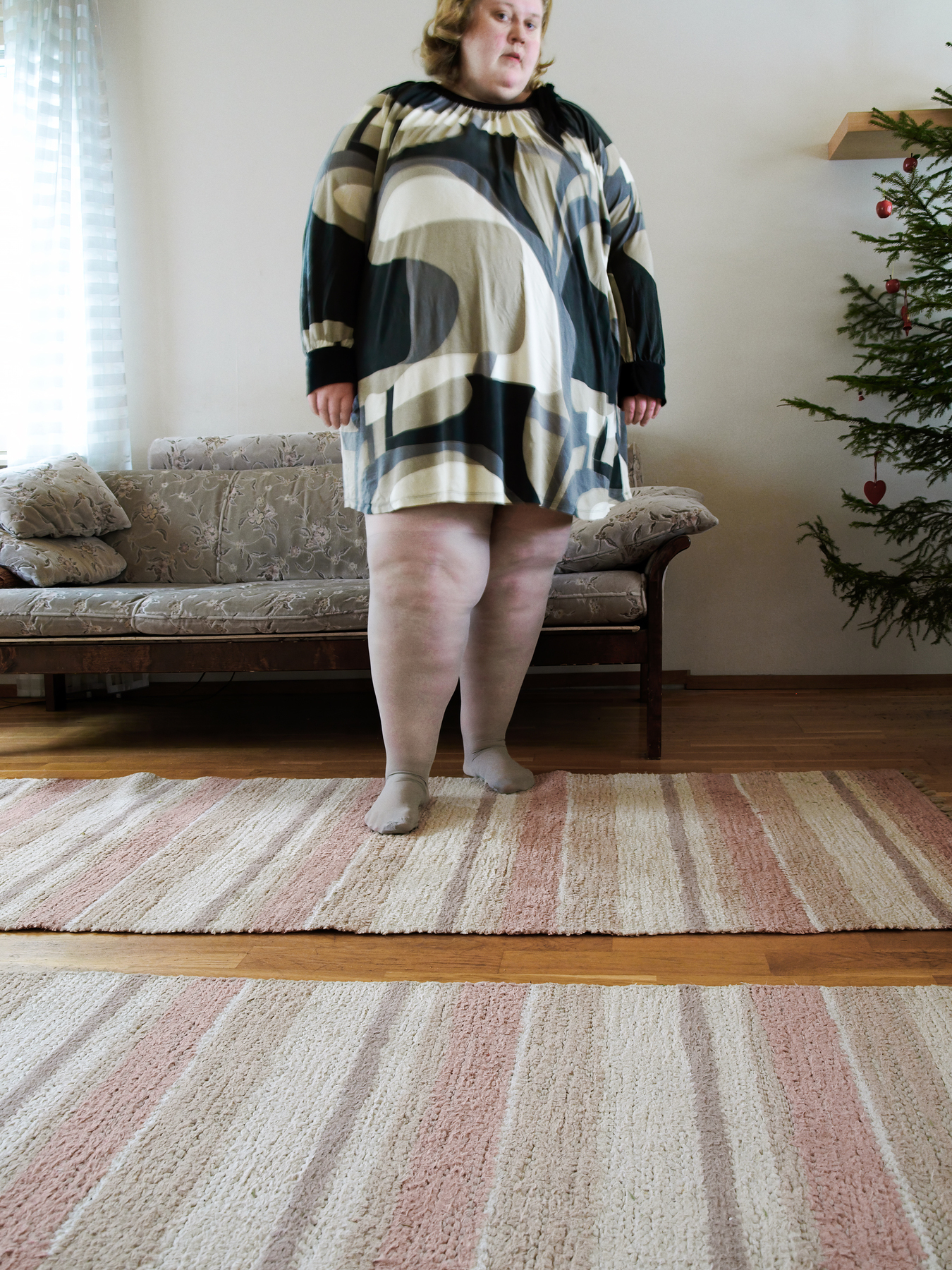
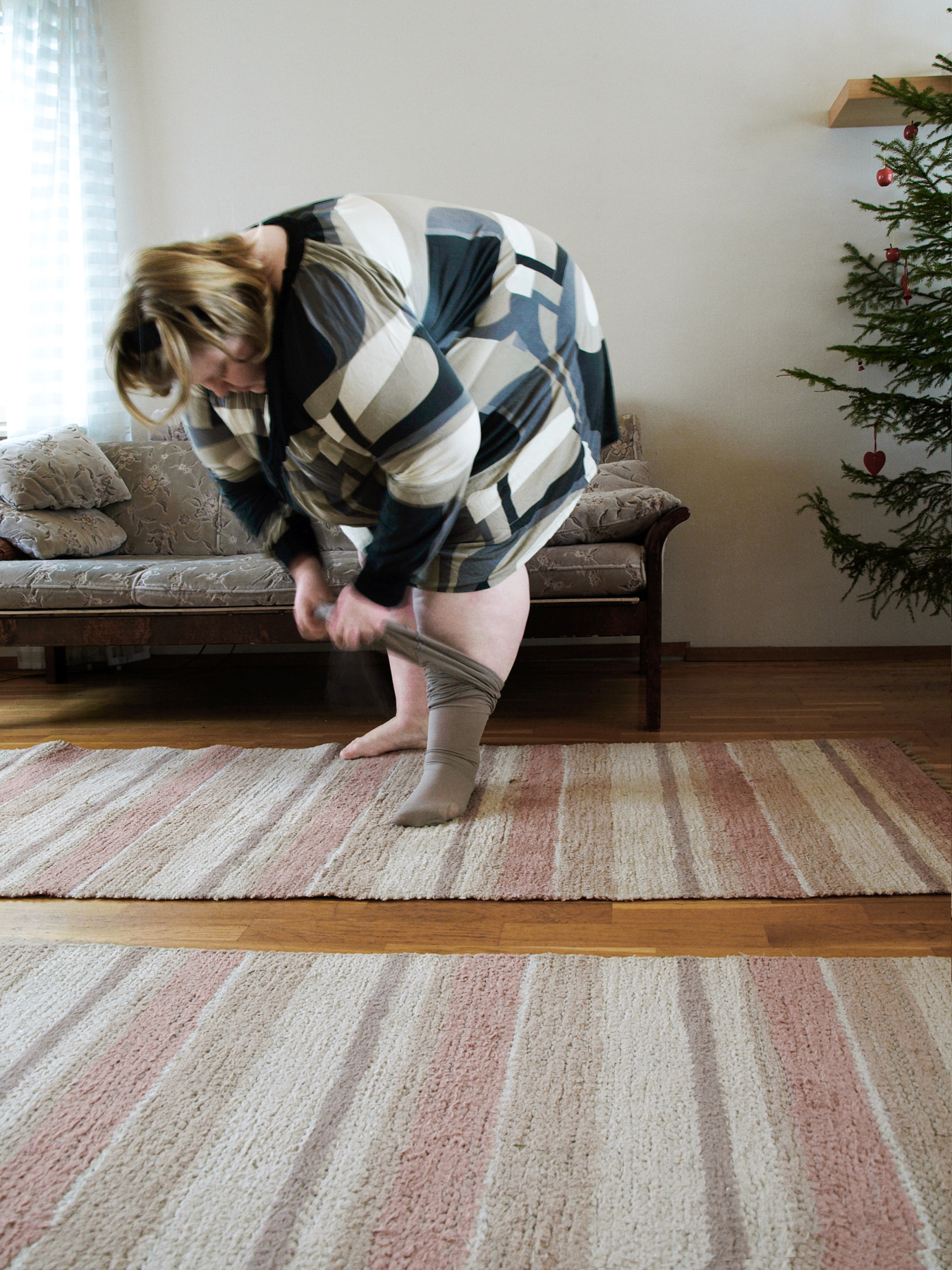
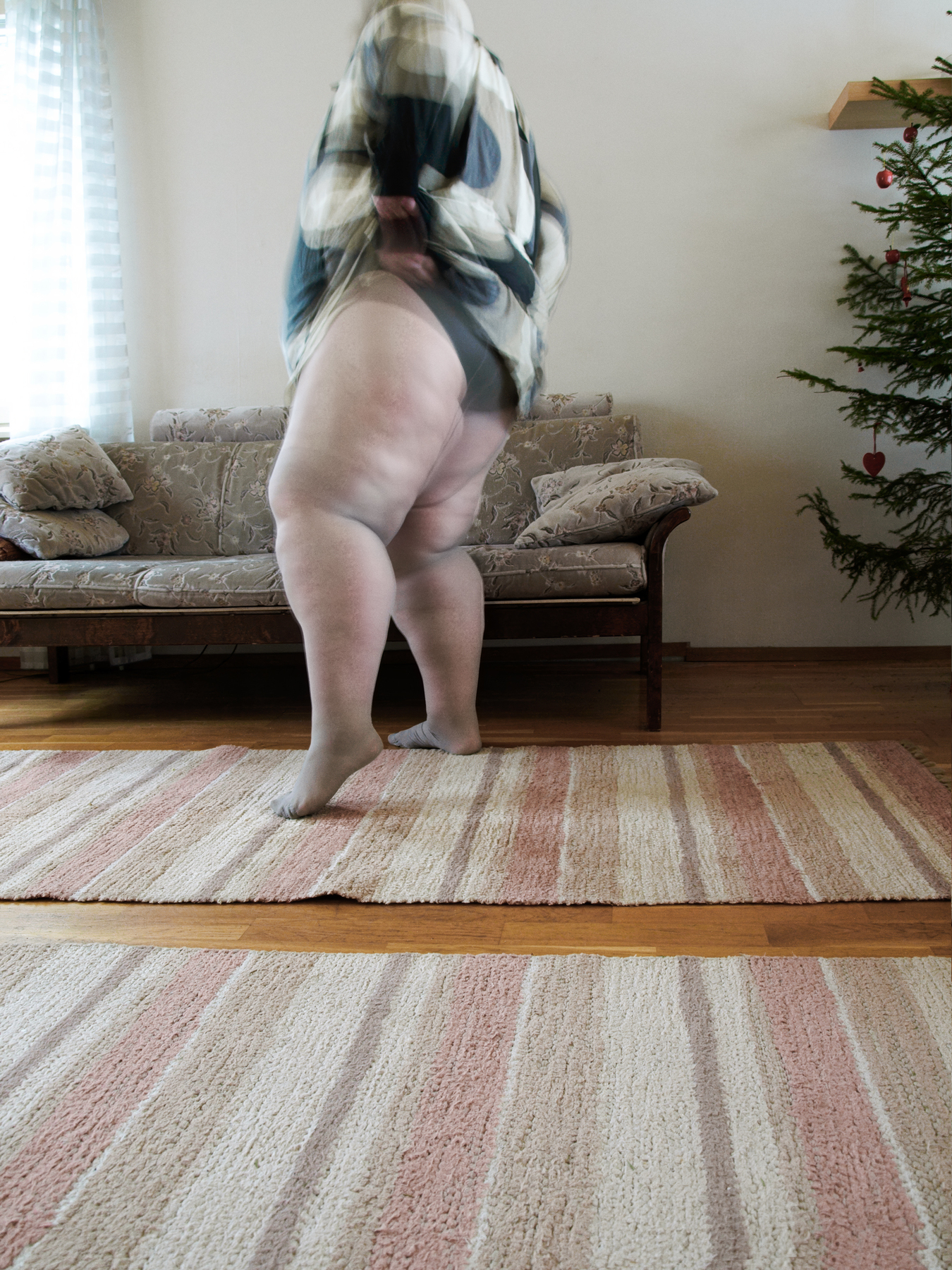
In her work Susiraja plays the straight man, never breaking. But there are cracks. In her photo Clown is trying to be magician’s bunny, 2018, she wears a tank dress in her living room, her left foot standing in a black top hat as she looks out to the viewer with a constellation of six red clown noses affixed to her face. In Laundry day, from the same year, she stands beside a drying rack from which hang three balaclavas (and nothing else) with the strings of three yellow balloons clipped with clothespins to her breasts and lip (or tongue) as the balloons hang limply. Her face is, as ever, expressionless, though I interpret it as a deep inscrutability rather than a void. Deadpan is the word applied again and again by critics and commentators to this fascinating tension between opacity and openness. “The thing that has always struck me is how her images manage to be both profoundly forthright and slippery with ambiguity,” Graf says of what drew her to Susiraja’s work. “She disarms the viewer with a directness that evades explanation.”
During our conversation, Susiraja sends me a PDF with thumbnail images of new photos she will show at Gratin. In most, she is fully nude. In two, she sits beside or holds a TV displaying her image. Like Laundry day, many feature balloons, including Lift up, Breasts, 2025, where the strings of two floating helium balloons are affixed with duct tape to her nipples. It’s a wry commentary on aging from an artist who in one early picture held a broom horizontally across her pendulous chest, not needing any assistance from her hands to keep it there.
“I am a homebody,” she says, parroting the English idiom I just introduced to her. Beyond the clear domestic confines of her work, the word also gets at Susiraja’s relationship to her own corporeality. She speaks forthrightly about her gastric bypass surgery, noting that, while she wants to always take care of her health, she also delights in observing her body’s metamorphosis. I confess to her, I normally wouldn’t mention the procedure in my writing, but she insists that she thinks of it as part of her art, citing as an influence the French artist Orlan, who has utilized plastic surgery as a medium. “My art is me,” she concludes.
It’s hard to look away from Susiraja’s mise-en-scène. Her home becomes a reflection of the viewer’s own interiority, a space to contemplate what stretching our understandings of ourselves can teach us about self-acceptance. Beyond the humor, beyond the surreality, beyond the documentary, her work is a thing of beauty.


 in your life?