For the past year, the artist Iván Argote’s aluminium-cast and hand-painted pigeon has occupied hallowed contemporary-art ground in New York. Towering over 10th Avenue, Dinosaur, 2024, is perched on the High Line Plinth, where commissioned artworks rotate every 18 months. Reversing the power dynamic between man and prey, the sculpture’s title nods to the ancient past and a post-anthropocene future. Millions of years ago, the pigeon’s ancestors dominated the planet; today, we do; who will eons from now?
“My intention was to create a monument that is a bit controversial and that has a sense of humor,” shares Argote. “Every day I receive messages from people that are not related to the art world, kids or grown-ups, people who do performances in front of Dinosaur, or people even shoot weird commercials with or without permission.”
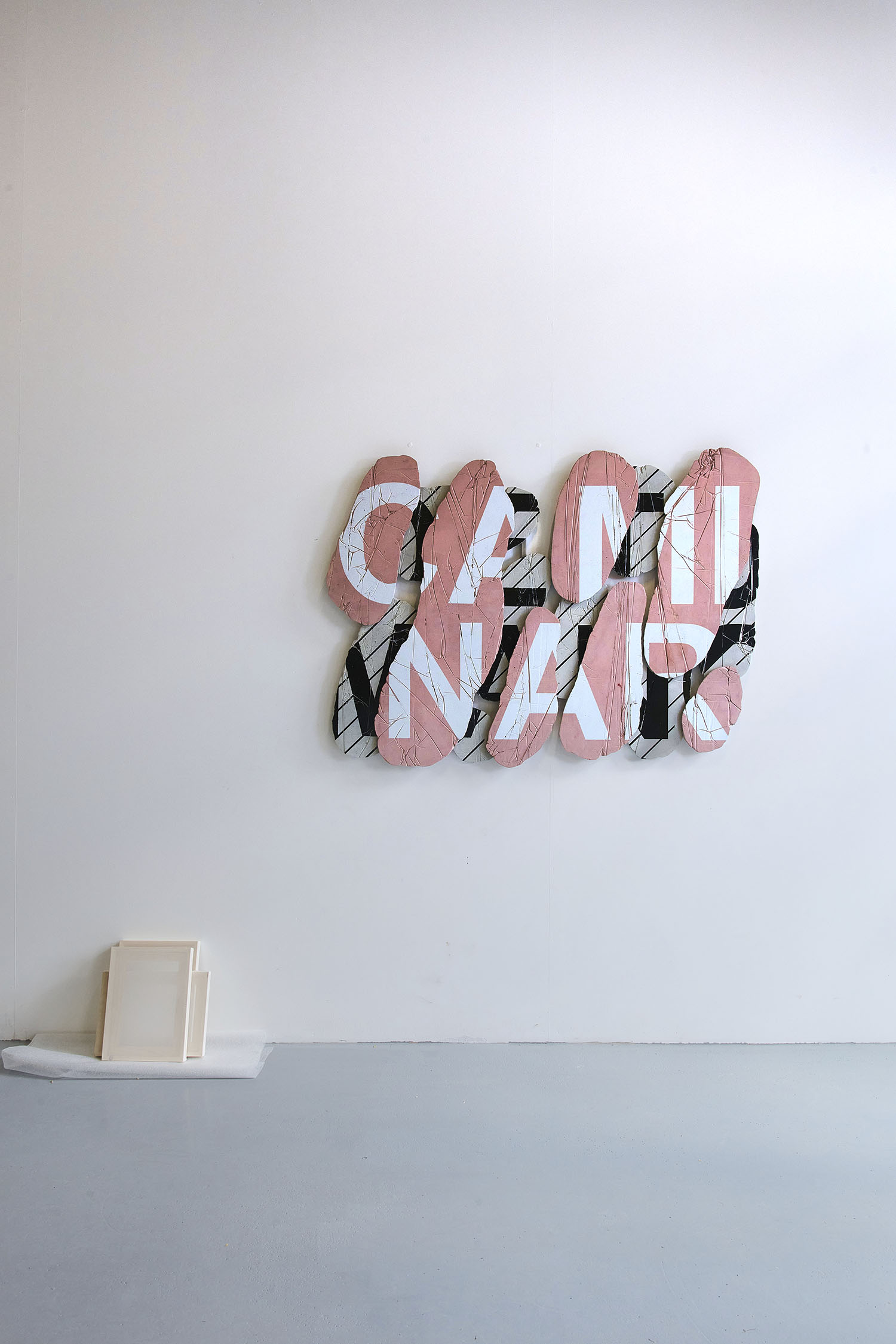
While many New Yorkers are smitten with Argote’s larger-than-life bird, narratives of resistance and civil disobedience are also leitmotifs in the Paris-based Colombian artist’s diverse practice of painting, performance, and installation. For the 2024 Venice Biennale, his video Paseo depicted Madrid’s Plaza de Colón’s Columbus statue riding “in exile” on the back of a flatbed truck through the city. And next week, Argote opens his second exhibition with Albarrán Bourdais in the Spanish capital, which centers around a video of a civic performance-meets-public artwork that Argote created outside the gallery.
In a municipal orange utility jacket, the artist ventures into the street with a bucket of colored concrete and works to fill in the cracks in the sidewalk—a tender, symbolic act of repair. “Sometimes it’s blue, sometimes red, and I have engraved some words on it that have to do with dignity and respect, and sometimes romantic meanings like Sentir tu peso—feel your weight.” Argote says. “This exhibition is very special to me because Madrid is very dear to me.”
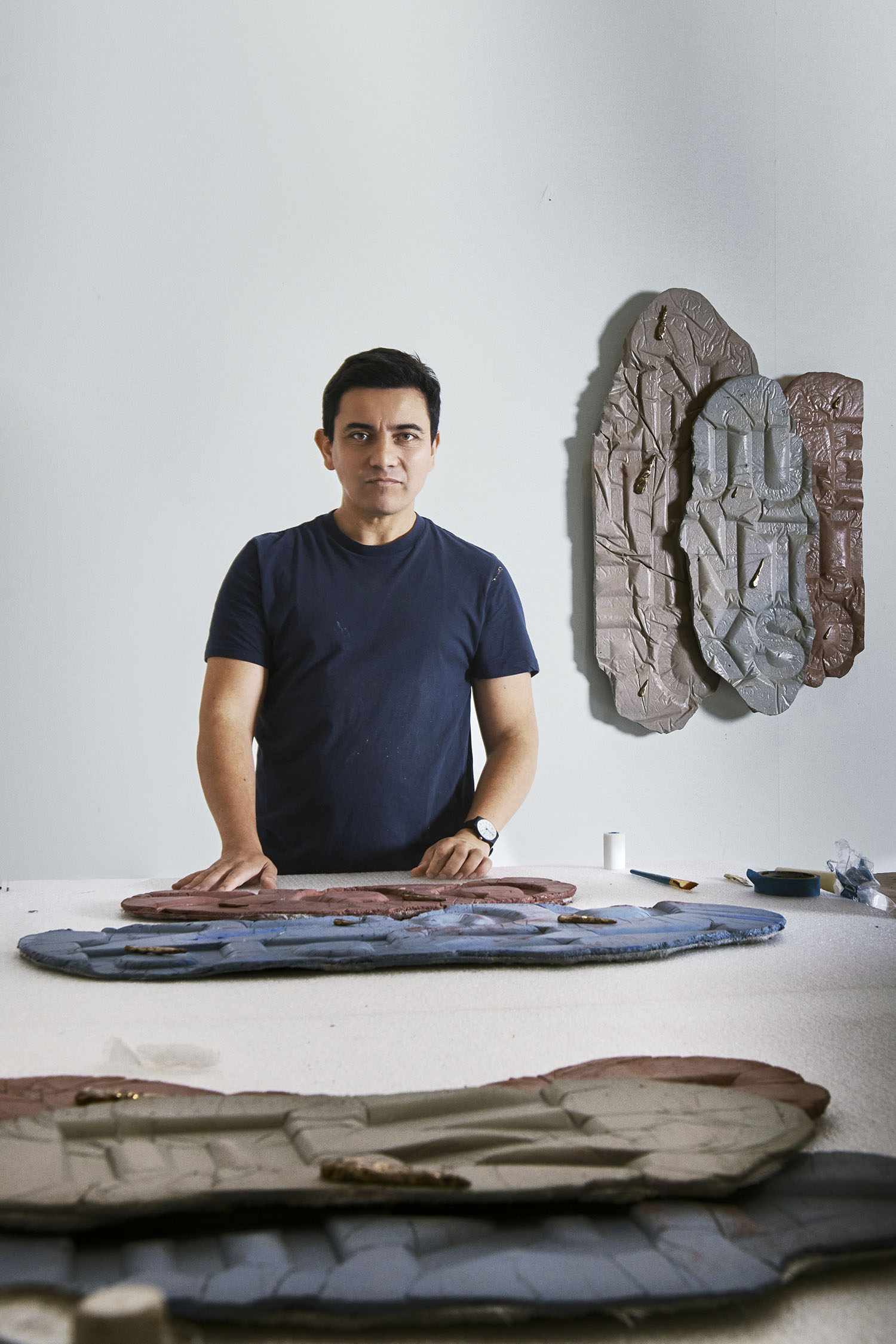
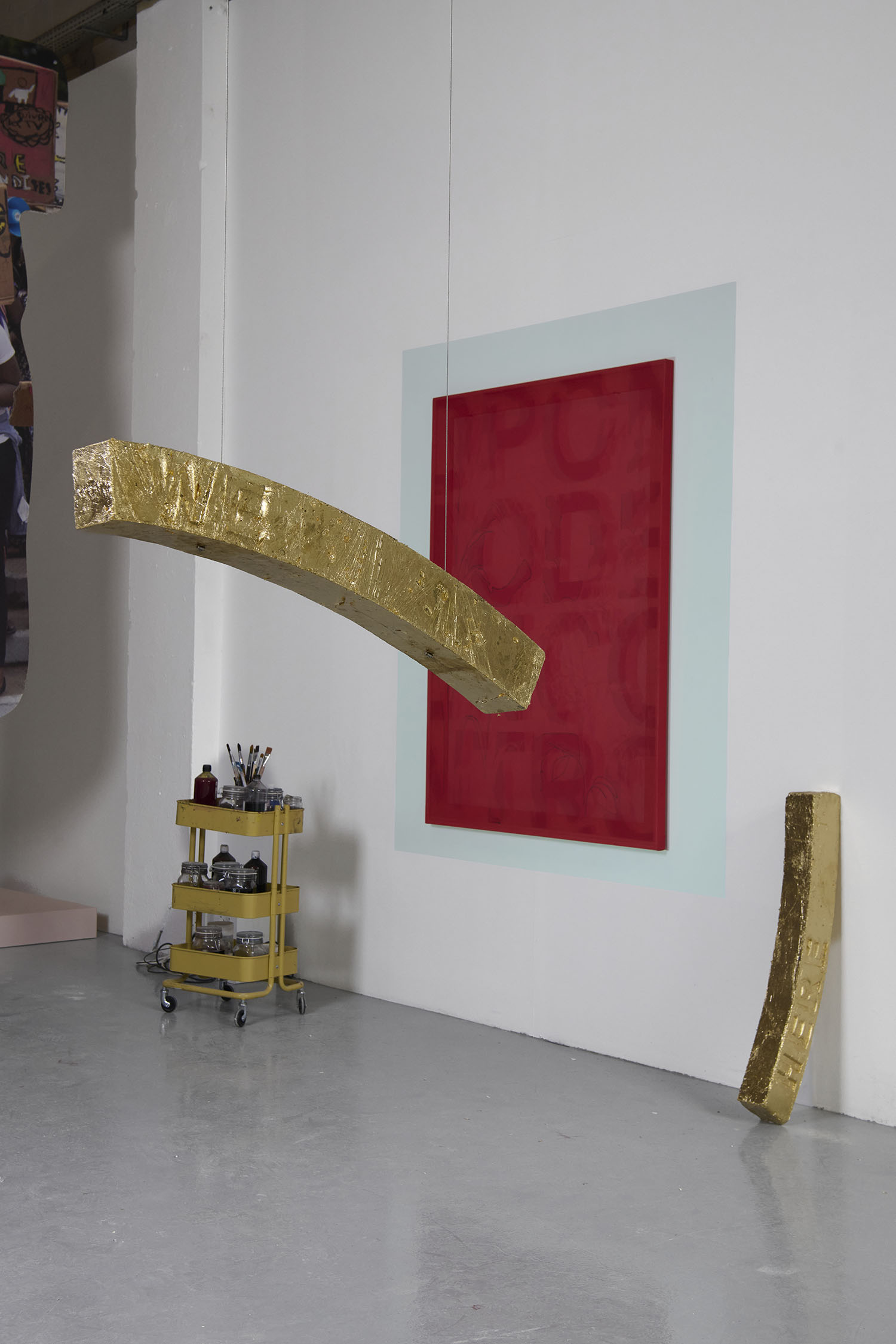
On a rainy October day at the tail end of Paris Art Week, Argote invited CULTURED to preview the upcoming exhibition in his studio and take a peek at some of his favorite things, from a stocked Champagne fridge to a well-worn High Line staff jacket.
What’s the first thing you do when you enter your studio?
I hang my jacket behind the door and ask Cécile, my studio manager, “What am I supposed to do today?” We have many deadlines all the time. We are either shipping work or finishing work. I take a coffee, and we sit and figure out the priority of the day. Sometimes it’s hard to find time to literally work on the pieces, with my writing and research. So we try to make the most room possible so I can physically make artwork. The team tries to help me with things that are more communications-related, but sometimes the whole studio is mixing concrete.
How many people work with you here?
Between three and six, depending on the day.
What’s on your studio playlist?
We listen to music all the time here. There’s always a Latin vibe for sure. We play a lot of reggaeton. I grew up in the ’90s, so there’s always some hip hop and R&B from then. It’s a real mix. When we need more energy, we play Destiny’s Child.
What’s in your studio fridge?
Since it’s Paris Art Week, we have plenty of visitors at the studio—so we happen to have a lot of champagne in the fridge right now. We also have cheese and ham and an assortment of hors d’oeuvres. I think when you come to the studio, it should be an experience in itself. Visiting an artist’s workspace is very intimate. I try to make it a special moment for people because they are giving you their time. It’s generous from both sides.
What’s the weirdest thing you’ve ever done in your studio?
I used to throw a lot of parties—not in this studio, but in my previous one. We had a huge Mexican party here in Paris, before the pandemic. Three hundred people came, and we built seven piñatas. We filled them with hundreds of little plastic bottles of vodka and tequila. Everybody was super crazy. We had a DJ. But then I had to leave because I had a trip to Switzerland the next morning and had to be at the train station very early. People were still partying, so I just left the keys and was like, “Close when you finish.” Some people slept there and left at noon.
Have you ever destroyed a work to make something new?
I don’t think I’ve ever destroyed something. But I have reused and integrated an existing piece onto a larger one. I have done that with my collages, for instance. I have plenty of archives I keep, but they are not fully formed works. They become parts of pieces later. I think about it as if it were a machine: I build some parts that I know I’m not going to use right now, but maybe in the future.
If you could visit any artist’s studio, dead or alive, who would it be?
I would love to visit Bruce Nauman’s ranch in New Mexico. It looks amazing.
If your studio were an animal, what would it be?
A cute tiger… or a street pigeon!
Tell us about the jacket you have on today.
I have my High Line jacket on that says “staff.” They gave it to me when we installed Dinosaur in New York last October. We closed 10th Avenue. It was 3 a.m. and freezing, with a lot of wind. They gave this to me to wear and I kept it. It was used already and is actually very warm.

 in your life?