
Let’s just call it what it is: a free fall.
American politics are moving at record speed—in what direction, we’re not quite sure. Morning news alerts read like a Mad Lib of zeitgeisty terms (President Trump flies a jet pilot in an A.I. video posted to Truth Social, dropping feces on No Kings protesters?). The problems that need solving are too numerous to keep track of, and the money needed to address them seems to flow in only one direction: out of Americans’ pockets.
Orienting ourselves as we fly through this political mayhem is dizzying at best, and we’re not cats—there’s no guarantee we’ll land on our feet. But one comfort remains. In the midst of a government shutdown, plenty of our leaders are still hard at work and optimistic about the future. For our own sanity, we asked a few of these politicians, lawyers, activists, professors, and more for a book that has helped them parse our current political moment. Their recommendations are diverse, deeply personal, dense, and, most of all, heartening.

Parable of the Sower by Octavia E. Butler
Recommended by Alexis McGill Johnson, President and CEO of Planned Parenthood
“Octavia Butler published Parable of the Sower in 1993, and she may have very well been a time traveler. Her writing is eerily predictive of the political moment we find ourselves in today. I highly recommend reading her words and listening to Octavia’s Parables, a podcast hosted by adrienne maree brown and Toshi Reagon, where the two masterfully unpack the work chapter by chapter.”

Here Comes the Sun by Bill McKibben
Recommended by Michael E. Mann, Author and Director of Penn Center for Science, Sustainability and the Media
“The book I’d like to recommend is Here Comes the Sun: A Last Chance for the Climate and a Fresh Chance for Civilization by climate activist Bill McKibben. The reason is pretty simple. My mantra these days is “Urgency and Agency” when it comes to the climate crisis. We face great peril, and there is great urgency in taking dramatic actions now to decarbonize our world. But there is also agency. There are actions that we can take to avert disaster. That’s what I like so much about Bill’s latest book—it communicates both essential messages. We have the tools to accomplish this. The obstacles aren’t physical, or technological. They are political. And as Bill points out in the book, the solution is starting right at us when we look up at the sky. It’s clean energy—solar. And also wind, geothermal, battery storage technology, etc. We can do this. That’s the attitude the book takes. And that’s the attitude we need to be taking too in these times when it is all too easy to fall into dispair… and darkness.”
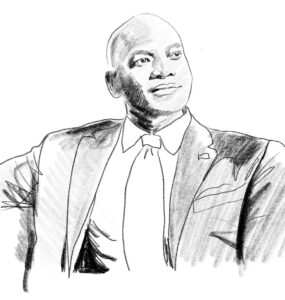
My American Journey by General Colin Powell
Recommended by Wes Moore, Governor of Maryland
“Powell’s writing helped me reconcile two contradictory feelings and thoughts—on one hand, a lucid understanding of America’s uneven history; and on the other, a deeply felt desire to serve this country in uniform, as a soldier in the Army. I’ve learned that loving your country doesn’t mean lying about its history, and I trace the germ of that patriotic mindset back to my experience as a young man reading Powell’s book, a text I occasionally return to for inspiration even now.”

Switch: How to Change Things When Change Is Hard by Chip and Dan Heath
Recommended by David Hogg, Co-Founder and President of Leaders We Deserve; Co-founder and Board Member of March For Our Lives
“This title is extremely on the nose, but when I read it for the first time in college it felt like an essential manual to explain and sustain changemaking. So much of our work at March for Our Lives was powered by raw and painful emotion. This book gave me a framework to connect the emotional and rational mind to achieve more, faster.”

The Human Revolution by Daisaku Ikeda
Recommended by Chi Ossé, New York City Council Member for the 36th District
“I would say The Human Revolution by Daisaku Ikeda. I’m a practicing Buddhist under the sect of Buddhism called Nichiren Buddhism, and one of the founding presidents of this organization of Buddhism that I study under was actually a political prisoner himself in Japan during World War II. He found light and happiness and this ongoing journey of revolutionizing the human state of suffering and war and pain—in pursuit of his freedom, but also in pursuit of his freedom of liberating others from pain and sadness and putting them in a place of finding their own happiness or, as he calls it, human revolution. We’re all in a similar place like that right now, given the political state of this country, and I think finding happiness can seem difficult. This book is something that keeps me going. There’s a lot of universal messages in it. Everyone wants to be happy, or a lot of us do, and that’s one of the main tenets of these texts.”

Competitive Authoritarianism by Lucan Way and Steve Levitsky
Recommended by Joshua Tucker, NYU Politics and Data Science Professor, Co-Founder of NYU Center for Social Media and Politics
“The book that I would recommend is Lucan Way and Steve Levitsky’s Competitive Authoritarianism. However, given the fact that it is a very long book, I might also suggest that your readers first check out the similarly named original journal article that introduced the concept of competitive authoritarianism. While there is a ton of useful information for readers in both the book (35 country case studies!) and the article, I want to stress two implications for why I think it is important for understanding our current moment. First, it really sets up the idea that we can’t think about countries as simply being democratic or authoritarian: There is a grey area in between. Second, in this grey area inhabited by these ‘competitive authoritarian’ regimes, elections are held, but they may not be free or fair. However, and this is part of what distinguishes full-blown authoritarian regimes from competitive authoritarian regimes: These are elections that incumbent candidates and parties can lose, despite their many advantages. Taken together, these points suggest that for people living in regimes where they think democracy is being degraded, elections can still remain a viable vector of change, despite what may be significant challenges.”
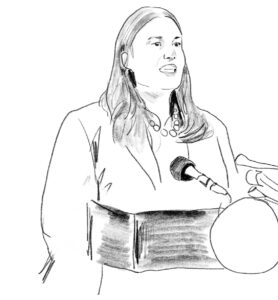
Why We Can’t Wait by Dr. Martin Luther King Jr.
Recommended by Skye Perryman, President & CEO of Democracy Forward
“The book, which contains the full text of Dr. King’s Letter from Birmingham Jail, reminds us that the work for justice and true democracy has always been urgent and never fully achieved. It also serves as a reminder that elements of autocracy have always existed in the United States and that it has been the people—against great odds and barriers—who have worked to oppose hatred and bring real change. King writes that peaceful protesters in the Civil Rights Movement were ‘standing up for what is best in the American dream … bringing our nation back to those great wells of democracy which were dug deep by the founding fathers in their formulation of the Constitution and the Declaration of Independence.’ There is much we can learn from those who came before us who insisted that the nation live up to its promises and work to achieve a true democracy for all. They showed the courage and commitment that we must find now.”

Senator Joe McCarthy by Richard Rovere
Recommended by Andrew Gelman, Author and Professor of Statistics and Political Science at Columbia University
“Richard Rovere’s 1959 book, Senator Joe McCarthy, is a vivid telling of an important moment in American political history by someone who was there at the time. I hate to draw an analogy between McCarthy and Donald Trump because it seems so obvious… but I happened to be reading Rovere’s book back in 2016 and came across so many passages that reminded me of Trump. ‘I Am the Law. He and the country were one and the same, synonymous and interchangeable.’ We see echoes of this, not merely in Trump’s own statements, but from his supporters. The characteristics that Trump particularly seems to share with McCarthy are boastfulness and self-focus; willingness to boldly lie about important things and, perhaps more important, escalate rather than backing down after the lie is caught; a willingness to attack respected figures; and a fundamental frivolousness, a sense that they are not taking all this very seriously. There are differences, the biggest being, I think, that Trump and his allies control over all three branches of government, whereas McCarthy had to act more indirectly. At his peak, McCarthy was more popular than Trump. In contrast, more Americans disapprove than approve of Trump. In retrospect, I suppose McCarthy had to have been that popular, in that his national following was the source of his power, and, without it, his fellow senators would not have supported him for so long. McCarthy did not have the advantage of party loyalty that Trump has enjoyed from Congress and the Supreme Court. You can learn more about this by reading Rovere’s book.” Read more of Professor Gelman’s thoughts on Senator Joe McCarthy here.

Lawless by Leah Litman
Recommended by Chase Strangio, Co-Director of the ACLU’s LGBT & HIV Project
“One book that I keep coming back to is a recent release from Leah Litman called Lawless: How the Supreme Court Runs on Conservative Grievance, Fringe Theories, and Bad Vibes. Leah helpfully and accessibly walks the reader through the Supreme Court’s role in empowering the Trump administration, exacerbating deeply inequitable legal and material conditions, and abandoning bedrock norms, all of which have opened the door to the present rise in fascist leadership. I would also recommend people listen to Leah’s podcast with Kate Shaw and Melissa Murray, called Strict Scrutiny, as a helpful companion to the book.”
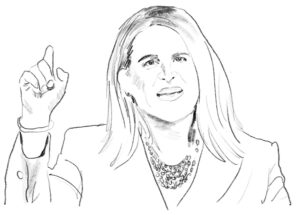
The Strike of ’28 by Daniel Georgianna and Roberta Hazen Aaronson
Recommended by Liz Shuler, President of the American Federation of Labor and Congress of Industrial Organizations
“A few weeks ago I was in Massachusetts and a friend recommended this incredible book—a look at one of the most important strikes in labor history, a six-month textile workers’ strike in New Bedford, Massachusetts, in 1928 after mill owners announced a 10 percent wage cut. It’s a powerful reminder of what workers can accomplish when we stand together, and it couldn’t be more timely in this moment, as we stand up to unprecedented corporate greed, new technologies on the job, and fight for the dignity of all working people.”










 in your life?