

Just blocks from the Chelsea Hotel sits a remarkable piece of New York architectural history: the former home and office of architect David Webster. Completed in 1981, the preserved interior is a rare surviving example of High-Tech design, an off-the-shelf, ad-hoc, and industrial approach to space-making that emerged in the late 1970s.
Within these walls, Webster lived and worked, hosting gatherings with his partner, the writer and AIDS activist Larry Kramer. They drew the artists and thinkers of their time into a space that celebrated urban living liberated from the confines of decoration and fuss.
Today, the home enters a new chapter, having been recently purchased by countertenor phenom and general director and president of Opera Philadelphia Anthony Roth Costanzo, who is carrying forward—with the very hands-on guidance of its creator and former tenant—the character of the design and the spirit it represents. Anthony and David met at the storied apartment to discuss its legacy.
David Webster: There were 15 of us who bought this building in 1975. It was built in 1903 as an apartment hotel, supposedly for [Gilded Age financier and philanthropist] Diamond Jim Brady’s girlfriend, Peaches. At the time, I had a shop in Southampton called Country Living. It sold plants, baskets, all that stuff. Everybody wanted Mario Botta in the mid- 70s, so I would do whatever architectural work came along. A lot of penthouse terraces, which I published in the Times. But I couldn’t find people who would actually agree to living with neutral interiors. I didn’t know a whole lot of gay men, and this was the sort of thing they liked, not the straight
ones.
Anthony: I’ve lived here now for two years; there is no other space like it in New York. When did you first begin working in this style?
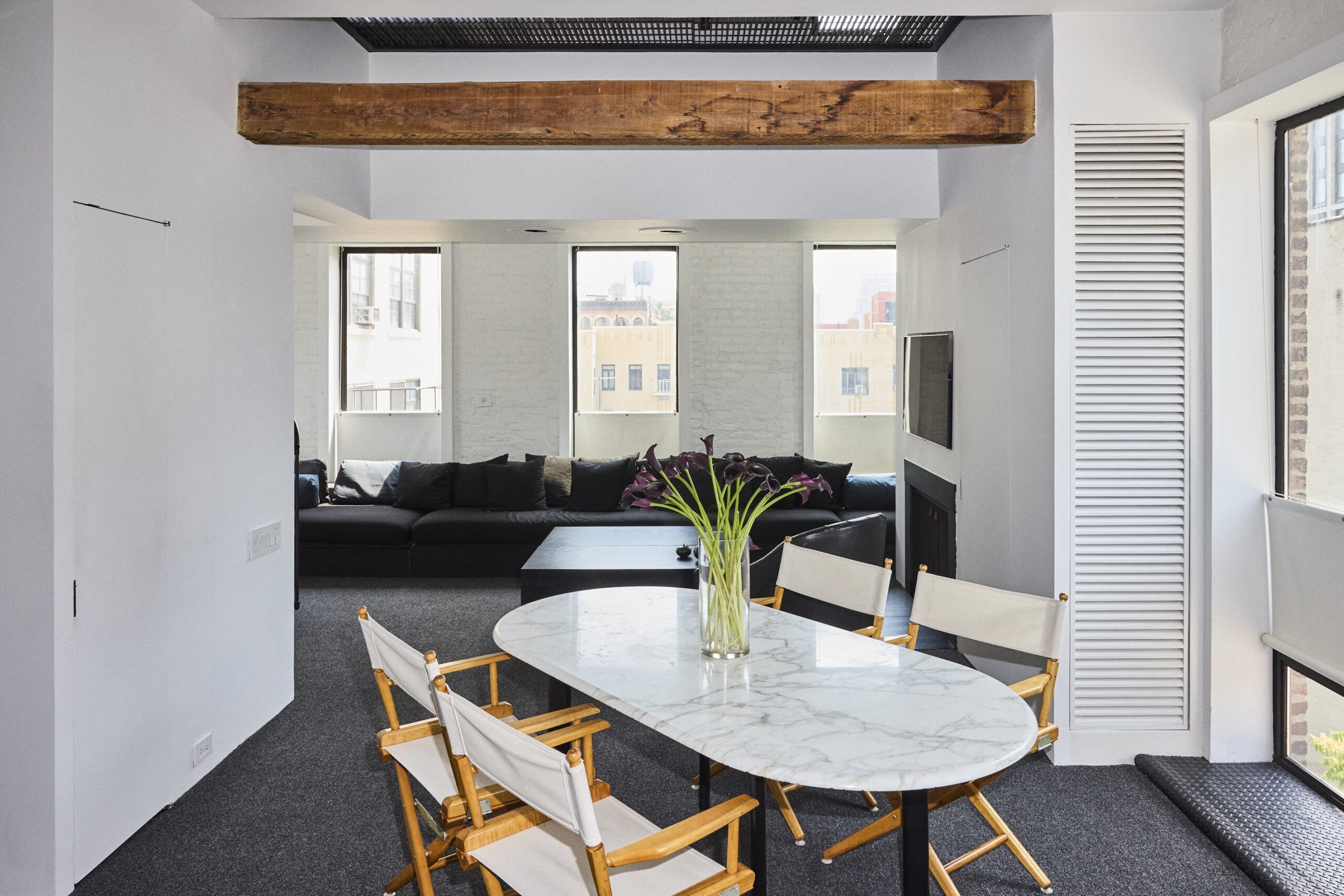
David: In 1979. I bought this unit and the roof space above it to turn into a home and office. You can stand up there at night and look out over the city. I made my own space, the way I wanted. When traditional clients came here for a meeting, they would sort of freak out. One woman said, “Where’s the green lacquered library?” I said, “There isn’t one. Not in my house.” I finished it in ’81. The front door didn’t match the apartment, which made me upset. So I designed this sliding door to make it disappear. Then it didn’t bother me at all.
Anthony: I close the sliding door every night. I love it.
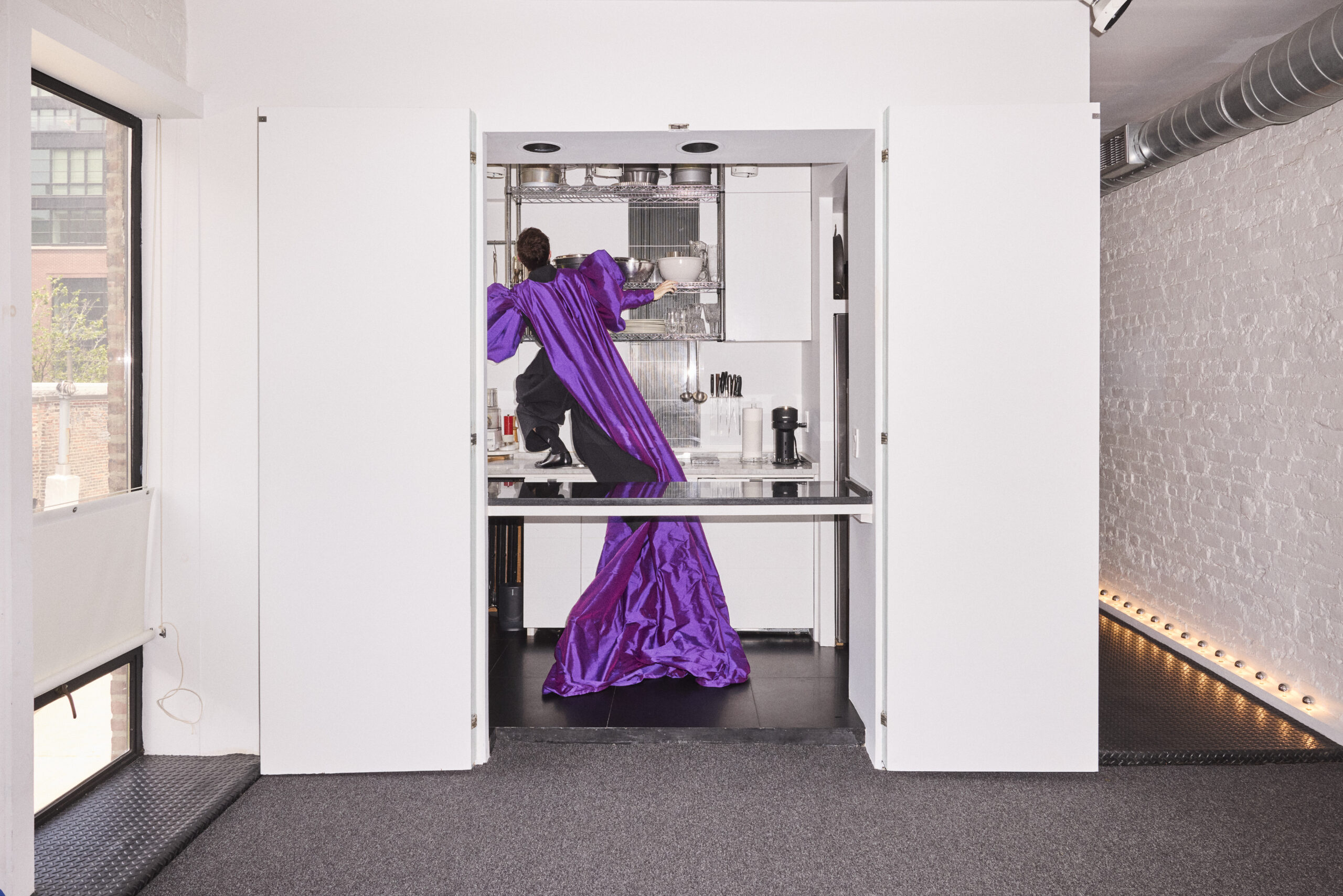
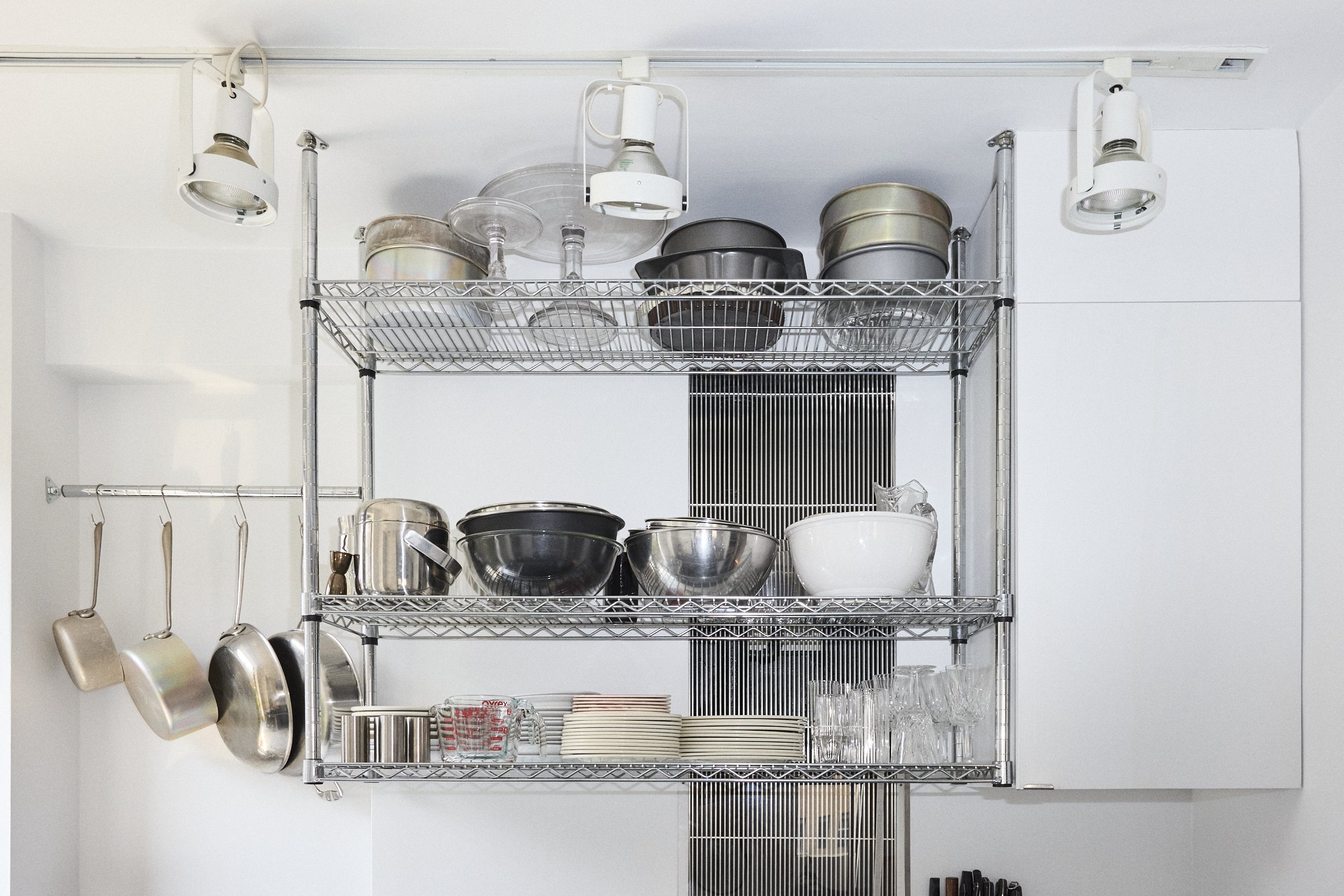
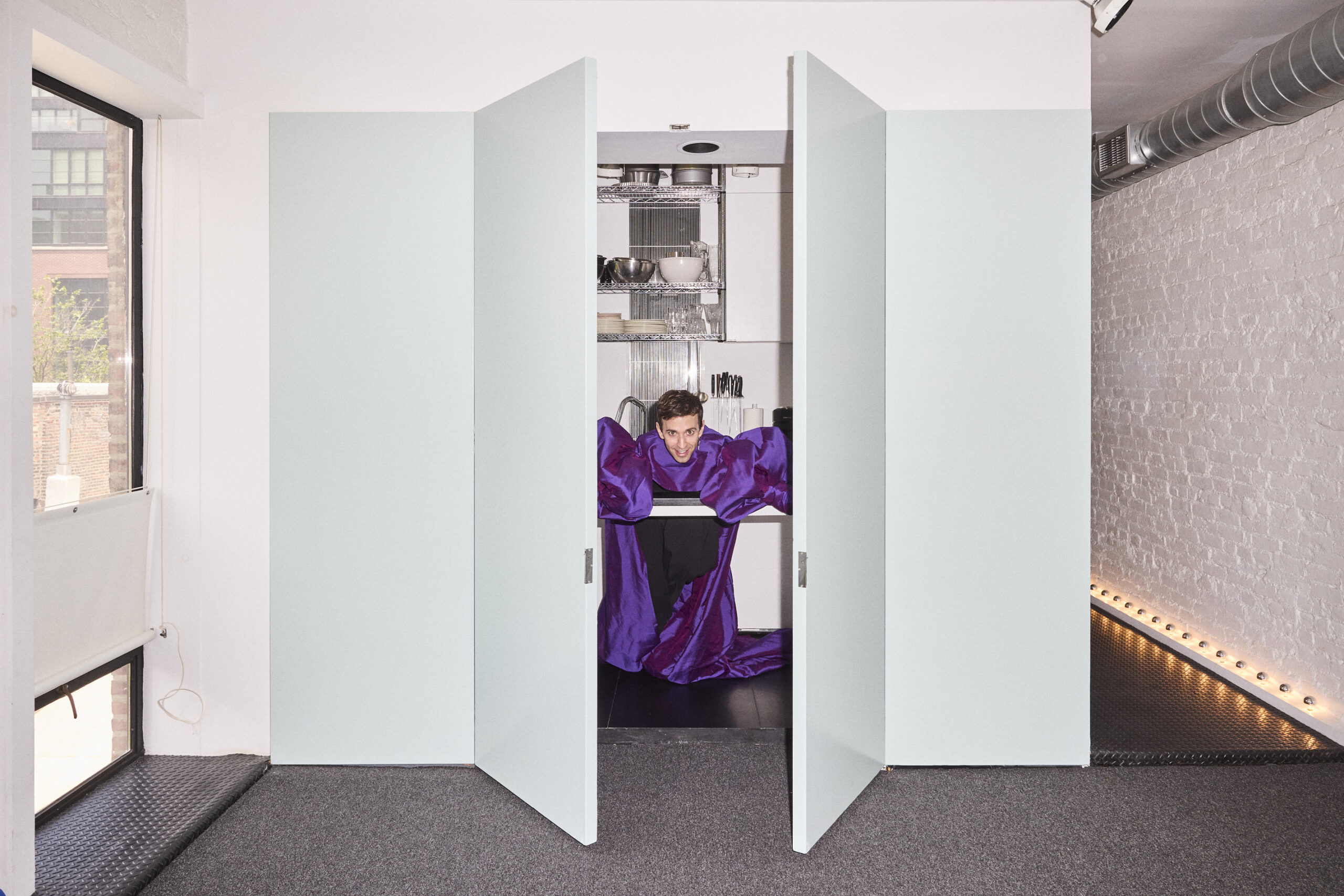
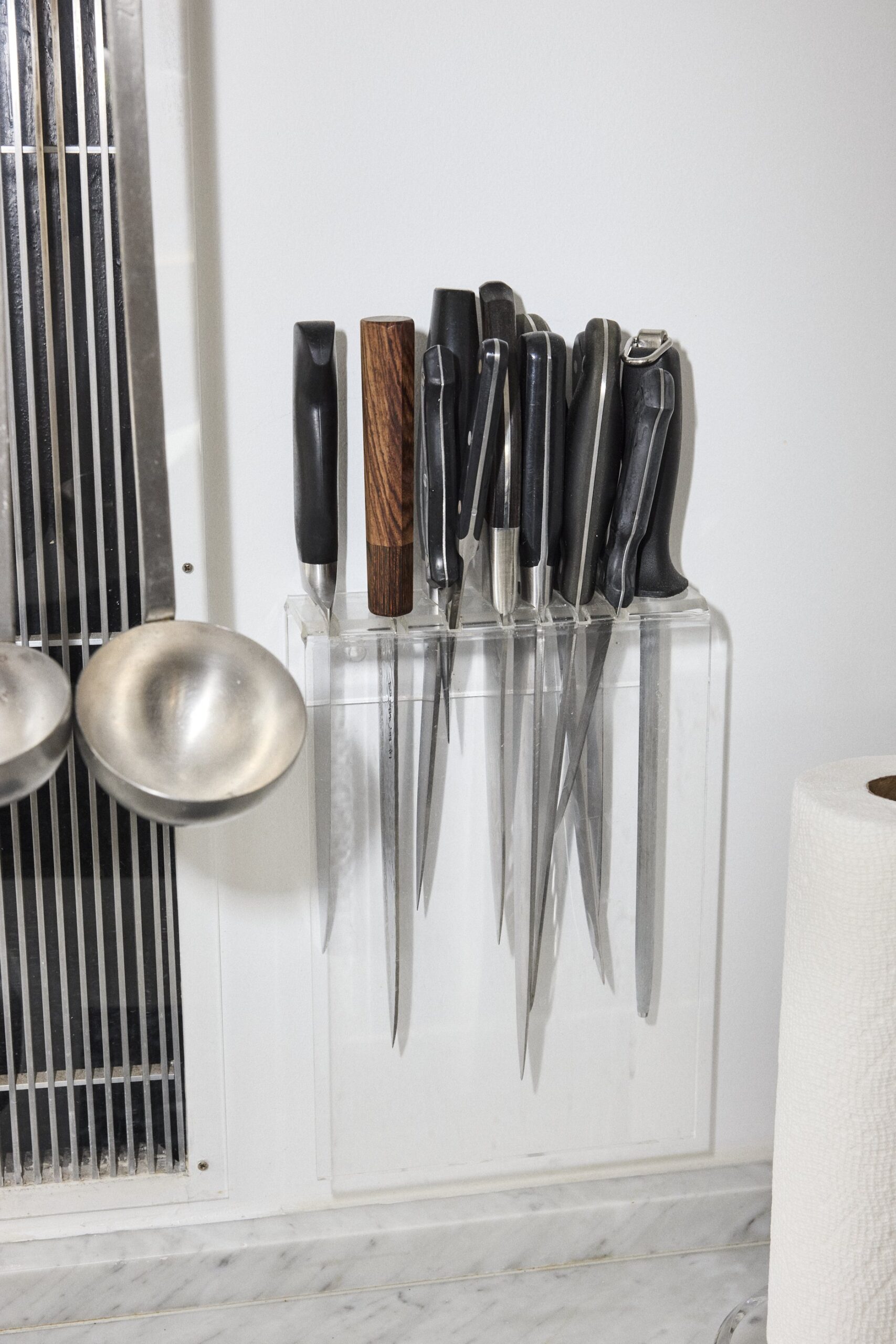
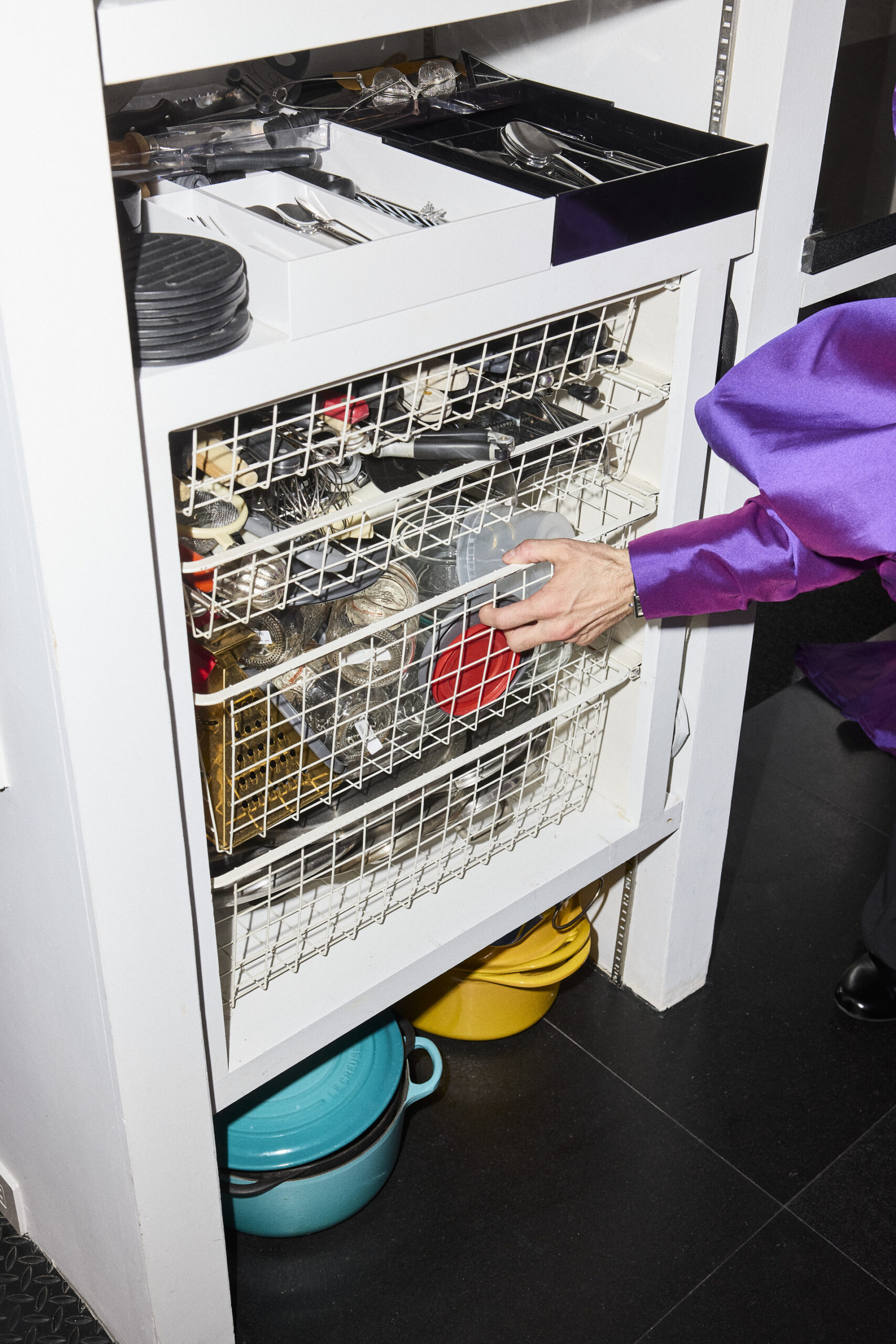
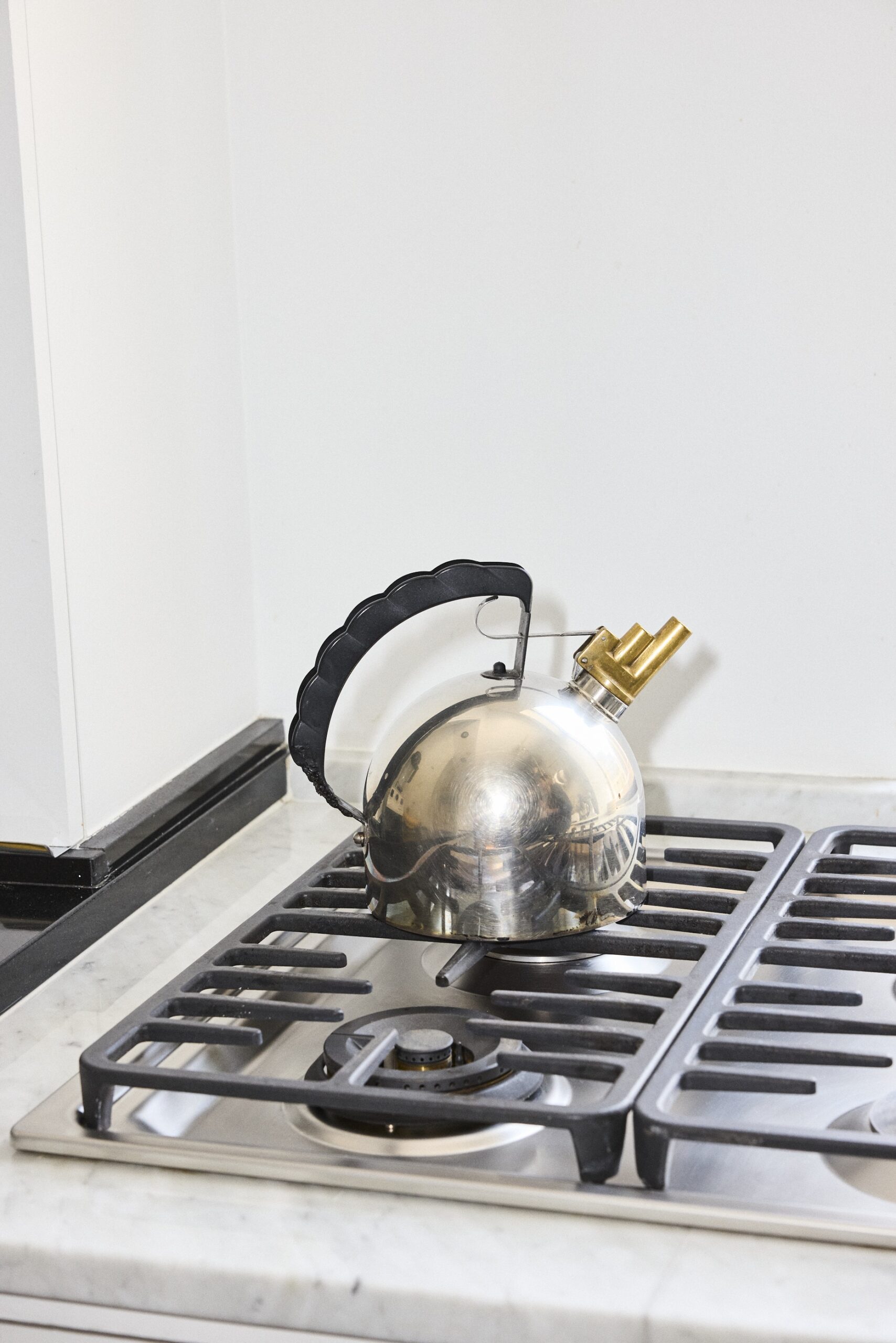
David: If the hinge catches, just ask Luigi to put some WD-40 on it. Then I built the sofa box and painted everything gray. There was a bedroom where the kitchen is. There was a wall that created a double living room with French doors, all of which I ripped out, so it was an L-shaped living room with the loft space. Kilroy Metal Works in Long Island made the iron windows custom. If you need to fix a handle, they’ll fix it. I also split the bathroom in half so that Michael [Eriksson], my partner at the time, could shower, and I could take a bath when I returned from the Chelsea YMCA. Everything was white Formica, which I love, with a black rubber floor.
Anthony: There are so many useful details throughout the apartment. You set the top rack back in the closet so that when you go to look at things on the bottom rack, you don’t have everything hanging over it. You put outlets everywhere.
David: I designed this home before people had cell phones. I used to read in bed and needed an electric light.
Anthony: Justin Vivian Bond and I were wondering about these little hooks by the bed. We think these are for restraints, but we don’t know for sure.
David: They are.
Anthony: Oh, I got it right! I was going on dates with a guy recently, and I showed him. I said, “What do you think those are for?” And he said, “Well, let’s test it out.” We haven’t yet, but I’m glad I confirmed.
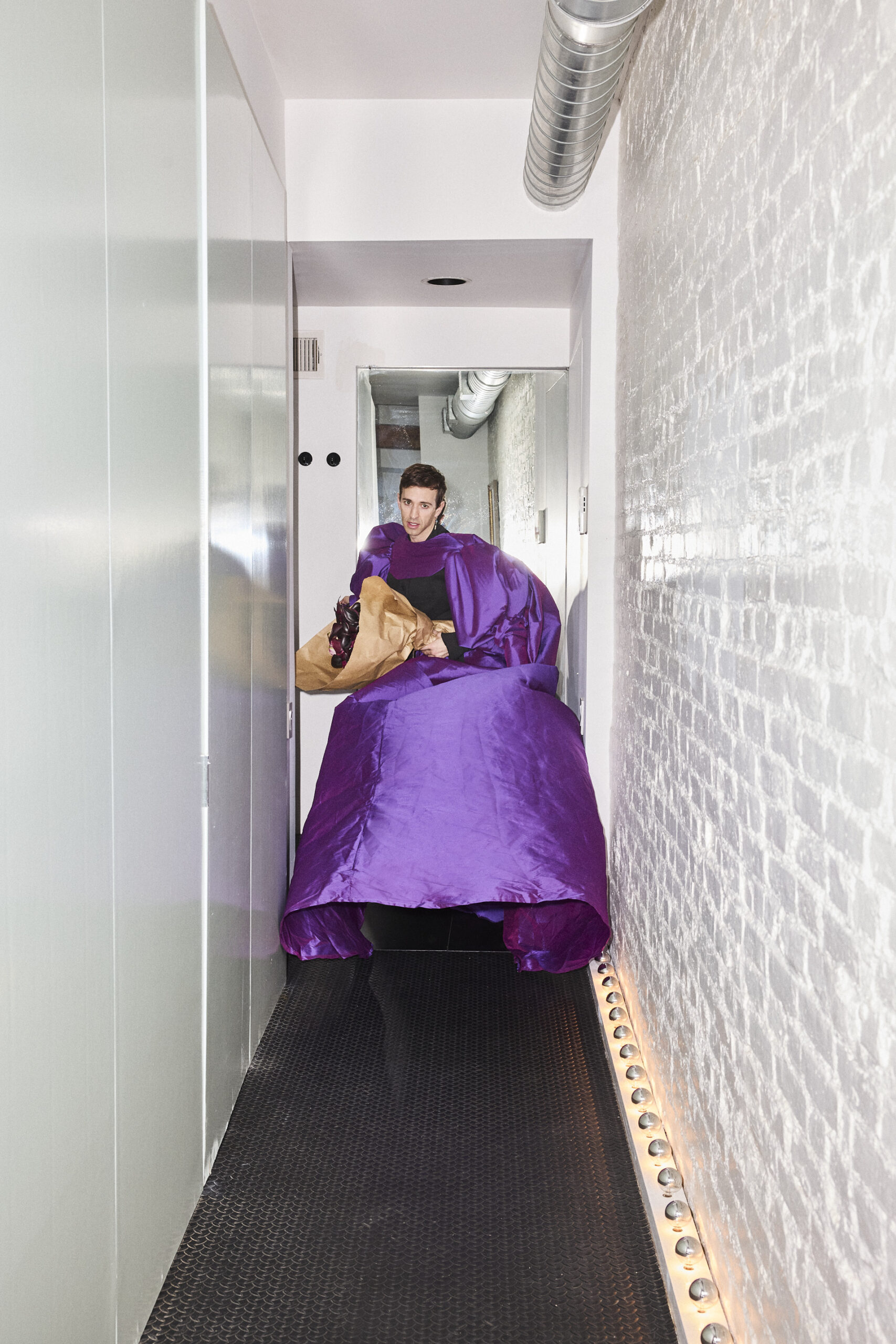
David: You got it right. The hallway runway was made for a job in New Jersey that was for [composer] Jerry Herman’s aunt. I had leftover lightbulb strips that you use for lining bathroom mirrors. I took them and thought it would make logical sense to put them in the floor.
Anthony: And because it was an office, you wanted to be able to close off the kitchen.
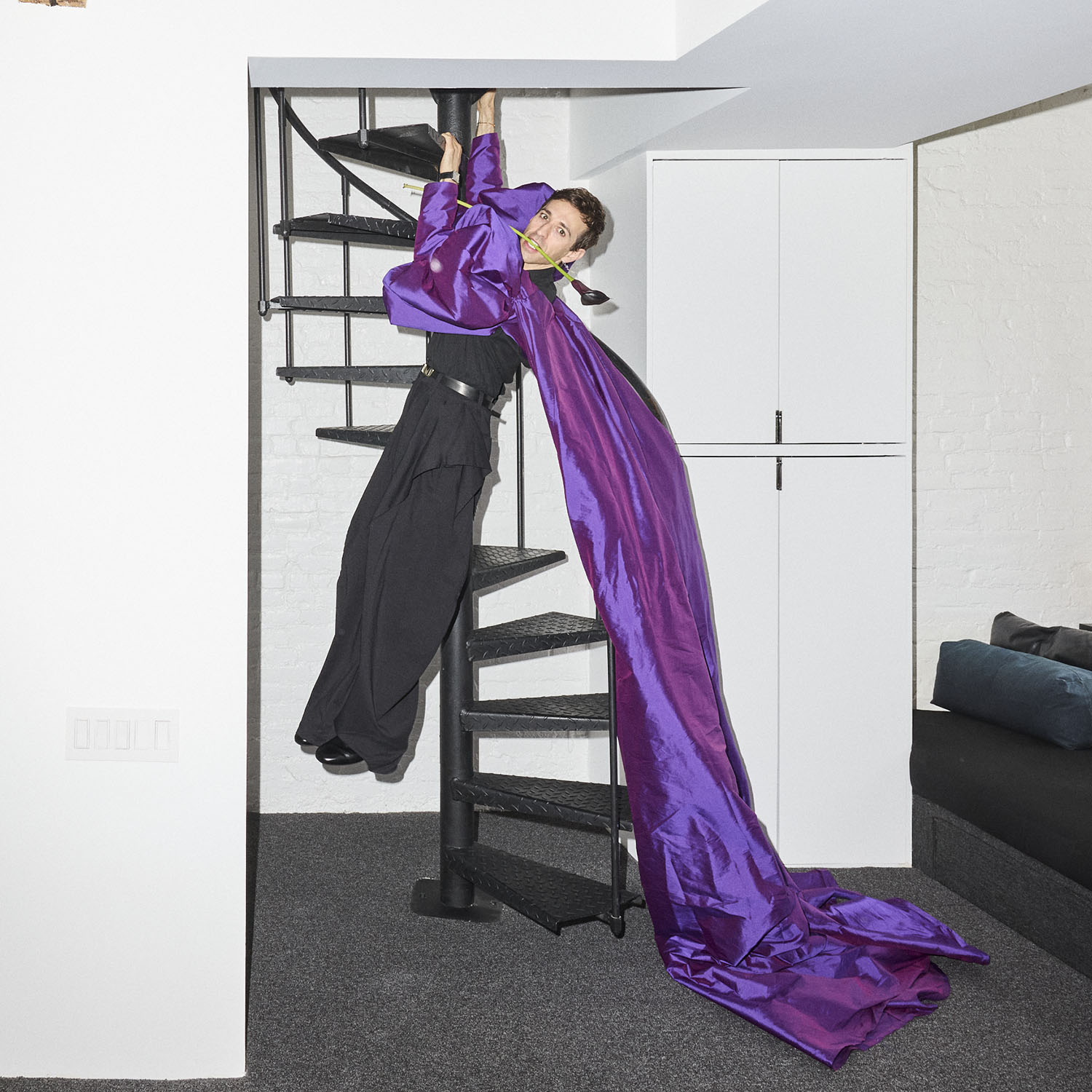
David: I needed the kitchen to disappear when clients came over. People who came here to work at this big table didn’t need to know how I lived. That wasn’t the business. I didn’t want doors. When I went to Japan, I was fascinated with shoji screens. It’s all bamboo lashed together. Have you been there? I took tons of pictures. I thought this whole thing should be like a folding screen. So I dropped the ceilings down. And when the doors are all closed, the kitchen is gone.
Anthony: I try to keep every change I make to this space as invisible as I can. I put in a pot rack and made sure to cut the bar to the exact same length. I tried to find the exact same triangular feet so that it would all look original.
David: If you’d called me, I would have ordered that for you. I found out that if I called Metro Shelving, they would compress the shelves so you could hang them upside down, which I do in my projects.
Anthony: I should have done that. I found it all online.
David: We used to shop in a store in SoHo called Hardware. It was on West Broadway. It had all these off-the-shelf products. Suzy Salesian and Joan Kron’s book High-Tech had just come out at the time.
Anthony: That’s part of what’s so brilliant about the apartment, I find. It’s like a puzzle. Everything fits so beautifully, even if it’s off-the-shelf. There’s luxury in that.
David: There’s creature comfort in that.
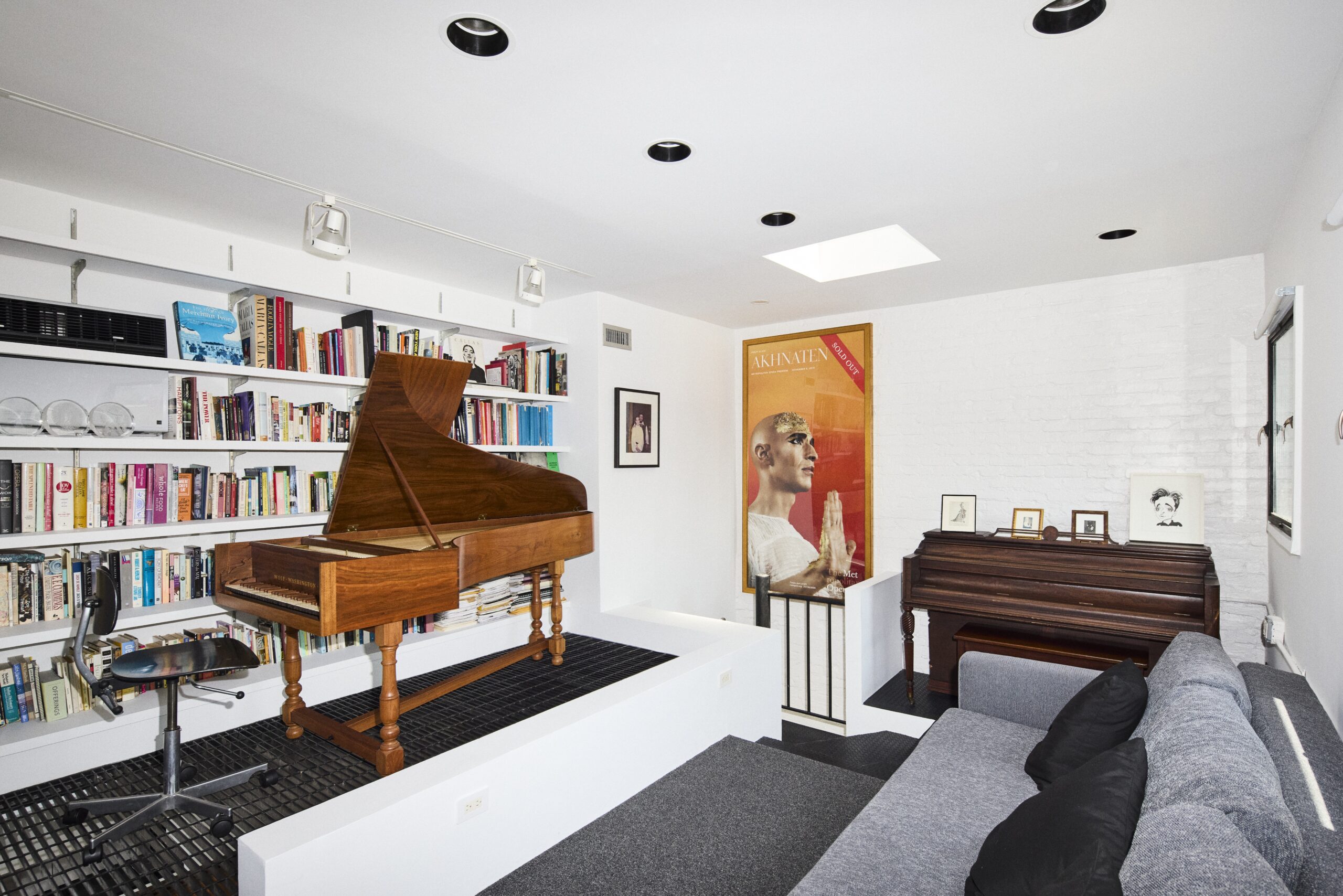
Anthony: One thing that I’m surprised to say I love is this industrial carpeting. When I first visited this place, I thought, I can’t live in an apartment with industrial carpeting. My friend says you could murder someone on the carpet, drag them out, and still remove the stain. You know what I mean? It’s such a durable space, which is the opposite of many historical settings I’ve been in, where I’ve worried about scratching this or breaking that. It’s practical.
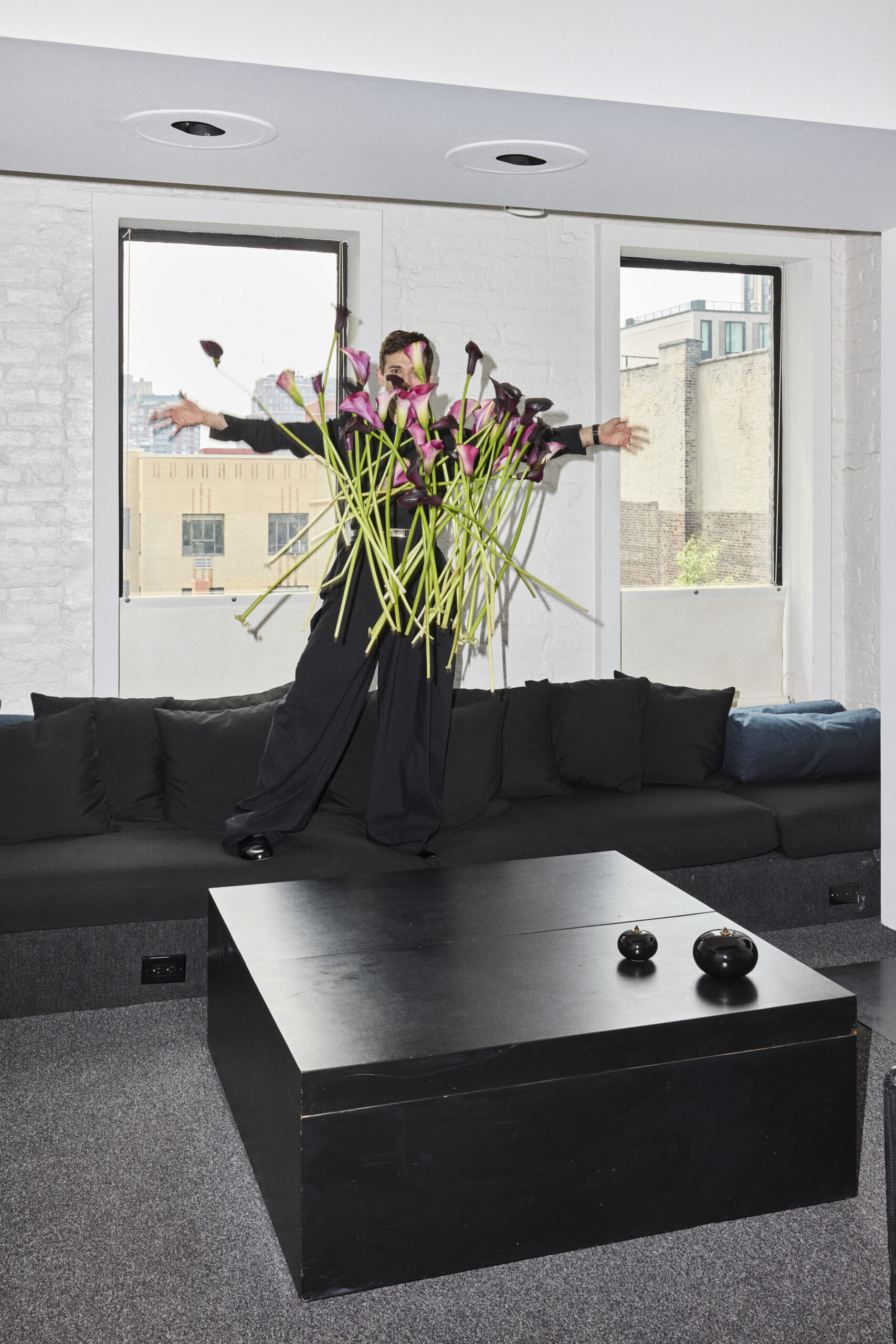


David: I wanted to sell the apartment to someone who gets it. What made you decide you wanted to live here?
Anthony: When I first saw it online, I told my mother, “You have to go see it for me.” She went with the real estate agent, and you were just leaving as she arrived. She loved it. Then I sent my closest friend whom I dated for four years when we were very young. He went to Parsons; he knows all the design stuff. We looked at maybe 500 apartments together. He walked in and texted me, “You have to get this apartment.” Meanwhile, I’m opening Akhenaten in London, and we’re about to go on. I snuck back to the States the morning after, came to the apartment and said, “I have to have it.”
My real estate agent said, “I think the owner is someone you might know.” That’s when I learned your backstory and relationship with Larry Kramer. I decided to write a letter to send you alongside my offer. It basically said, “You’re going to want someone here who appreciates the history and who comes from the queer community.” I just wrote all about this in my book draft, which is due today.
David: They always extend the deadline.
Anthony: I know. Do you know Jonathan Galas at Farrar, Straus and Giroux?
David: Very well. Tell him hello. He waited five years for Larry to finish his draft, so he knows how it works.
Anthony: I’m having lunch with him on Tuesday. I’m at 101,000 words. But there’s a section about the letter I wrote you, David, where I told you how I came out as gay and offered you the most money I could afford. And then we got to know each other a little bit, which they don’t like you to do when you’re selling an apartment, but we didn’t really care.
David: I gave you all of it.
Anthony: Everything. Down to the soap that you used to take a bath with.
David: Vitabath. I also lent you some pieces of the Ward Bennet flatware we used.
Anthony: And your alcohol, some of which is still untouched. I would find little things like cookie tins or things that said, “Happy Christmas, David and Larry,” or whatever. I would find little cigarette butts around, which I loved. It made me feel like life had been lived here.
David: Would you tell me about the book?
Anthony: It’s called Countertenor, and it digs into the idea of the countertenor voice. There is something called gay voice, right? People who “sound gay.” Does being a countertenor inherently sound gay? And why is that? Why do we associate pitch with gender and gender with sexuality? I think of this apartment as a gay space. Do you?
David: No. I never thought of it as gay. In design and architecture, there are people whose work I felt I was in dialogue with. At the time, Joe D’Urso and Bob Bray and Michael Schaible were making work in a similar language. Joe designed this table we’re sitting at for Knoll. It’s called a Racetrack table. I special-ordered it without wheels and with a Calcutta marble top.
Anthony: That’s interesting. I mention in my book that I don’t experience my countertenor voice as being gay. Even though I am. But other people…
David: But it isn’t.
Anthony: It’s filled with my experience in the same way that this apartment is filled with your life and experience. So, to someone coming into it, that does carry a certain energy.
David: For me, the design of this apartment is more about urban living. Being interactive, adult. Everything taps into one basic feeling. All the doors, the furniture.
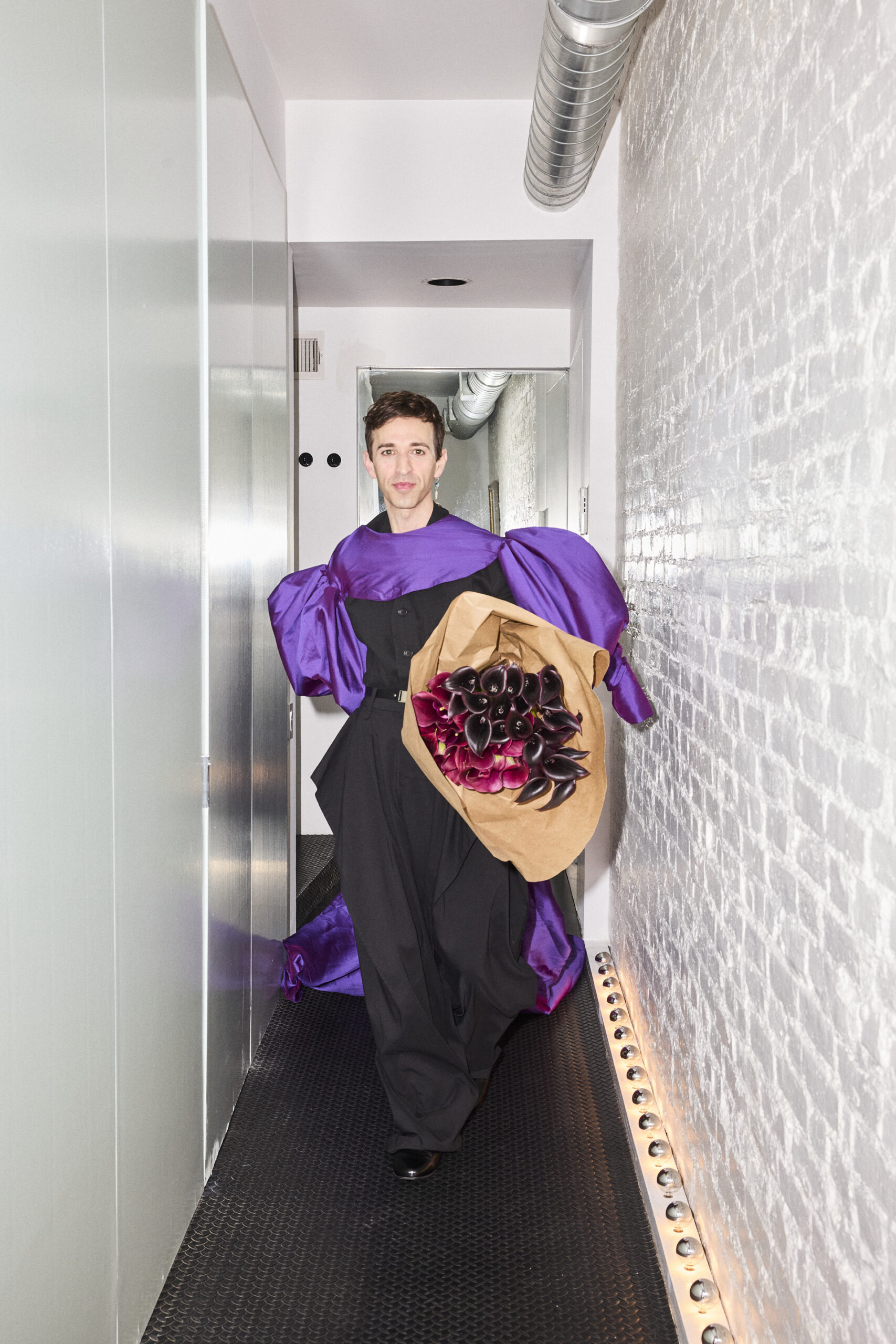
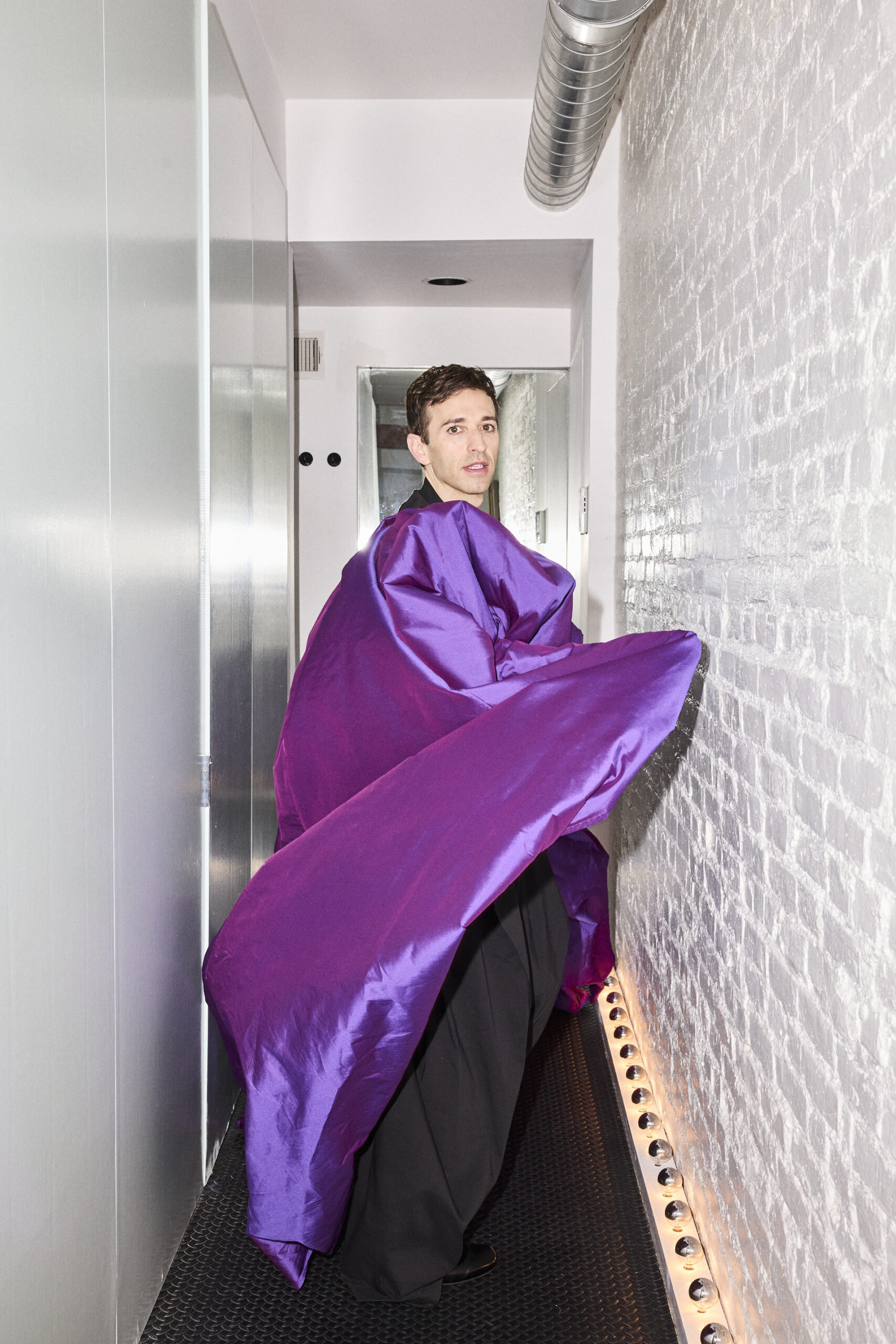
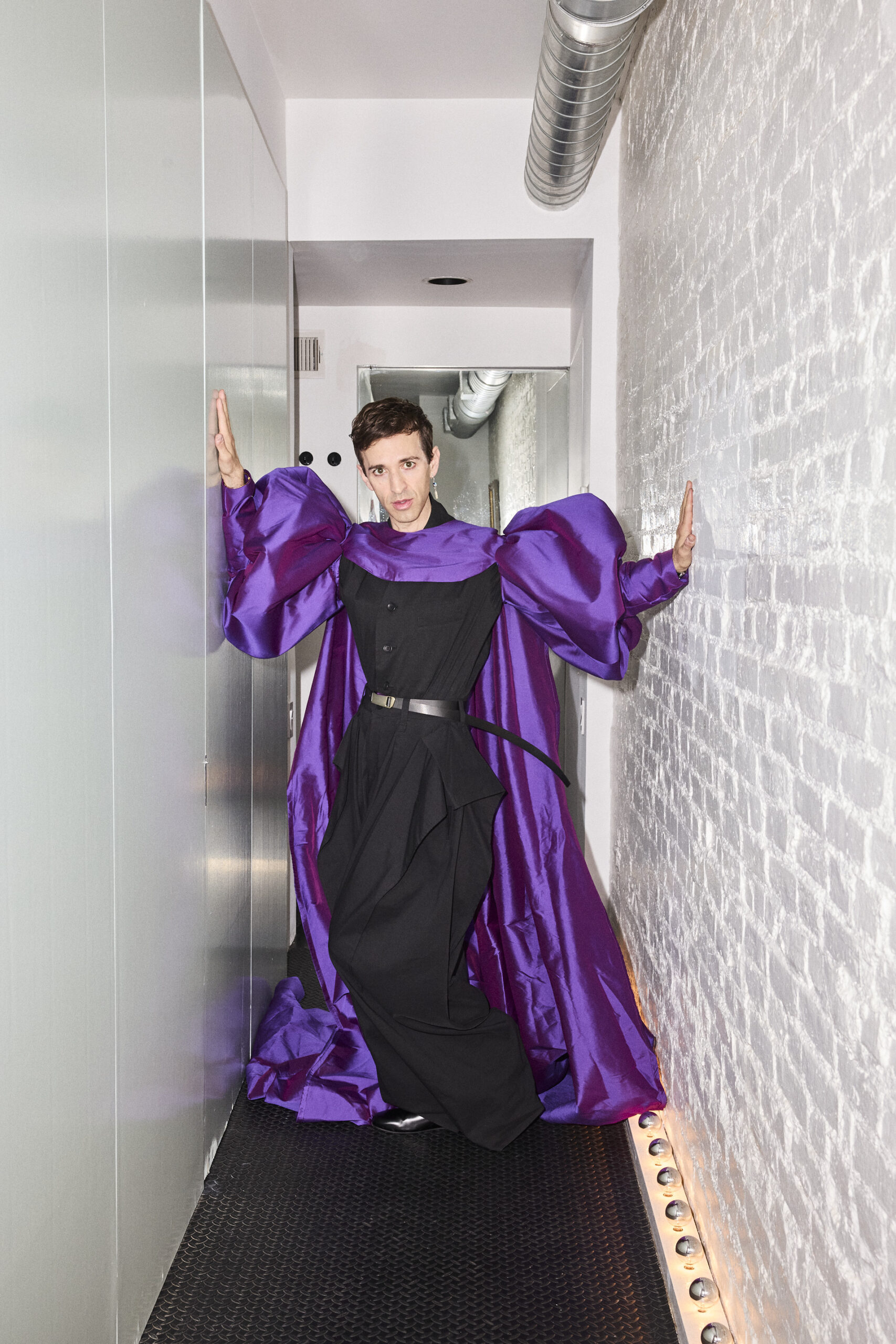
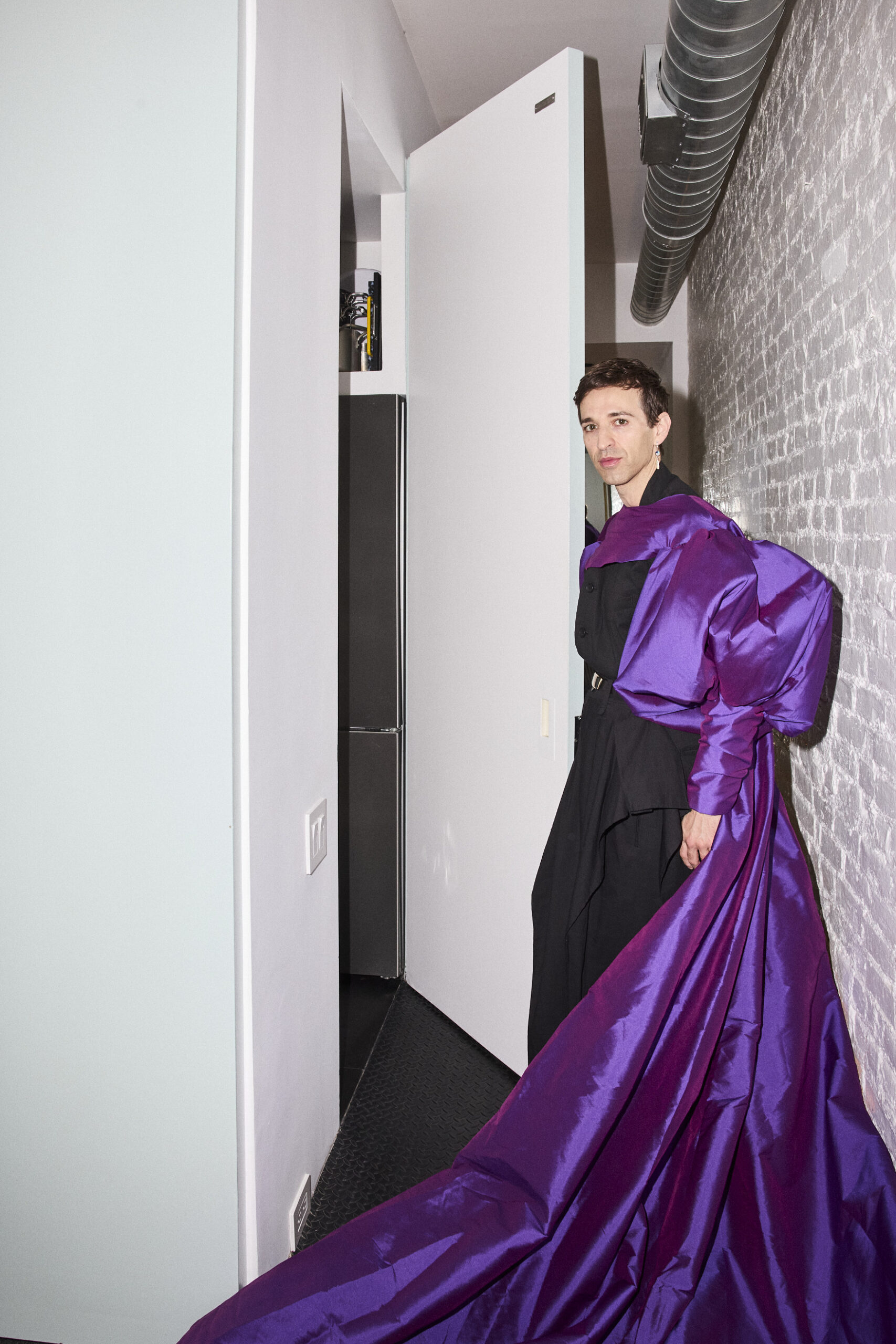
Anthony: You designed a space for everything. I have all kinds of stuff stored in the coffee table. It’s like the attic. There’s stuff under the couch, all my grandmother’s china in that cabinet.
David: It’s neutral enough that you could have a grandma party and have all her china out.
Anthony: I always feel a great sense of relief coming in after a show, when I’ve been in front of a ton of people. It’s very calming.
David: It’s a compliment that you’ve kept the space as I designed it. It’s also a really nice intellectual exchange to meet someone who’s on the same plane you’re on.
Anthony: I probably think of you more than you think of me. I’m living in your space. I think about all the ways it works, and all of the things that were designed to meet very specific needs.
David: Do you use the toolbox?
Anthony: Of course!
David: [Laughs] I kept it all in the family.










 in your life?