
At “Virgil Abloh: The Codes” in Paris, guests could almost visualize what it felt like to stand shoulder-to-shoulder with the designer. Abloh, who founded the Milan-based label Off-White in 2012 and later served as artistic director of Louis Vuitton Men’s, was known for collapsing the distinctions between streetwear and high fashion, architecture and art, sound and design.
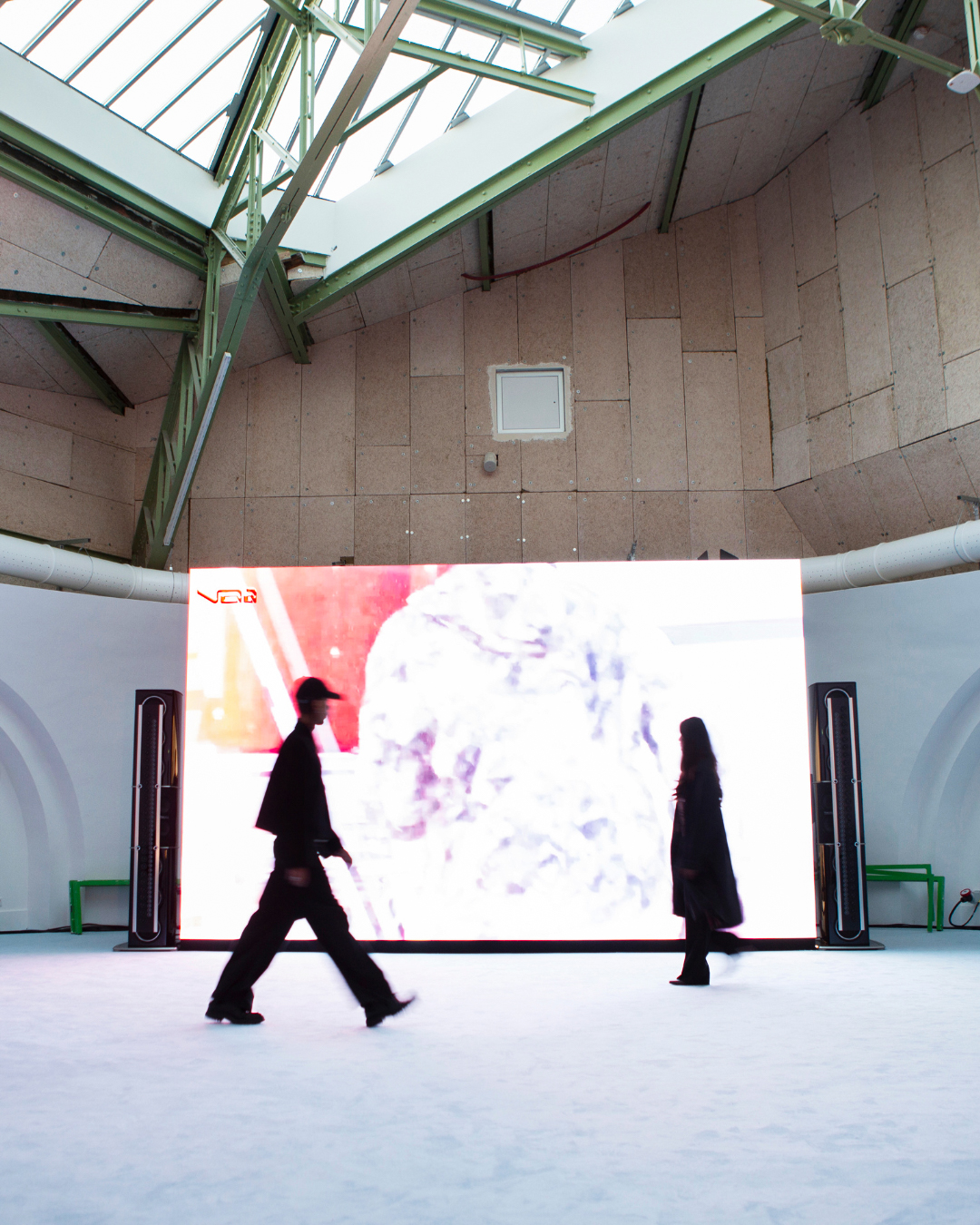
In the monumental rooms of the Grand Palais, melodies seeped from a recreation of the designer’s sound set-up—humming with vintage and limited-edition equipment—and an entirely new system developed for the exhibition, based on a final design conceived by Abloh and completed by his team. What else was in store for watchful Abloh acolytes? A wall of collaborative shoes, a recreation of the designer’s original work table splayed with memorabilia, Louis Vuitton skateboards and coffee cups, archival pieces from his line Pyrex Vision and collaboration with Chrome Hearts, and a bedazzling station sponsored by Nike to develop new merchandise within Abloh’s vision.
On Jan. 3, 2020, the late designer wrote to the McIntosh team proposing a collaborative, special-edition speaker—an object that would merge his design ethos with the brand’s technology (much of which he already owned in his personal collection). As the pandemic unfolded and with Abloh’s untimely death of a rare cancer in 2021, the project was quietly set aside—until this Paris Fashion Week.
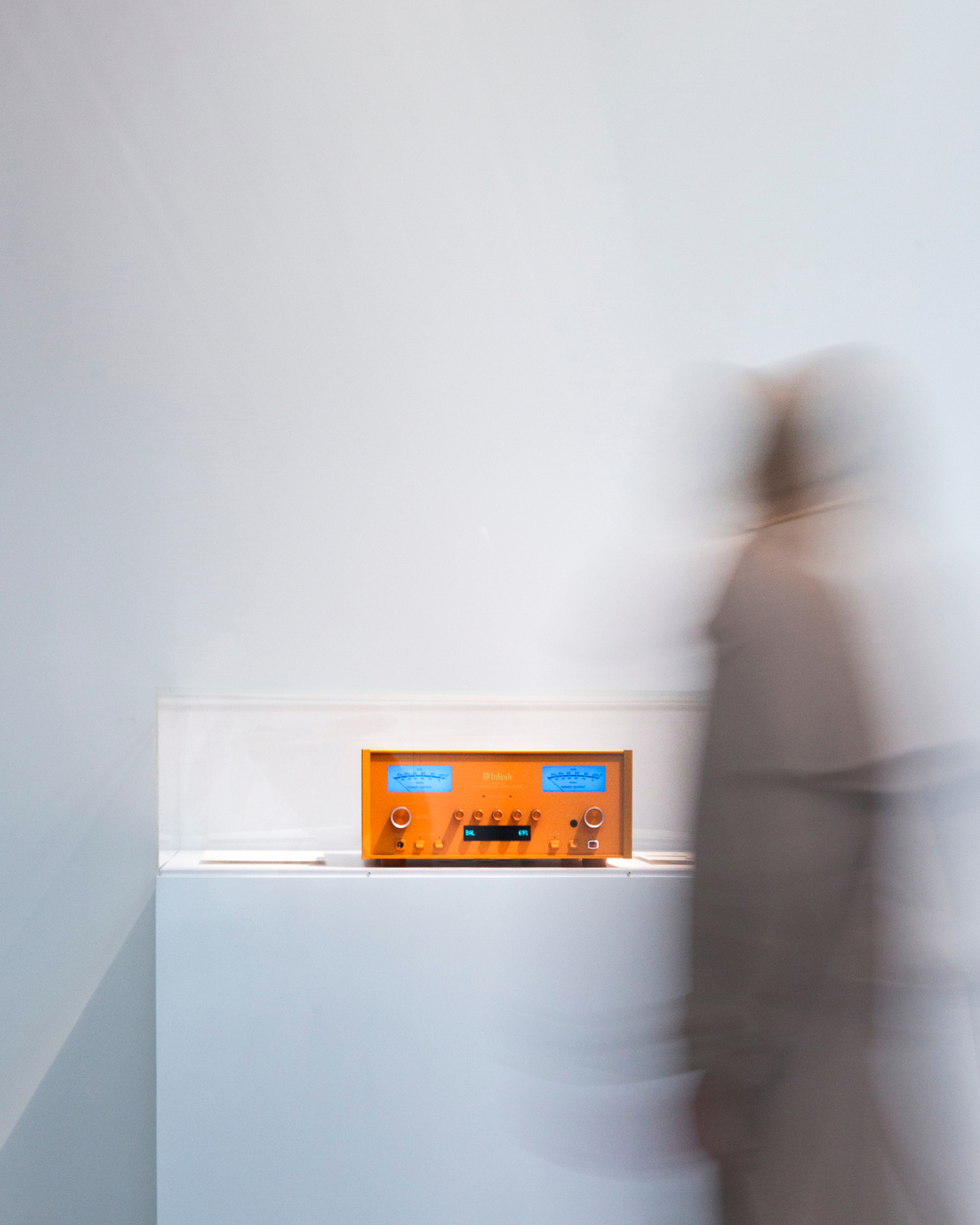
The result is a one-of-one design object-cum-sound system dubbed the MA8950 x Virgil Abloh Integrated Amplifier, a symbol of ongoing dialogue, and an intersection of McIntosh’s craft and the designer’s belief that all facets of creativity could (and should) be elevated to their highest degree.
As the exhibition unfolded (opening just a day after what would have been Abloh’s 45th birthday), CULTURED spoke with President of Bose Luxury Audio Jim Mollica, who helped bring the designer’s vision to life one more time.
CULTURED: When you think of Virgil Abloh, what comes to mind?
Jim Mollica: Creative fearlessness. Virgil had this rare ability to blur the lines between fashion, music, design, and art, and make it all feel part of the same universe. He reminded us that creativity has no boundaries and that you shouldn’t constrain your ideas or limit yourself.
CULTURED: How did it feel seeing Virgil reinterpret that DNA in his first correspondence, and then through the team’s piece in the exhibition?
Mollica: It was humbling and inspiring. Music was such an important part of his process, and he understood how deeply it’s tied to our identity as a brand. Seeing that vision come to life in the amplifier created for the exhibition was incredibly moving—it captured his creative energy and reflected our shared belief that sound and design are inseparable cultural forces. It still feels unmistakably McIntosh, but with his spirit and perspective woven through it.
CULTURED: The amplifier is a one-of-one piece. Which detail do you think most reflects Virgil’s spirit?
Mollica: The bold, orange finish. It’s a color Virgil often used to signify energy, creativity, and disruption. It captures the spark he brought to everything he touched and feels like a perfect reflection of his creative spirit.
CULTURED: How did sound fit into his creative universe, from your perspective?
Mollica: We know music was an important part of Virgil’s creative process—it shaped ideas, gave life to design, and continues to inspire the legacy we see today. In his studio, McIntosh equipment wasn’t just there for listening—it was part of how he worked and created.
CULTURED: What was the most exciting moment about bringing this collaboration to life?
Mollica: Seeing the finished piece for the first time. The idea was first brought to us in 2020, and to finally see it realized was deeply moving. It felt like we were honoring what he started.
CULTURED: Do you see this as a spark for more cultural crossovers with McIntosh?
Mollica: Absolutely. Collaborations like this remind us that sound isn’t just heard—it’s multi-sensory. It’s seen, it’s felt, and it can connect us more deeply to culture and design. We’ll continue finding ways to connect our heritage with creative voices shaping what’s next in music, art, and design. That’s our history, and that’s our future.

 in your life?