
While many collectors keep their prized archival fashion behind glass or in a lined box, Arianna Cho wears hers to work.
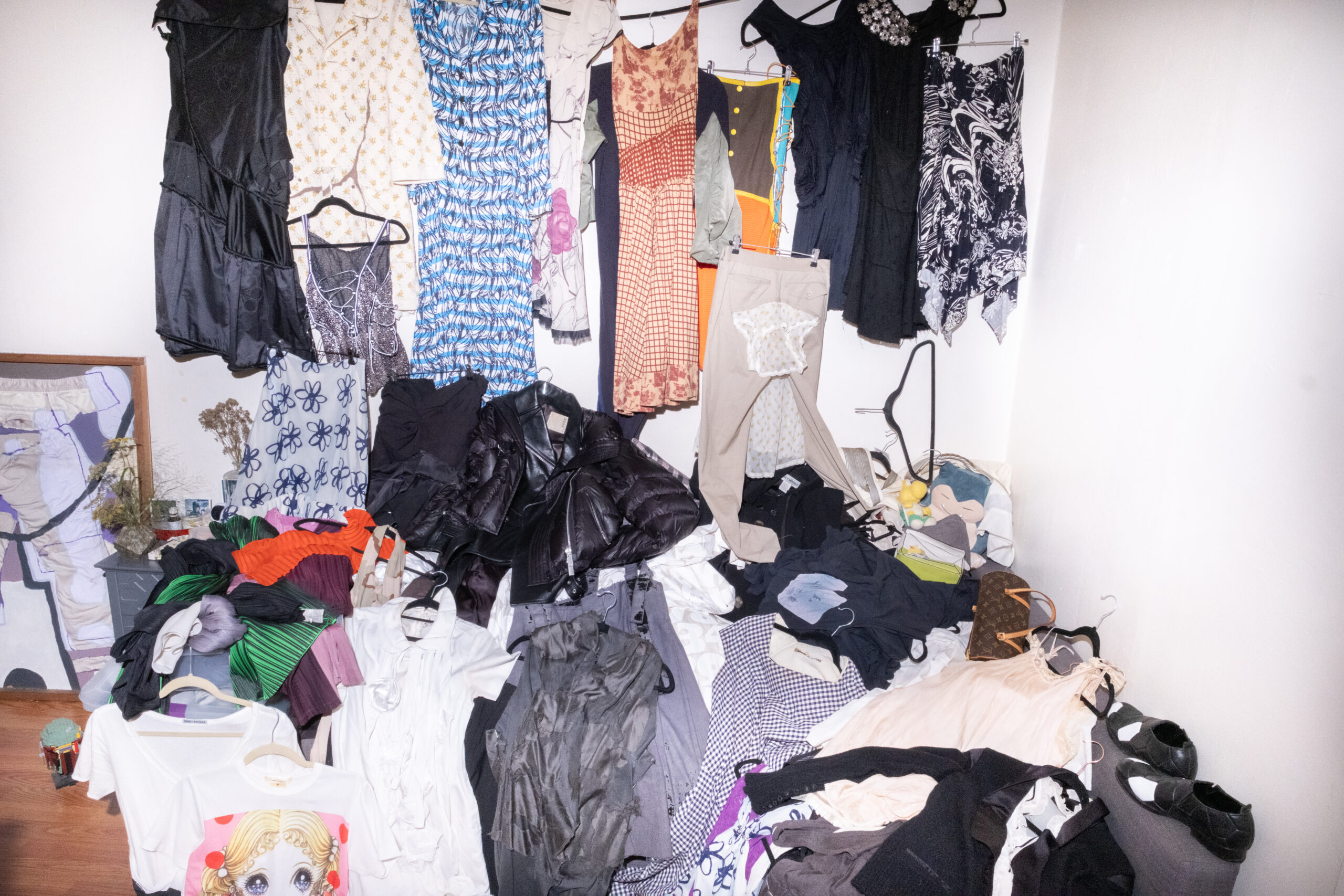
“I think an archive should be worn, and the stains of your own history should be embedded in the clothes,” says the Sake Bar Asoko co-owner, nodding to the sea of archival Japanese fashion that she currently retains at home. From Junya Watanabe’s Spring/Summer 2005 floral-and-eyeball hybrids to Comme des Garçons’s Autumn/Winter 2005 Broken Bride collection, or Issey Miyake corsets, each piece is a facet of Cho’s one-of-a-kind world-building and a compelling story unto itself.
What began as a childhood fascination with vintage evolved into an obsessive, meticulously curated archive for the Lower East Sider. “Combined with my general nerdiness, I went from buying true vintage to learning about designers in school, and wanting to understand the brands on a more personal level by interacting with their clothes,” she explains. The collectors nearly 400 garments are rotated, thrown on, and layered, proving that in this house, fashion is for living, not the history books.
How would you characterize your collection?
It’s mostly Princess Leia on Yavin 4 and Padmé Amidala on Mustafar, with a touch of Anakin Skywalker’s fall to Darth Vader.
Which piece provokes the most conversation from viewers?
People are most interested in pieces that challenge what they think they know of designers, although on the contrary, some of those designs are totally definitive of their work. For example, many people may know of Jun Takahashi’s work at Undercover for his use of subversive graphics and T-shirts, but in his Spring/Summer 2005 womenswear collection, many pieces are essentially ripped open to reveal inner layers of ultra-feminine floral and lace fabrications, juxtaposed with uncanny valley teeth and eyeballs as a nod to Czech surrealist filmmaker Jan Švankmajer.
Pieces that have sparked conversation were the dress I wore to my wedding dinner—look 23 from Junya Watanabe’s Spring/Summer 2005 collection, which blends dainty floral embroidery and oversized metallic snaps, and 1/150 Margiela Tabi boots with patchwork tulips and buttercups in scalloped, white leather.
How do you discover new pieces and seasons of interest for collecting?
I don’t really discover new seasons in my collection. Because I’ve spent so much time researching, reading, and analyzing each collection, I am certain and particular about which seasons I want to add to my archive. Of course, there are outliers and pieces I like, but those collections resonate with me less. My focus is to have pieces from specific collections.

If you could snap your fingers and instantly own the fashion collection of anyone else, who would it be and why?
I feel very connected to my own collection and don’t necessarily want to own anyone else’s, but three collectors I admire are Metrobulotdot, who I probably found when I was using Tumblr in high school and college, a woman in China named Tiffany who used to make dolls in Japan in the early 2000s, thus amassing a huge collection of Undercover and Comme des Garçons, and I would be remiss not to mention the legendary collector, Michelle Elie. I generally find that ordinary people wear and collect clothes better than others in the fashion industry.
You’ve opened Sake Bar Asoko with a new team. Can you tell us about your current work uniform? How does the archive make an appearance?
We are a team of three—and my business partner has an amazing style in her own right—but my work uniform is created, essentially, in my dreams, as I imagine them when I sleep. Authenticity is extremely important to Sake Bar Asoko, and my fashion is my authentic self.
What is the strangest set of circumstances that you’ve experienced in acquiring a piece?
When in Los Angeles visiting family, I got connected with this man who physically seemed like the total antithesis of Undercover, yet he had pieces from the brand that I’d never seen in real life—just documented on the runway. After meeting in person, I immediately added those pieces to my collection. When I googled him after (because of course I did), let’s just say that I found out that he’s extremely well-connected.
Tell us something unexpected about the collection.
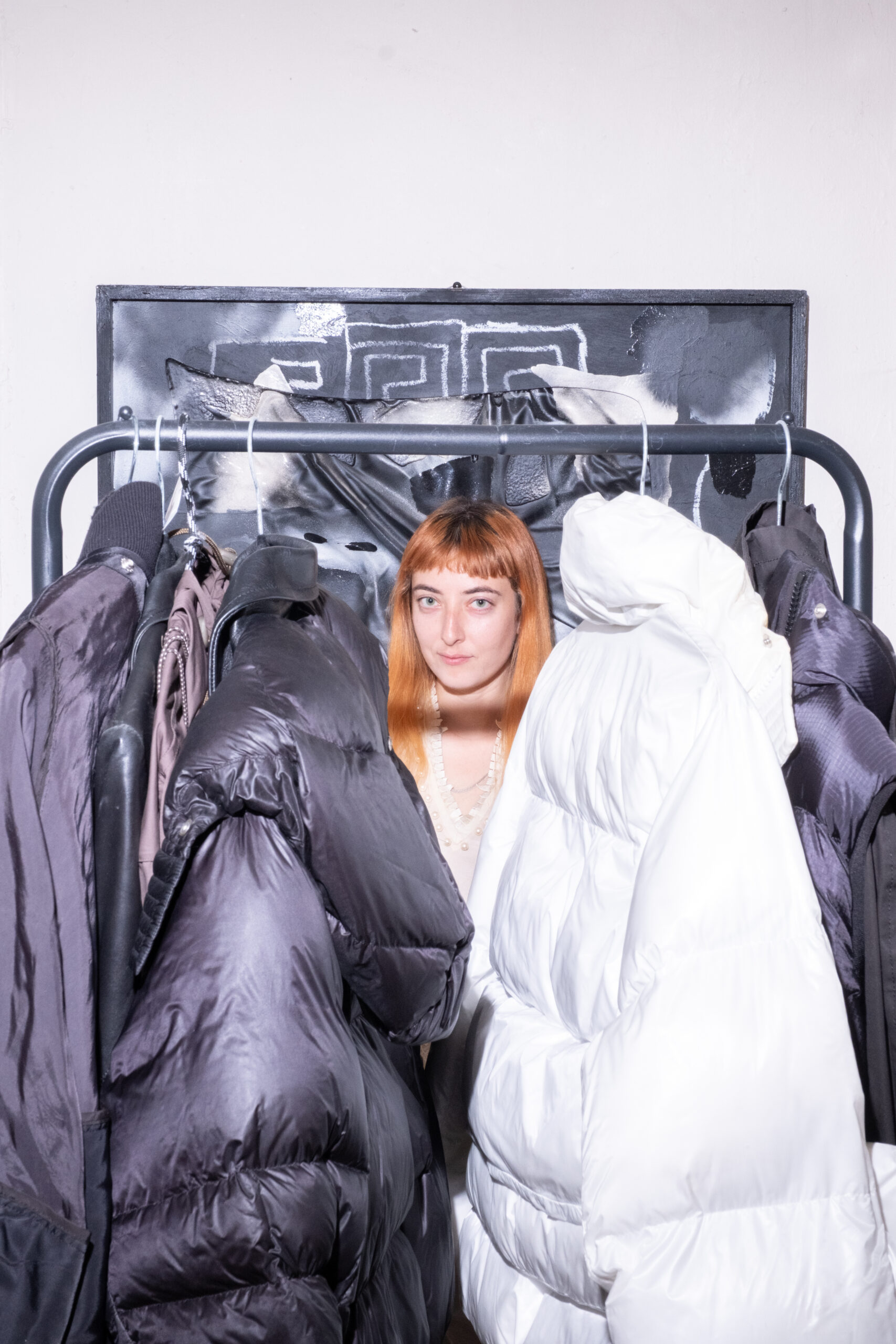
My recorded collection consists of only designer pieces, but I also have a massive T-shirt collection that ranges from graphics of various sake breweries, to local businesses like Yokkoyama Hat Market to, even, a very old Pleats Please Issey Miyake 1998 ad campaign T-shirt that is disintegrating.
Would you explore designing your own clothes?
While I am a total admirer of fashion, I don’t have the skill set or patience to design my own. I am happy to appreciate the works of others though!
Which emerging brands do you have your eyes on?
I love the work of Pauline Tan from Tweo. Although she comes from the world of Issey Miyake—as she was the head designer of Makiko Minagawa’s Haat [launched by the former Issey Miyake textile director]—I find her work to be vastly different. I especially love her focus on resilience and the concept of versatility in each piece, but also the idea of a woman designing for a woman.
What are the five holy-grail looks in your whole collection, if you had to decide?
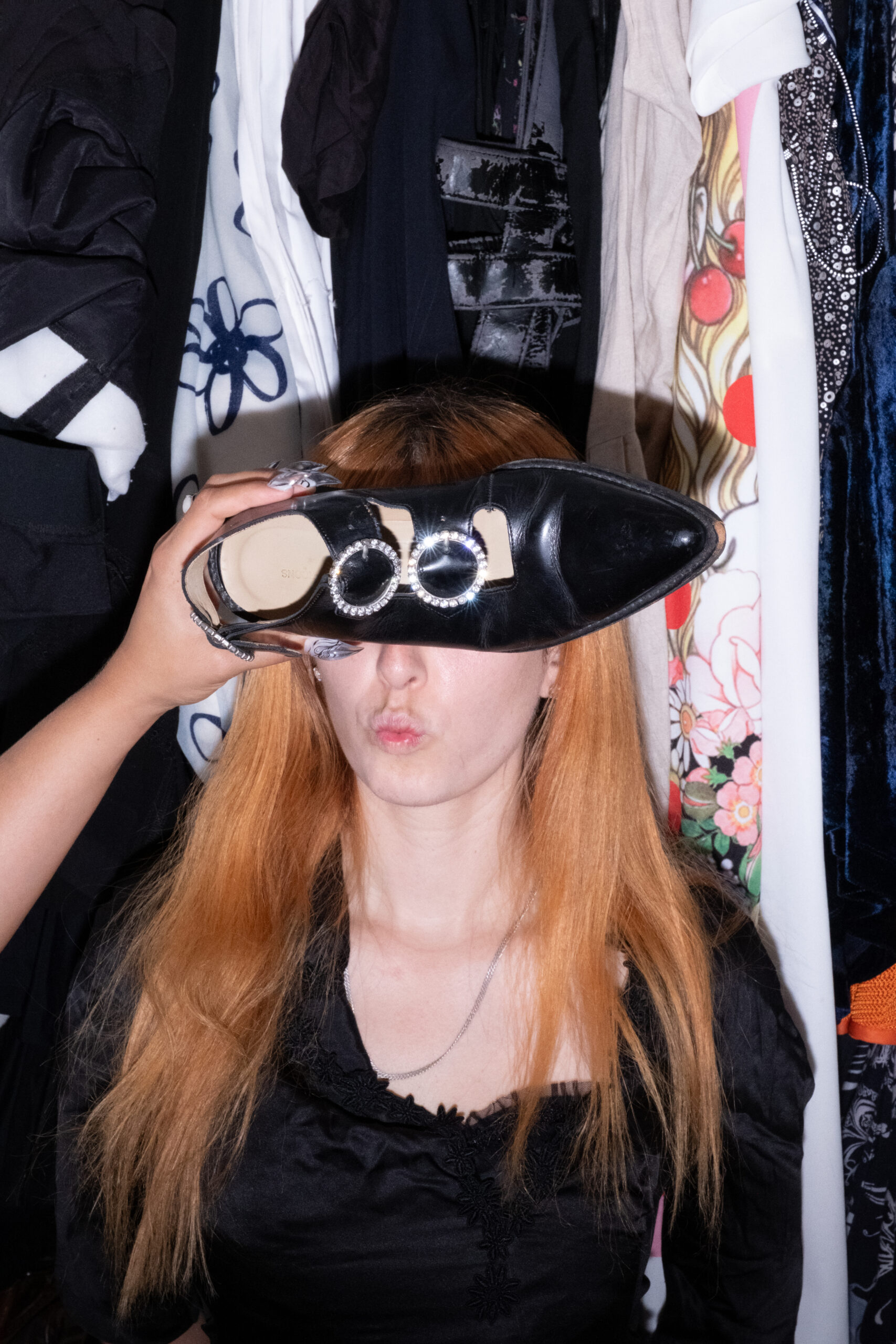
The most special piece is actually not from my designer collection—it is an Oshima kimono from my mother-in-law. Oshima Tsumugi, notable for creating the black kimono, is an ancient, multi-step practice that uses tannin and mud-dyed silk made specifically in southern Kagoshima, and is so specific and hand-made that the extremely manual process’s technique and textile is close to dying out. It’s often said that these kimonos can last for multiple generations. Although I collect the work of Naoki Takizawa for Issey Miyake, the Issey Miyake holy grail I have is actually designed by Naoki-san’s successor, Dai Fujiwara. In his second collection for the brand (Spring/Summer 2008), he collaborated with Dyson (yes, the Dyson you are thinking of) for a collection called The Wind.
Additionally, I think my holy grail pieces from Comme des Garçons would be from Autumn/Winter 2005’s Broken Bride (both looks 13 and 34) not purely because of their extraordinarily detailed design, but due to the fact that they experimented with natural fabrics like silk and cotton, rather than their standard polyester. Commonly referred to as Parachute, Junya Watanabe’s Spring/Summer 2003 collection blends two personalities of the milkmaid and the combatant, and while the set I wore to my civil ceremony at city hall is beautiful, I think look 29, in the runway’s nylon fabrication, is most recognizable and can be considered a holy grail.
Finally, while Undercover on one hand is very popular, it’s also very niche, so it’s hard for me to choose the holy grail, but the blazer from look 25 from the Spring/Summer 2005 collection I mentioned earlier is extremely special. The exterior fabric that is stained to resemble rust stains is spliced open to reveal white lace, with a trim of synthetic teeth and an eyeball for a button.
Which pieces are currently on rotation?
All of it is in rotation, as clothes are meant to be worn. I like to give equal opportunity to each of my pieces. I do consider the fact that I cannot wear platform sandals or super long pieces to work, so those get priority on my days off, but generally I do like to give each of my pieces a chance to be worn—even if it means multiple outfit changes a day!

 in your life?