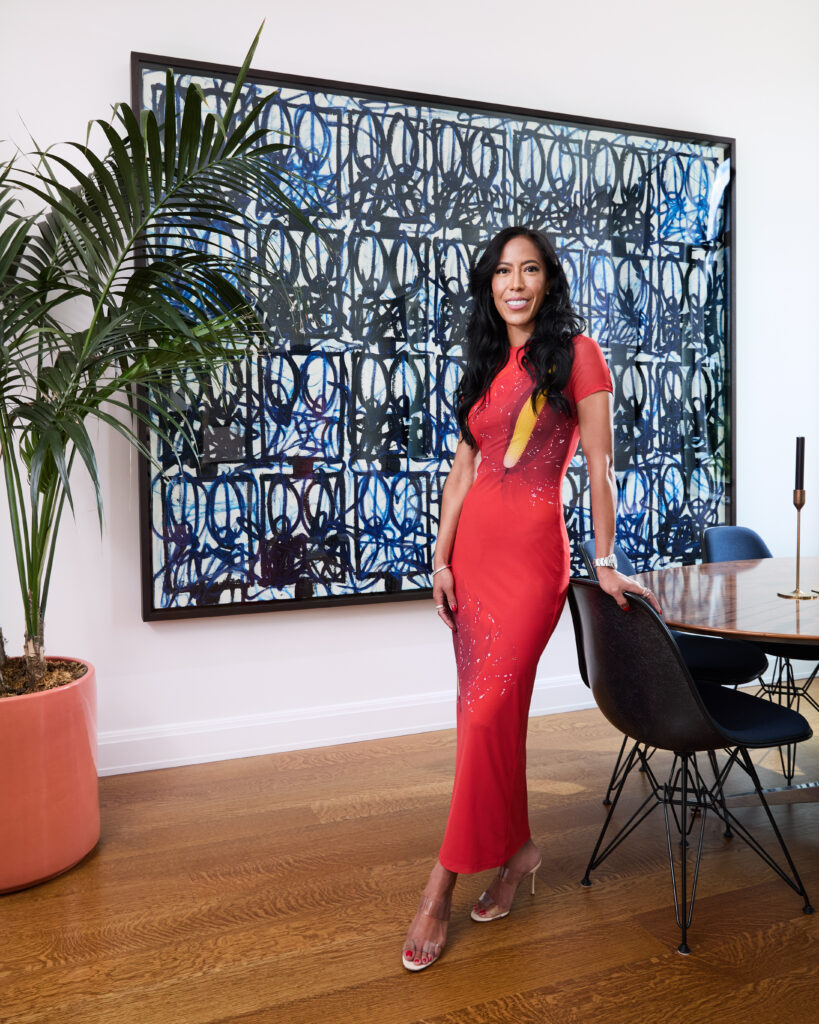
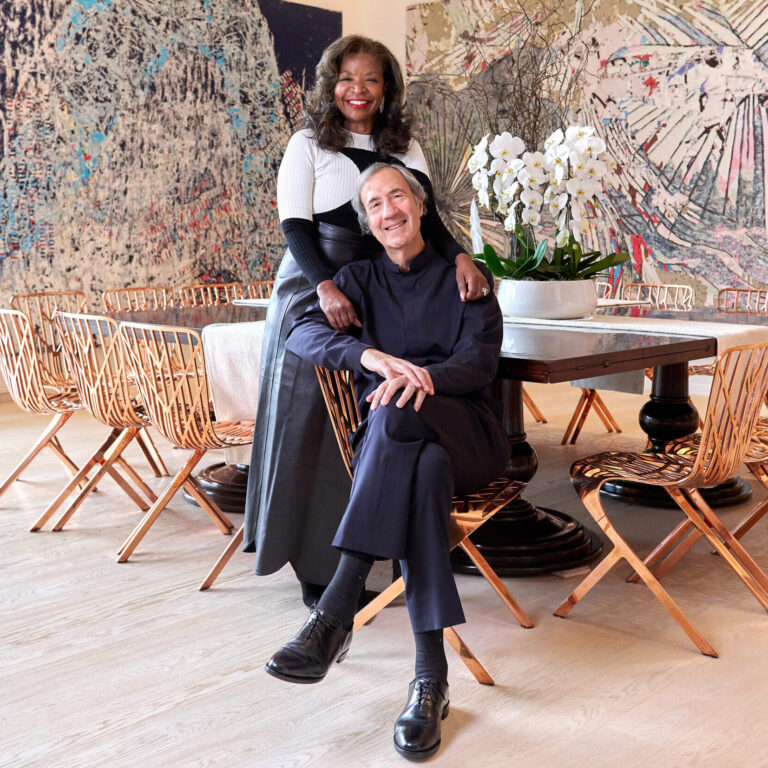
Back in the day, collector Amitha Raman got her education in the art world by taking late-night classes at MoMA with art historian Agnes Berecz. While the rest of New York shuffled back to their apartments, she got Matisse and Dalí all to herself, roaming the museum’s empty galleries after hours. “Those quiet evenings shaped how I see and collect art,” she remembers. Later, her husband proposed to her in MoMA’s sculpture garden. Now, in a final act of circularity, she serves as the co-chair of MoMA’s Young Patrons Council and member of the museum’s Black Arts Council.
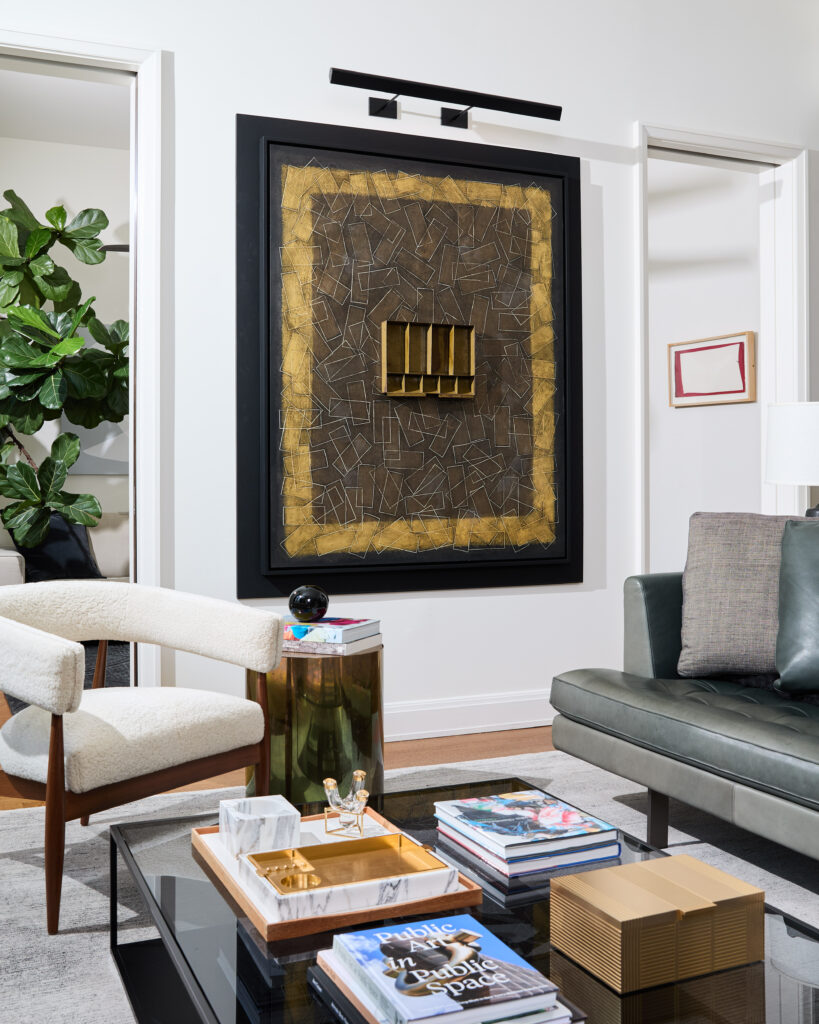
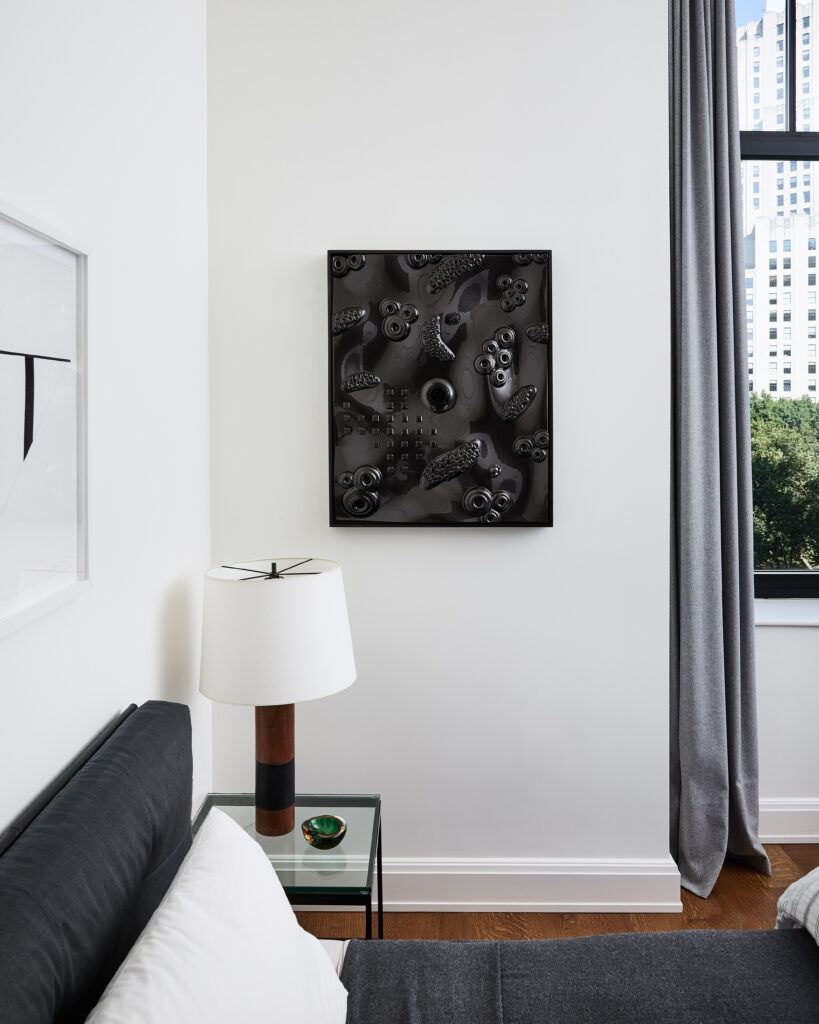
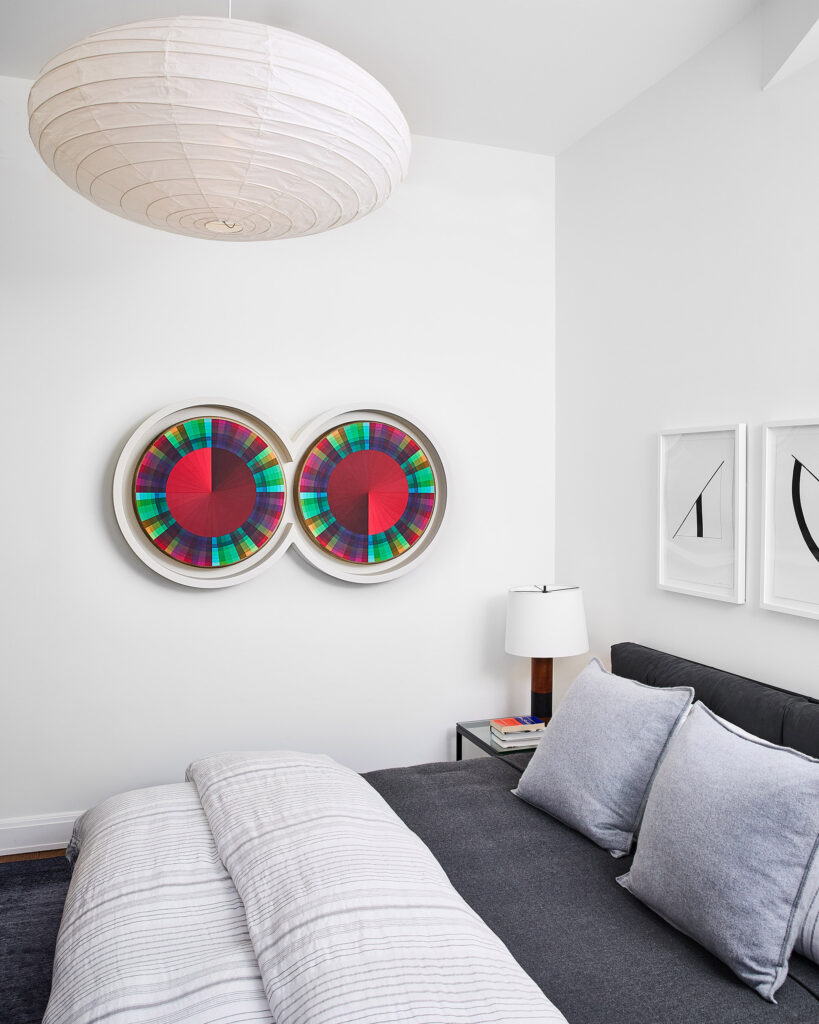
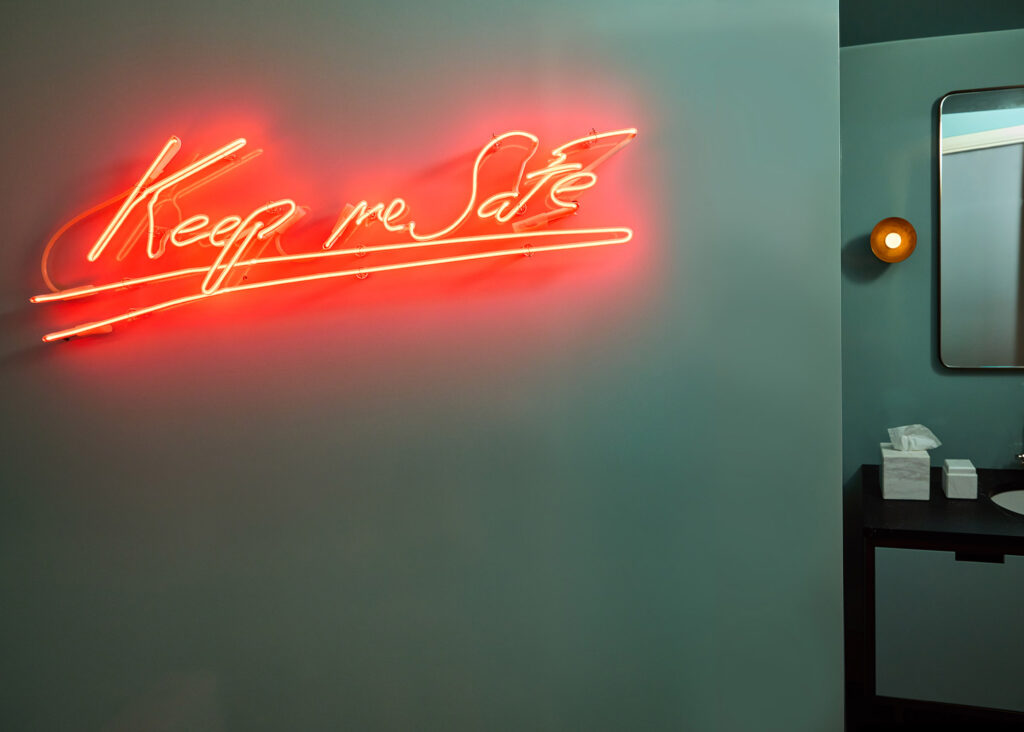
At home, Raman is surrounded by pieces from the likes of Rashid Johnson, Wolfgang Tillmans, Tracey Emin, Jenny Holzer, and Jeffrey Gibson. The way she learned it, art collecting is about community care, part of her broader mission to champion established and emerging women, queer, and BIPOC artists. Whether it’s chopping it up on her podcast with other top collectors or loaning works out for major museum exhibitions, Raman is always looking for new ways to bring emerging artists to new audiences. Here, she takes CULTURED inside the ways she’s been able to do so, as well as where she has her sights set next.
And what was that about fine art rolling papers?
Describe your art collection in three words.
Poetic. Political. Minimal.
How did you start collecting? What is the first piece you ever bought?
The first work I collected was Hounds of Hell, 1973, by Mary Beth Edelson from her “Woman Rising” series, which I acquired in 2018. At the time, I was deeply interested in how pioneering feminist artists of the early 1970s like Edelson reclaimed goddess imagery, ritual, and magic as tools of empowerment in both their art and activism. This small but potent piece continues to resonate with me, and it has become the most frequently loaned work in my collection, having been included in exhibitions at the Hamburger Kunsthalle, the Toledo Museum of Art, the Speed Art Museum, and the Minneapolis Institute of Art.
What was your biggest influence in fostering your passion for art?
My love for contemporary art took root after college when I moved to New York and began taking classes at MoMA. One late-night course with art historian Agnes Berecz was especially formative. We’d wander the galleries after hours, learning to see art as a way of understanding overlooked histories and cultural narratives. MoMA has held a deep personal significance ever since—my husband proposed in the sculpture garden, and we celebrated our engagement at the Modern afterward.
You’re the co-chair of MoMA’s Young Patron’s Council and a member of its Black Arts Council. What has your time there taught you about collecting?
Being part of these communities has deepened my understanding of what it truly means to support artists. Collecting isn’t just about acquiring work—it’s also about creating opportunities. That might mean hosting a studio visit or dinner to connect an artist with potential collectors so the gallery can focus its resources elsewhere. It could mean commissioning writing to contextualize an artist’s practice, underwriting childcare or studio space, or simply showing up to an opening to make someone feel seen. I’ve learned that patronage is as much about care and community as it is about collection-building.
Do you collect anything other than art?
Yes, though it often circles back to art in some way. I collect vintage smoking accessories and beautifully made objects that blur the line between utility and sculpture. What started as a small personal collection eventually inspired me to create my own line of smoking accessories—pieces that are as intentional in design as the artworks I live with.
You often loan your pieces out for inclusion in exhibitions worldwide. What was your favorite show that you contributed to?
We loaned a work to “Pipilotti Rist: Big Heartedness, Be My Neighbor”—her first major West Coast survey at the Geffen Contemporary [at MOCA]. It was unforgettable. Spanning four decades of work, the show was a full-on sensory experience, especially in the wake of the pandemic. The scale, color, and intimacy of her video installations felt overwhelming in the most beautiful way. To see such an imaginative and influential artist honored like that while she’s still actively creating was a powerful reminder of what timely recognition can mean.
You also co-host a podcast, Art from the Outside. What is something you think is misunderstood about collecting right now?
Something we talk about a lot on the podcast—and that’s really shaped how I think about collecting—is the importance of having a clear point of view. The collectors we’ve interviewed all have some kind of personal mission or set of parameters that guide their acquisitions. That kind of clarity makes for a stronger, more intentional collection, even when it’s tempting to follow trends or act on impulse.
There’s this idea that you should “just buy what you love,” and while I get the sentiment, I think it can be a little misleading. Without some kind of framework, it’s easy to end up with a collection that feels scattered—or full of things you don’t actually love living with. Tastes change, but having a throughline helps your collection grow in a way that still feels true to you.
Which artist are you currently most excited about and why
I’m especially excited about Jeffrey Meris. We met through Skowhegan in 2019, and I’ve loved following his evolution ever since. His work is conceptual, poetic, and deeply personal—engaging themes like ecology, embodiment, and healing. He draws on artists like David Hammons, Howardena Pindell, and Felix González-Torres, but his voice is entirely his own. I’m constantly impressed by his commitment to making everything by hand, from firing ceramics to wiring kinetic sculptures. His rigor, thoughtfulness, and generosity as an artist make him someone I feel lucky to support.
Every collector has made a rookie mistake or two. What was your most memorable?
I learned the hard way that excitement can sometimes outpace logistics. I bought Mika Rottenberg’s Ponytail on impulse in 2019, completely captivated by her work. What I didn’t realize was that the piece required specific wall depth and electrical access that our apartment just couldn’t accommodate. Despite creative problem-solving with the gallery, a contractor, and even the building’s handyman, it’s been in storage ever since. But I don’t regret it—it’s a reminder that collecting is a long game. Some works are just waiting for the right time and place.
What is the strangest negotiation you’ve ever had with an artist or dealer?
One of the more unusual negotiations I’ve had was with Celine Mo at Dinner Gallery, who represented Baltimore-based artist Phaan Howng. I commissioned a painting from Phaan’s “Snakes on a Plain” series and worked with Celine to license the image for a custom print on pre-rolled cones from my smoking accessories line. They were handed out during VIP day at NADA Miami right next to the booth featuring Phaan’s work. It’s not every day a piece from your collection ends up in a joint rotation at the fair.




 in your life?