
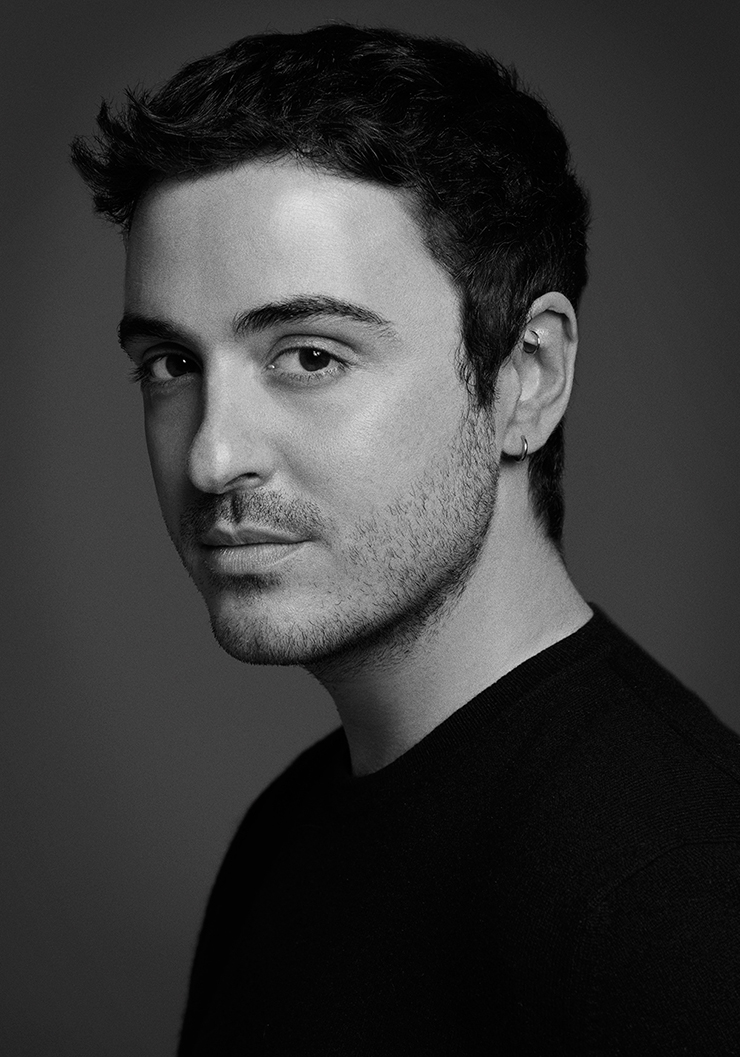
“Each material is a word, and you want to make a language,” explains Ryan Korban, the fashion world’s go-to interior designer who names Alexander Wang, Joseph Altuzarra and Balenciaga among his clients. Known for his luxuriant sensibility—fur, marble, strong binary color choices—Korban has had a meteoric rise from an unexpected start. Entirely self-taught, the 32-year-old New School art history graduate designed his first store with classmate Davinia Wang. “Once we opened Edon Manor, they would come in for the fashion and say, ‘Will you make my home look like this?’”
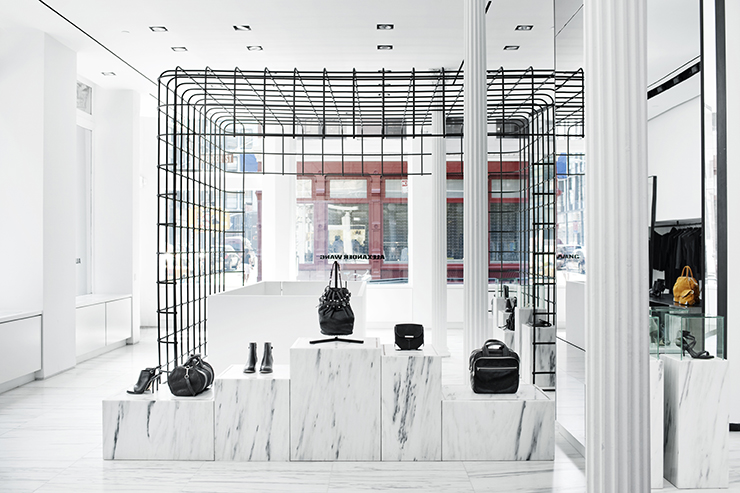
Korban credits his success to a kind of aesthetic liberation. “I graduated not with an interior design skill set but with a very strong visual point of view,” he says. His Parsons friends—Alexander Wang and Vanessa Traina among them—formed a supportive circle, helping each other in their careers’ infancy. His friendship with Wang became a crossover interest story (Korban designed Wang’s home and flagship store) and while he worked on residential projects, Korban found his calling in haute-fashion retail.

“I like the idea that the collection is your client. How do I make it look better than ever before? When I leave a job it has to stay living—scents, flowers, merchandise. You can’t just take a pretty picture and walk away,” he says. Korban’s success is due in part to his intuitive understanding of contemporary retail: A brick-and-mortar shop isn’t just a destination to buy clothing, but rather an environment that communicates a brand’s identity and, most importantly, seduces. When most luxury houses are making their margins not on couture, but rather on small leather goods, fragrance or sunglasses, the challenge for the designer is to treat every item with an even hand. “A lot of the job is making the fragrance feel just as important as the fur coat or sandals or earrings. When you achieve that kind of design, it means the brand is in a very healthy place,” he says. He looks to Hermès as a shining example of creating that kind of harmony. “A pencil is just as important as a Birkin—that is great retail design.”
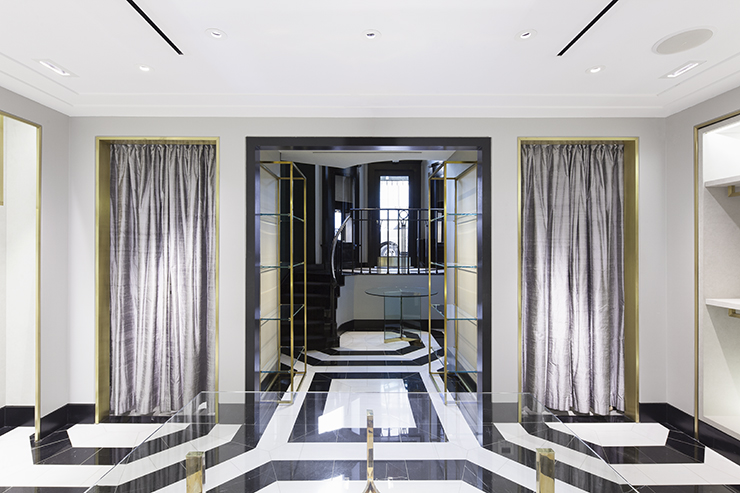
Korban’s treatment of Balenciaga, for which he designed the retail concept for North America and the flagship store in Madrid, is an apropos example of mining a foundational brand aesthetic and translating it into an environmental experience. “I looked back at Cristóbal and found this green marble—it was so European, the DNA was really there, it felt so true. But to make it modern we added chrome, not brass, along with limestone, polished nickel and something totally different: We produced our own cracked resin,” he says. “It is so important to stick to a language, be consistent and stand behind it.”




 in your life?