Let’s just say it: there are too many Substacks. Once a platform for the erstwhile freelance writer, the newsletter behemoth is quickly going the way of podcasts (low barrier for entry, high barrier for quality, dominated by bros with “opinions” about “the state of things”). But buried in the onslaught of content, the best Substacks see some of the best writers of the moment offering up their wisdom for a few bucks or—gasp!—free. But how to find them…
It’s much easier to select a book from a bestseller list or one of the regular roundups assembled (for some reason) by former President Barack Obama. Newsletters are harder to cull. Some power players, like Rayne Fisher-Quann‘s Internet Princess, enjoy regular bouts of virality across social platforms. Others, like author Garth Greenwell’s To a Green Thought, enjoy quiet IYKYK status in literary circles.
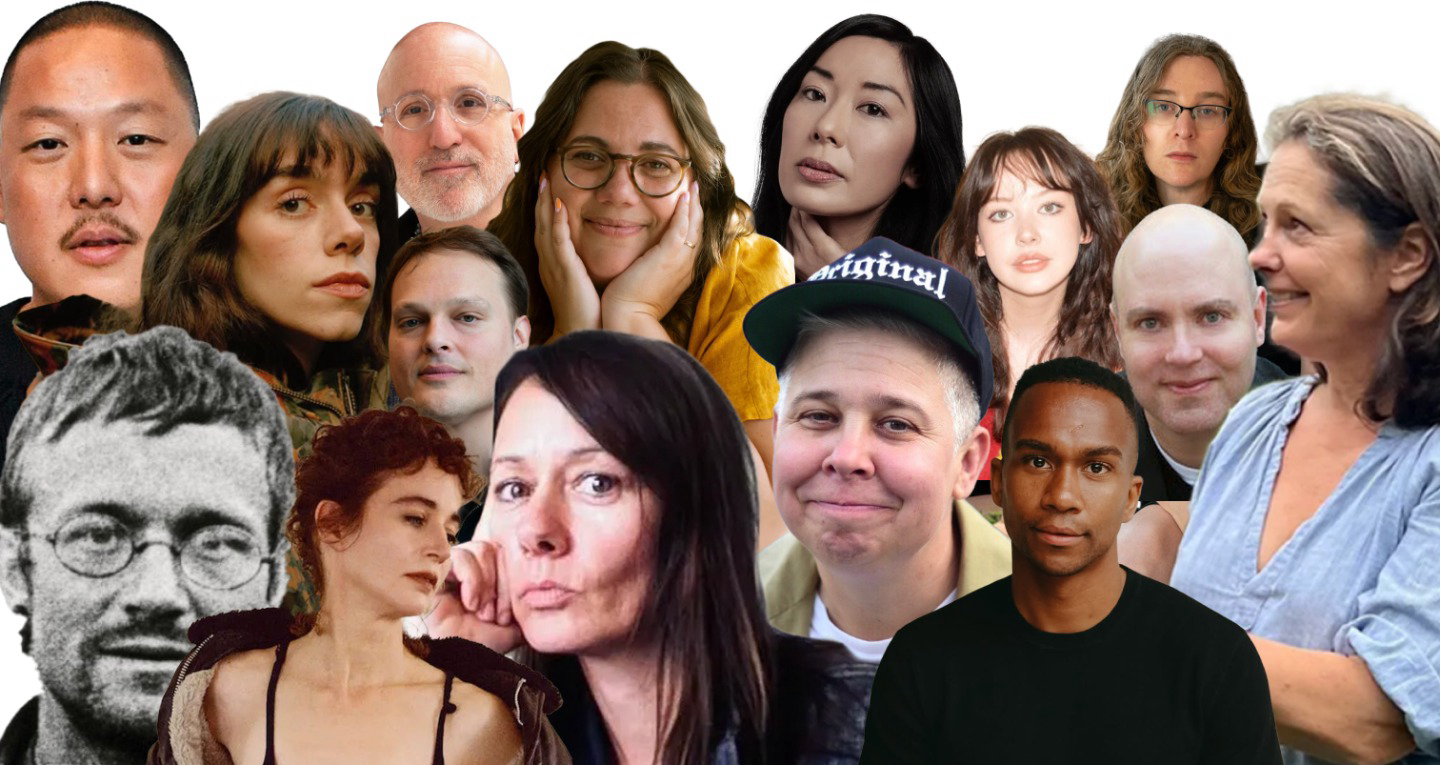
At CULTURED, we’re nothing if not the outsider’s insider (or the insider’s even-more-insider?). To glean insight on where the literary elite have been logging their email addresses, we reached out to a host of our favorite writers to learn who to follow on Substack. The answers will soon have your inbox as packed with quality reading as ours.
Rebecca Makkai on A Word About…
It’s no surprise that Rebecca Makkai’s favorite newsletter offers a deep dive into the written form. The Substacker and author is best known for her bestselling novel, 2023’s I Have Some Questions for You, as well as the Pulitzer Prize and National Book Award finalist, The Great Believers, 2018.
“Ben Dreyer, the former chief copy-editor for Random House, has written an amazing book (Dreyer’s English) on usage that’s like a modern, funny Strunk & White. His substack, A Word About…, gives us his thoughts on good writing, bad writing, annoying grammar, and even the ethics of pointing out a typo in a friend’s work. You don’t have to be a writer to enjoy it, but if you care (even against your will) about how words are used, this Substack is an educational, hilarious, and often cathartic read.”
Suleika Jaouad on Miranda July
Emmy-winning journalist, artist, Substacker, and writer Suleika Jaouad is on the heels of releasing her deep dive into journaling, The Book of Alchemy, with essays from Lena Dunham, Salman Rushdie, Gloria Steinem, and more. It follows her bestselling memoir, Between Two Kingdoms, 2021.
“The writer on Substack that currently has me in her grips is Miranda July. She’s a relative newcomer to the platform, and I’m a big fan of how she’s using it. She’s funny. She’s experimental. She’s free—and by that, I mean she seems like she’s totally herself, whether she’s writing about what she eats, or her experiments in fashion, or the epically long voice messages she and her friends leave each other. July’s presence on the platform feels like a kind of permission, even an invitation. It’s inspiring me to express my full self, rather than just the parts I think of as acceptable or expected of me. July is also cultivating really meaningful conversations with her readers, many of them about the themes she writes about in All Fours, like partnership and motherhood and selfhood. But how she’s doing it feels so organic and true, rather than some mercenary promotional tactic to sell books. I find everything about her newsletter delightful, and every time it hits my inbox, I’m eager to open it. I just want to take a little stroll with her—to be in company with her totally original, wild genius of a mind.”
Haley Mlotek on Cat Hair on the Cutting Board
Writer Haley Mlotek released her first book in 2025, No Fault: A Memoir of Romance and Divorce, but her preferred newsletter dips back into time spent she writing for magazines including The New Yorker, Vogue, and CULTURED.
“I worked with Erika Houle at SSENSE, where we were both editors of the magazine, and she always knew just what to cook or eat whenever I was at a loss. Now she’s pursuing food as a full-time career as a writer and chef and her Substack, Cat Hair on the Cutting Board, is always the perfect menu: an update on what she’s been cooking lately and for what occasion with the most artfully inviting photographs to display her skill and talent, the recipes so that we can attempt it for ourselves, and my favorite part, a list of all the subject lines to emails she receives about food. ‘Do You Eat Clockwise, Top-Down, or Bite-By-Bite?’, ‘Roasting a Whole Chicken: An Emotional Rollercoaster,’ and ‘I Tried Mormon Blender Pancakes’ are just a few of the ones I recently liked best.”
Emma Pattee on The Snap Forward
Climate journalist and Substacker Emma Pattee pooled her expertise into longform writing with the release of her debut novel, 2025’s Tilt, about a pregnant woman seeking safety after an earthquake leaves Portland, Oregon in chaos.
“The Snap Forward. Alex Steffen is pulling no punches about the planetary crisis. An acclaimed futurist, Steffen has been thinking and writing about the implications of climate change for decades. If you want feel-good musings about ecological breakdown, this Substack isn’t for you. If you want clear, researched, innovative, ice-cold-water information about what the future might look like and how you can prepare for it, look no further. There’s no one I trust more when it comes to imagining and preparing for what’s coming.”
Jamie Hood on Internet Princess
Last year, Substacker and writer Jamie Hood followed her exploration of archetypes, How to Be a Good Girl: A Miscellany, 2020, with her memoir, Trauma Plot—a skewering of our collective investment in “trauma porn.”
“Rayne Fisher-Quann doesn’t really need my recommendation—her newsletter, Internet Princess, has well over 100,000 subscribers—but I nonetheless feel compelled to mention her work here. In an age when it’s commonplace to publicly mourn the Death of Feminist Criticism, Fisher-Quann reckons with #MeToo and Amber Heard, tradwives and heteropessimism, Anora and sex work on screen, and all manner of other quote-unquote-feminist topics from a rigorous, stylish, and powerfully embodied critical perspective. She’s among my favorite writers working and is a beacon for those of us feeling demoralized by this political moment and its current strain of anti-feminist backlash. Her essay on Heard was indispensable to my thinking about the deflations of #MeToo as I wrote my rape book, Trauma Plot. If you aren’t reading her, you surely should be.”
Once again, Rob Franklin on Internet Princess
Writer, professor, and Art for Black Lives Co-Founder Rob Franklin was met with acclaim for his debut novel, Great Black Hope, last year. But between writing sessions, he’s reading this list’s fan-favorite Substack.
“On her Substack Internet Princess, writer Rayne Fisher-Quann delves into contemporary culture in a voice—Internet-fluent, yet emotionally raw—that feels organic to the platform. Without the frantic directive of an editor to GET TO THE POINT, Fisher-Quann often takes the scenic route, stopping along the way to examine experiences from her textured life, Internet ephemera, and allusions to critical essays from both the canon and her contemporaries. In this way, she proves that the Internet age hasn’t rotted our brains and attention-spans but introduced us to a new kind of seeing: a thousand images at once, yet still able to be ordered. Recent favorites have included her piece on the language of self-care and solitude and her ode to the kind of writing A.I. is soon to replace. But the essay that stopped me in my tracks was ‘Anora’s American Dream,’ which probes how the street-smart titular character of the Oscar-sweeping film falls in love, not with the romantic lead but a hetero-optimistic fantasy. Like all truly brilliant writing, the piece not only expresses Fisher-Quann’s essential ideas and observations about art in our contemporary moment but helped me, the reader, understand my own.”
Rayne Fisher-Quann on Female Small Business Owner
After the last two entries, top Substack writer Rayne Fisher-Quann really needs no further introduction, but those looking for more from her will soon be able to get their hands on her first book, Complex Female Character, forthcoming from Knopf.
“Really so hard to pick just one! I really love the work of the critic Grace Byron—finding out that she’s written about a book I’m reading or a piece of discourse I’m following is always a huge delight. My first thought is to say she always says what I’ve been waiting to hear, but really she always says far more than anything I could have conceived of ahead of time, and in far more compelling terms. Her taste is wonderful, and she really knows what she’s talking about. Just real, great CRITICISM with a solid political core!!!”
Ottessa Moshfegh on Canal Street Dreams
PEN/Hemingway Award winner Ottessa Moshfegh is the novelist behind My Year of Rest and Relaxation, Eileen, and Lapvona—each sporting instantly recognizable covers for those who frequent bookstores’ best in fiction sections. For those who frequent Substack, you’ll recognize her as It’s Ottessa, bitch.
“Eddie Huang’s Substack is a passionate assemblage of essays, interviews, stories, opinion pieces, what have you, all focused around Eddie’s adorably curious point of view. He somehow manages to be positive, enthusiastic, and yet completely brilliant, a soothsayer about culture, art, politics, FOOD, and he is real and wonderfully kind. Sometimes I think, We should be gatekeeping this platform, because everyone’s publication is like a zine or a letter to the world.
In other words, I like Eddie’s style and his maximalist approach to self-expression. He’s also wildly creative. It’s inspiring to see others on Substack grabbing what they want and getting their work done. It’s not like the addictive circular-minded self-referential Instagram or Twitter platform. If you want to participate, you’ve got to make something. So everyone on there—or a lot of them, anyway—are MAKERS. Not passive absorbent sponges. Substack isn’t trying to sell you anything except for access. I really believe in writers getting paid to write. For some reason people think it’s a gift that we can easily expend. It’s not. Eddie makes it look very generous and fun.”
Liz Moore on Frump Feelings
Bestseller Liz Moore is most recently the author of 2024’s thriller The God of the Woods. Recently, however, her previous novel—Long Bright River, a Barack Obama favorite—premiered as an Amanda Seyfried-led limited series.
“I recommend Emma Copley Eisenberg’s Substack Frump Feelings. In Emma’s words, it consists of ‘monthly dispatches on culture, books, and fat liberation.’ In my words, it’s a needed space for public-private reflection on the way we think about our own bodies and the bodies of others. (And fictional bodies too!)”
Matthew Gasda on Oldoldoldoldnew
Brooklyn Center for Theater Research Founder Matthew Gasda is the playwright behind pieces like Dimes Square and Zoomers that skewer the contemporary landscape of New York. In his free time, he catches up on another writer’s cultural musings.
“Philip Traylen is a sardonic and philosophical British writer who has the rare capacity to both say deep things and avoid saying shallow things. Oldoldoldoldnew has fiction, highly original aphorisms, and translations; I think with Substacks, you’re looking for something that you’d find appealing if you found it in an old bookstore, that has some kind of contemporary value and originality, but doesn’t feel like it’s just reacting to the Internet TODAY. A newsletter doesn’t have to be news, or newsy or chocked with hot takes. I want to read philosophers.”
Mike Crumplar on Garden Scenery
Remember when Dimes Square was all the rage? Around that time, writer Mike Crumplar made his name with Substack’s Crumpstack, a newsletter about the tenuous scene’s evolving nightlife and, when the lights dimmed in the square, his literary musings on the culture at large.
“David C. Porter’s Garden Scenery is for real heads. It’s mainly twice-monthly flash fiction with some poetry, criticism, and other newsletter ephemera thrown in. Porter’s fiction has a sort of eerie, understated absurdism that reminds me of Harold Pinter and ‘comedy of menace.’ It’s edgy in a sophisticated way that is sadly rare these days. And I think I trust his opinions on cinema more than those of anyone else online.”
Katie Kitamura on To a Green Thought
Guggenheim Fellow and National Book Award long-listed author Katie Kitamura released her latest novel, Audition, last year. It was a most-anticipated book from nearly every publication I can name off the top of my head about the roles we all play, in and out of the spotlight.
“Garth Greenwell’s To a Green Thought is full of his meticulous and passionate prose—reason enough to subscribe. A Substack of real substance, it contains beautifully argued works of criticism, including close readings of Greenwell’s favorite books and films and generous explorations on literary craft. There are also personal essays on such thorny and difficult subjects as money and writing, and the experience of being reviewed, written with bracing intelligence and disarming honesty; the entire publication is a gift.”
Clare de Boer on Silver Linings
Five-time James Beard nominated chef Clare de Boer is the owner of New York country tavern Stissing House and the author of Substack’s The Best Bit, sharing witty insights about appetites and recipes that temporarily satiate them.
“Pom Shillingford, my longtime collaborator at Stissing House, writes about her garden as beautifully as she tends it. Her Substack isn’t a how-to guide (though following along might give you a loose sense of what to plant when); it’s an ode to Mother Nature, and to the seasons—in life and in the garden.”
Miranda July on Dad Bod
Filmmaker, artist, and writer Miranda July rocketed into the literary mainstream with All Fours—a book that prompts even the most non-zeitgeisty of acquaintances to ask, “Have you read it?” Meanwhile, July is tucking into her inbox with a fellow multihyphenate.
“You’re laughing, you’re surprised, but most of all you’re not alone when you’re reading Dad Bod [by writer and painter Ali Liebegott]. Recent posts include AMC A-list membership as therapy and being an over enthusiastic blood donor because she likes being tended too. An old-school butch, they don’t make ’em like this anymore.”
Elizabeth Gilbert on Snaps
Elizabeth Gilbert is most well-known for her all-time bestseller Eat Pray Love, but she returned last year with a memoir about love and loss, All the Way to the River. She also regularly expounds on the topic in her Substack, Letters From Love.
“My favorite newsletter on Substack—the one that I think embodies the best of what this platform can do—is Snaps by Deirdre Lewis. Lewis is a writer and photographer who lives in Los Angeles, raises her kids and grandkids, and works in a law office protecting the rights of oppressed people. And as she is going about her daily life, she never stops observing, photographing, and processing her experience of the world. What she shares on Substack are these tiny jewels of moments (‘snaps’ of brilliantly executed prose and photos) that are like perfect little bits of jazz, overheard from a slight remove on a rainy night. It feels like writing and thinking from a different time—a slower, richer way of seeing. I am always touched and inspired by the artistry of her newsletter, and it’s accounts like this one that make me love Substack.”
Anika Jade Levy on Chartbook
Anika Jade Levy is the founder of downtown publication Forever Magazine, but stirred up even more buzz with the release of her debut novel, Flat Earth, late 2025.
“Adam Tooze’s Chartbook is what I read when the news makes me feel stupid. He scrapes the Internet for diagrams from central banks, the ILO, and German bureaucratic agencies to assemble a story about how the world actually works. Sometimes it gives me enough confidence to say ‘bond yields’ out loud.”
Sasha Bonét on Extracurricular
Writer and cultural critic Sasha Bonét burst onto the literary scene in 2025 with the release of her expansive debut novel, The Waterbearers, which ties together three generations of Black mothers.
“My favorite stack is Extracurricular by cultural critic Tembe Denton-Hurst. Tembe is able to synthesize our contemporary moment with intellect, curiosity, precision, wit, and humor. It’s rare in a time with so much noisy nonsense. I especially love her book dates where she takes a writer to their favorite bookshop and interviews them on their literary influences.”
Chris Kraus on Selling Out
Novelist and critic Chris Kraus returned to publishing last year with the release of The Four Spent the Day Together, a reimagining of true crime in an era obsessed with its sensationalism.
“I’ve read Natasha Stagg’s Selling Out since she started it, always eager to know what she thinks about things. And it’s so formally well-composed and interesting: the way she weaves between accounts of, and hyperlinks to, people and parties and things in a lucid, expansive way. But at the same time, there’s almost always an idea at the heart of the thing, an issue she’s turning around to examine from every side, approaching, retreating. More recently I’ve discovered Harmony Holiday’s dazzling Black Music and Black Muses, a real gift: the most profound and poetic kind of music writing that extends to the state of world order and consciousness. She writes about Epstein and Nabokov, Basho, Bad Bunny, balance and chaos, exploitation, indifference, with seemingly effortless brilliance. And then there’s Michelle Tea’s Dear Diary, that arrives like a coveted letter from a most-trusted friend, telling you everything.”
Stephanie Wambugu on Good Thing Going
Writer and Joyland editor Stephanie Wambugu’s debut novel, Lonely Crowds, 2025, sees her follow the friendship of two women from a New England catholic school to the early-’90s art world of New York.
“I suggest subscribing to Lena Dunham’s Good Thing Going. I really don’t care for Substack and tend to avoid looking at it until things land in my inbox. I prefer professionally edited writing in magazines. That said, I subscribe to a few friends’ and acquaintances’ Substacks and generally think that if someone is smart and personable then their Substack newsletter is bound to be enjoyable enough to pay a few dollars a month for. I don’t know Lena Dunham (rare non-friend subscription) but having watched her excellent TV show and read her writing through the years I feel that few people can pull of confessional, twee (in a surprisingly good way), and timely dispatches from contemporary life like she does!”
Zoe Dubno on Number Two Pencil, et al
Writer Zoe Dubno released her debut novel, Happiness and Love, last year, following one young woman through a dinner party with her vicious and estranged New York friends.
“Chartbook by Adam Tooze is where I get a very smart person’s take on the news, political economy, and environment. Kitchen Projects for complex baking recipes with full rundowns on how the recipes work and on the history of the item (medieval meat pies, how to temper chocolate, why to use a certain type of yeast). Architect Abigail Sandler’s Substack, Price Upon Request, about interior design and antiques that I usually can’t afford but enjoy looking at things like a 2,000 dollar egg cup. Left wing journalist Madeline Peltz’s substack, Number Two Pencil, which covers the right wing media, especially the new ascendent influencer class which has cropped up to capture young people. Her recent post on the “Womanosphere” and their pro-ICE antifeminist MAHA agenda was full of truly disgusting people and reading her incisive commentary was really clarifying. She really plumbs the depths of fascist TikTok and shows where the conversation, bewilderingly, will go in the next few months. Picky Nikki is my new favorite fashion Substack. I think the woman who writes it is a stylist at SSense and she’s got great idiosyncratic taste and doesn’t just recommend like, buying an $800 pair of pants.”
Grace Byron on Gaby Del Velle
Outside of her own Substack, Female Small Business Owner, Grace Byron’s work can be found in her debut novel, Herculine. The 2025 horror tome follows a trans girl stalked through the streets of New York by a malevolent force.
“Gaby Del Velle’s Substack has been an invaluable hub for reporting on Minnesota, immigration, and anti-ICE protests. She’s one of our most intrepid writers right now and effortlessly stylish at the same time while doing incredible work. I’d also recommend helmet girl, Small Wire, LOOSEY, and the late review. All great blogs with keen cultural insight.”


 in your life?