Though care for the viewer’s well-being permeates the artist’s work, it doesn’t take away the edge of its appraisal.

WORDS

DATE

SHARE

Twitter
LinkedIn
Facebook
Email


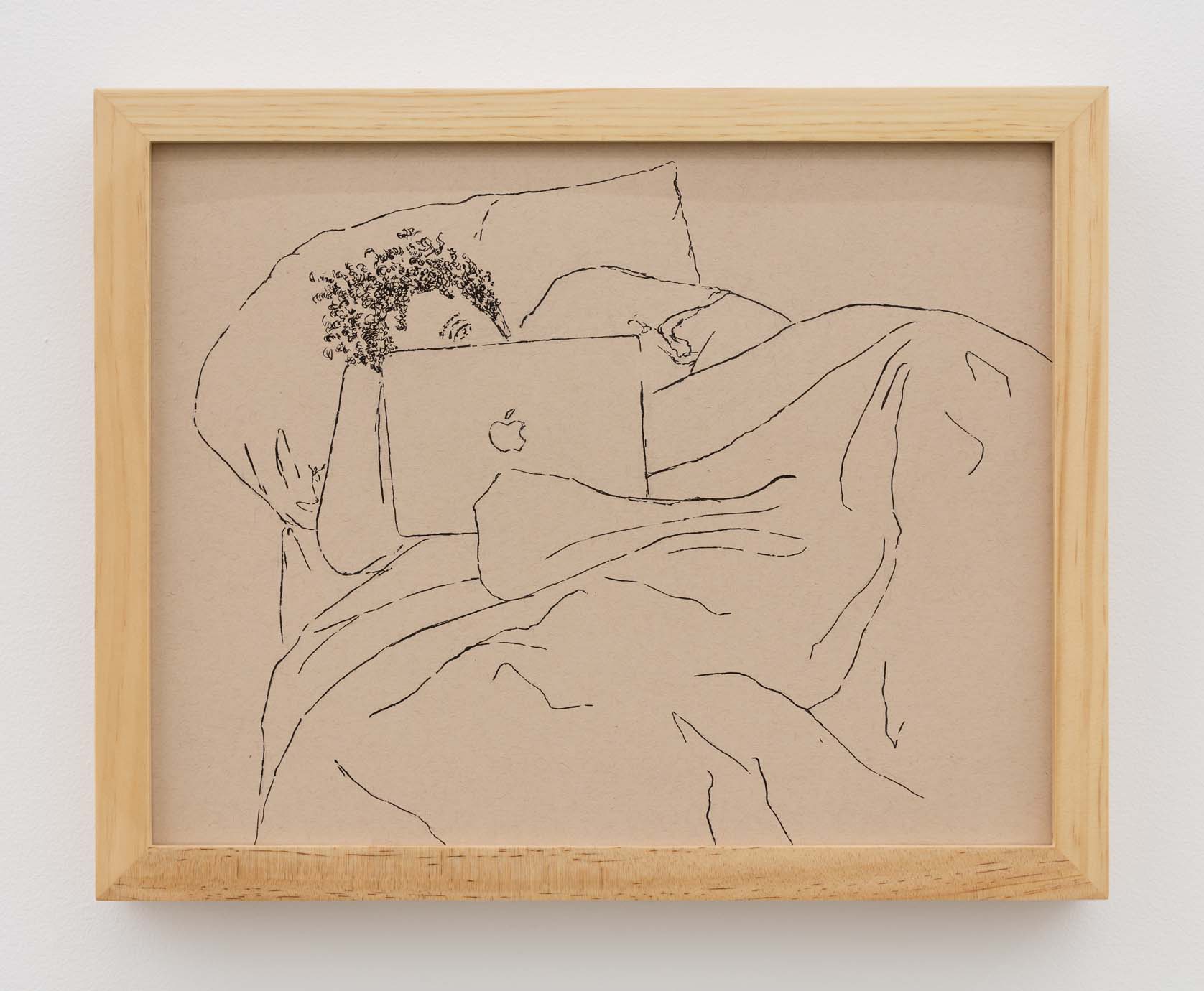
Carolyn Working, 2020. Courtesy of the artist and Essex Street/Maxwell Graham Gallery.

The tally of air purifiers that pocked “SYNC,” Carolyn Lazard’s Essex Street gallery debut in September, corresponded to manufacturers’ recommendations. If shown in the volumes of the kinds of institutional spaces where Lazard’s work often appears (Palais de Tokyo, Walker Art Center and the ICA Philadelphia, to name a few), their numbers would multiply according to square footage because it is, in fact, HEPA filter purified breeze blowing from the choir of haloed machine mouths that constitutes Privatization (2020). A new vision of the mundane, Privatization offers at once a moment of toxin respite and a blistering critique in the form of a premonition of urban miasma—infinitely worsened by climate catastrophe and a police force discharging warfare-grade chemicals against its people—becoming an impossible barrier to life. “The work started out as a gesture of goodwill,” Lazard reassures me.
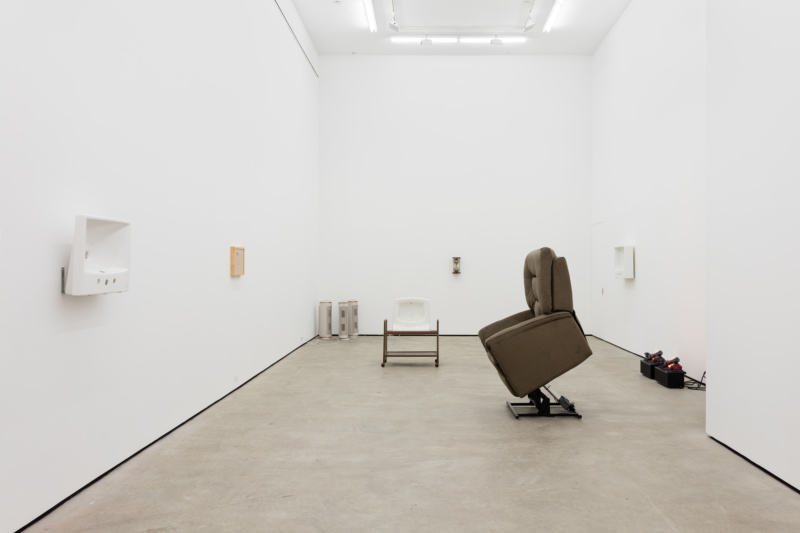
Installation view of Carolyn Lazard, SYNC, Essex Street/ Maxwell Graham, New York, 2020.

Though care for the viewer’s well-being permeates Lazard’s work, it doesn’t take away the edge of its appraisal. Lazard’s contributions as a writer, filmmaker and artist have knocked on the doors of institutions and individuals alike, to demand a fundamental overhaul of vision as it relates to our bodies and the demands we put upon them. Introducing the writings and work of crip artists to the public is central to this realignment. For “SYNC,” Lazard obtained permission to republish late writer and disability community advocate Tameka Blackwell’s And the Sun Still Shines because of the way the short story transforms the mundane into narrative complexity.

“What we are told to register as an event in our lives is culturally and socially constructed, and some of the feelings and ideas behind the show deal with challenging this,” Lazard says. “Instead of hiding the temporality of the domestic, maybe we should have it be primary, and embrace the slowness of convalescence.”Questions surrounding America’s extreme discomfort with rest lay at the heart of the show, which transformed the white cube into a disjointed living room consisting of La-Z-Boys posing like figurative sculptures and a fleet of sinks moonlighting as televisions. Those indoctrinated in Lazard’s work might have expected video from the Philadelphia-based artist and, in a way, these metal and ceramic readymade basins filled that role, if only as screens for projection.

We’ve Waited All Year For This…

Our 10th annual Young Artist list is here, comprised of 27 names you need to know ahead of 2026.

You’ve almost hit your limit.

You’re approaching your limit of complimentary articles. For expanded access, become a digital subscriber for less than $2 a week.
You’re approaching your limit of complementary articles. For expanded access, become a digital subscriber for less than $2 a week.

Already a Subscriber? Sign in Here

You’re approaching your limit of complementary articles. For expanded access, become a digital subscriber for less than $2 a week.

GET ACCESS

Already a Subscriber? Sign in Here

Want more in your life?

For less than the price of a cocktail, you can help independent journalism thrive.

Pop-Up-1_c
Already a Subscriber? Sign in Here
Pop-Up-1_c

Already a Subscriber? Sign in Here

Want more in your life?

For less than the price of a cocktail, you can help independent journalism thrive.

Pop-Up-1_c
Already a Subscriber? Sign in Here
Pop-Up-1_c

Already a Subscriber? Sign in Here

You’ve almost hit your limit.

You’re approaching your limit of complimentary articles. For expanded access, become a digital subscriber for less than $2 a week.

You’re approaching your limit of complementary articles. For expanded access, become a digital subscriber for less than $2 a week.
Already a Subscriber? Sign in Here
You’re approaching your limit of complementary articles. For expanded access, become a digital subscriber for less than $2 a week.

Already a Subscriber? Sign in Here

This is a Critics' Table subscriber exclusive.

Subscribe to keep reading and support independent art criticism.

Already a Subscriber? Sign in Here

Want more in your life?

For less than the price of a cocktail, you can help independent journalism thrive.

Pop-Up-1_c

Already a Subscriber? Sign in Here

Pop-Up-1_c

Already a Subscriber? Sign in Here

You’ve reached your limit.

Sign up for a digital subscription, starting at less than $2 a week.

Already a Subscriber? Sign in Here

Want a seat at the table? To continue reading this article, sign up today.

Support independent criticism for $10/month (or just $110/year).

Already a subscriber? Log in.